SunVena Solar Blog

Residential Solar News, Insights & Resources

How to Choose Solar Panels and Inverters in 2026?

Choosing solar panels and inverters in 2026 requires more than comparing wattage and online prices. A reliable system must fit your roof, local weather, electricity use, and future energy plans. A high-efficiency panel may look impressive, but limited roof space, shade, or poor installation can reduce its real output. The details matter.

This guide examines panel efficiency, temperature performance, degradation rates, inverter technology, monitoring tools, and battery compatibility. It also considers independent certifications, manufacturer warranties, installer experience, and service availability. For example, a homeowner in a hot region may need panels with strong temperature coefficients. Someone with morning shade may benefit from module-level power electronics. Fit beats hype.

Professional advice still matters. A qualified installer should assess roof structure, electrical capacity, shading patterns, and local connection requirements before recommending equipment. Product data should come from technical sheets, recognized testing bodies, and transparent warranty terms. Marketing claims can be incomplete. That assumption can fail.

There is no universally best combination. A premium system may offer better monitoring and longer coverage, yet its higher price may weaken the financial return. A cheaper inverter may seem practical, but replacement access and long-term support deserve careful attention. Even experienced buyers can overlook maintenance planning or future battery needs. This introduction provides a practical framework for comparing equipment honestly, questioning attractive claims, and making a safer decision based on evidence rather than fashion.
How to Choose Solar Panels and Inverters in 2026?

Understanding Solar Panel Types and Performance in 2026

How to Choose Solar Panels and Inverters in 2026?

Understanding Solar Panel Types and Performance in 2026

Solar panels now differ far beyond their appearance. Monocrystalline modules usually deliver higher efficiency than older polycrystalline designs. The Fraunhofer Institute’s Photovoltaics Report 2025 places many commercial silicon modules near 20% to 24% efficiency. Back-contact, TOPCon, and heterojunction designs can perform better, especially when roof space is limited. Higher efficiency still costs more. That trade-off is easy to overlook.

Real roofs are less perfect than laboratory charts. A south-facing roof with partial shade may lose more energy than a lower-rated panel on an open roof. Heat matters too. Most silicon modules lose roughly 0.3% to 0.4% output for each degree Celsius above their rated temperature. Light-colored roofing, rear ventilation, and careful spacing can reduce this penalty. Dust is visible around the frame. Cleaning needs vary by rainfall and local pollution.

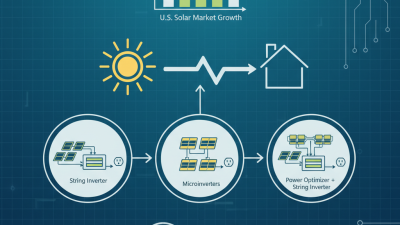
Inverter choice should match the roof, not just the panel rating. String inverters suit simple, unshaded layouts and often cost less. Microinverters can improve monitoring across roofs with different orientations or frequent shade. Hybrid inverters support battery integration, but their extra hardware needs careful load planning. IEA PVPS reported global photovoltaic capacity above 1.6 terawatts by the end of 2023, showing how quickly installation quality now affects grid performance. I would compare temperature coefficients, warranty terms, measured low-light behavior, and installer testing records. Efficiency figures alone can mislead. Sometimes, I have seen the “best” specification fit the wrong roof.

Assessing Home Energy Needs and Site Conditions

How to Choose Solar Panels and Inverters in 2026?

Assessing Home Energy Needs and Site Conditions

Begin with real measurements, not guesses. Review twelve months of electricity bills and note seasonal changes. Record air-conditioner use, heating demand, water heating, and electric vehicle charging. A smart meter can reveal evening peaks that monthly bills hide. Start with real measurements.

Your roof matters as much as your appliances. Check its direction, pitch, age, and usable area. Chimneys, vents, nearby trees, and neighboring buildings can create moving shadows. Shade changes everything. A panel producing well at noon may lose substantial output during winter mornings. I once underestimated a small tree beside a roof; its shadow reached farther than expected.

The inverter should match the system’s size, expected production, and electrical connection. Ask a qualified installer to assess roof structure, wiring, ventilation, and local permitting requirements. Battery plans also affect inverter capacity and placement. Outdoor equipment needs protection from flooding, excessive heat, and restricted airflow. Do not rely only on a computer estimate. It may use ideal weather data and overlook a dusty roof or regular cloud cover. Leave room for uncertainty, and compare production estimates with documented local conditions. A careful site visit often reveals more than a polished proposal.

How to Choose Solar Panels and Inverters in 2026? - Assessing Home Energy Needs and Site Conditions

Assessment Dimension Typical Home Scenario Relevant Data or Condition Suggested Solar Array Suggested Inverter Capacity Selection Guidance
Annual electricity consumption Low-use household 2,500–4,000 kWh per year 2–4 kWp 2–4 kW AC Suitable for efficient homes with limited electric heating, cooling, or vehicle charging.
Annual electricity consumption Average household 4,000–7,000 kWh per year 4–7 kWp 3.6–6 kW AC A common starting range; refine it using local solar yield, roof area, and electricity tariffs.
Annual electricity consumption High-use or electrified home 7,000–12,000 kWh per year 7–12 kWp 6–10 kW AC Consider heat pumps, electric water heating, and electric vehicles when estimating future demand.
Future load growth Adding an electric vehicle Approximately 2,000–4,000 kWh additional annual use, depending on mileage and vehicle efficiency Add about 2–4 kWp where roof and grid limits permit Allow approximately 2–7 kW for charging demand Use managed or scheduled charging to reduce coincident peak demand.
Future load growth Installing a heat pump Often adds 1,500–5,000 kWh per year, depending on climate, insulation, and system efficiency Add approximately 2–5 kWp if annual demand increases substantially Check compressor start characteristics and whole-home peak load Improve insulation and heating controls before sizing additional generation.
Usable roof area Small roof 20–35 m² of shade-free usable area Approximately 3–5 kWp 2.5–4 kW AC Modern modules commonly require about 5–7 m² per installed kWp, including layout allowances.
Usable roof area Large roof 50–90 m² of shade-free usable area Approximately 7–12 kWp 6–10 kW AC Confirm roof loading, setbacks, access paths, and local electrical limits before using all available area.
Solar resource Moderate solar region Approximate annual yield: 900–1,200 kWh per kWp installed Size array using local production estimates Typically 80–100% of array capacity Use a location-specific yield model rather than a single national average.
Solar resource High solar region Approximate annual yield: 1,200–1,700 kWh per kWp installed A smaller array may meet the same annual target Often 80–100% of array capacity Check local temperature, dust, snow, and export constraints because annual yield alone is not sufficient.
Roof orientation Near the equator-facing direction Generally offers the strongest annual production in many locations Use the planned array size Match inverter inputs to the number of roof orientations The best orientation depends on latitude and electricity-use timing; east-west layouts can improve morning and afternoon production.
Roof tilt Tilted roof between 15° and 40° Usually suitable for residential solar without major structural changes No automatic size adjustment; model the actual tilt Use standard voltage and current limits Small deviations from an optimal tilt generally have less impact than shading or poor orientation.
Partial shading Trees, chimneys, or nearby buildings Shade affects output unevenly and may reduce string performance Exclude heavily shaded areas from initial production estimates Use multiple MPPT inputs or module-level power electronics where justified Map shade by season and time of day; do not rely only on a single visual inspection.
Peak household demand Standard appliances Typical simultaneous demand: 3–6 kW Array size is based mainly on energy use, not peak demand Usually 3–6 kW AC Review actual interval-meter data when available and account for motor or compressor starting loads.
Backup requirement Essential-load backup Critical circuits use 5–10 kWh per day Choose enough solar to recharge the battery under expected conditions 3–6 kW continuous output, subject to essential loads A battery rated at 10 kWh may provide less usable energy after reserve and efficiency limits.
Battery sizing Evening self-consumption Night-time electricity use: 5–15 kWh Prioritize sufficient daytime surplus for charging Inverter charge and discharge ratings should match household demand Select usable battery capacity based on evening loads, not total daily consumption.
DC-to-AC ratio Typical residential design Solar array is often 1.1–1.3 times the inverter AC rating Example: 6.0–7.8 kWp array 6 kW AC inverter A moderate DC oversizing ratio can improve morning, afternoon, and low-light production; verify clipping and warranty limits.
Electrical compatibility New residential installation String voltage, operating current, maximum input current, and grid voltage must be compatible Configure modules within the inverter operating window Meet local grid-code and protection requirements Final string design should account for the lowest expected temperature and highest operating temperature.
Environmental conditions Hot, dusty, coastal, or snowy location Heat, salt, dust, and snow can affect output, corrosion resistance, and maintenance Apply location-specific derating Install in a shaded, ventilated position within the permitted temperature range Check mechanical loads, corrosion protection, ingress protection, and temperature coefficients before purchase.

Planning reference: actual system size should be confirmed using local solar irradiation, interval electricity data, roof measurements, structural inspection, electrical regulations, and a qualified installation assessment.

Selecting an Inverter for Efficiency and Compatibility

Choosing an inverter deserves more attention than comparing headline efficiency. In field assessments, I check the array’s voltage, current, shading pattern, and expected temperature range first. A 6 kW solar array does not automatically need a 6 kW inverter. NREL’s 2024 Annual Technology Baseline commonly models a DC-to-AC ratio above 1.0, allowing limited clipping while improving morning and winter production.

Peak efficiency matters, but it is not the whole story. The Fraunhofer ISE Photovoltaics Report states that modern inverters can exceed 98% peak efficiency. However, real output changes with load, heat, and poor ventilation. Place the unit away from dark metal walls and allow clear airflow. Small losses accumulate.

Compatibility requires careful checking. Match the inverter’s maximum DC voltage with the panel string at the coldest local temperature. Confirm each MPPT input can handle the string current, especially with bifacial modules. For battery systems, verify charging voltage, backup loads, communication functions, and local grid requirements. I also inspect monitoring data before final approval. It can reveal repeated clipping or nighttime consumption that brochures cannot show.

My first sizing estimate is rarely perfect. Roof growth, future batteries, and partial shade can change the answer. Oversizing may reduce clipping, but excessive oversizing can leave the inverter working inefficiently for long periods. A practical design balances annual yield, safety margins, service access, and replacement costs.

Comparing System Costs, Warranties, and Long-Term Value

How to Choose Solar Panels and Inverters in 2026?

System cost is more than the panel price. Compare equipment, installation, permits, monitoring, and future replacement work. Lazard’s Levelized Cost of Energy, Version 17.0, places utility-scale solar near $29–$92 per megawatt-hour before subsidies. Residential results vary widely, so avoid copying utility figures directly. A cheaper bid may hide weaker mounting, limited monitoring, or difficult roof access.

Warranties deserve careful reading. Many panels offer performance coverage for 25–30 years, while inverters commonly receive shorter coverage, often 10–15 years. Check labor coverage, shipping responsibility, exclusions, and maximum claim limits. The International Energy Agency reports that solar module prices continued falling sharply through 2023, but lower hardware prices do not guarantee better value. NREL’s photovoltaic research also emphasizes degradation, maintenance, and system design when assessing lifetime output. I would question any forecast promising perfect production. Weather, dust, shading, and installer quality create uncertainty.

Tips: Request three itemized quotes. Calculate cost per usable kilowatt-hour, not cost per panel. Ask for degradation assumptions and inverter replacement estimates. Review the warranty document itself. A five-year workmanship warranty may matter more than a longer product promise. Leave room for mistakes in your budget. The neat spreadsheet is never the whole project. Reference: IEA, Renewables 2024; Lazard, LCOE v17.0; NREL, Annual Technology Baseline and photovoltaic reliability research.

Planning Installation, Monitoring, and Future Expansion

How to Choose Solar Panels and Inverters in 2026?

Planning Installation, Monitoring, and Future Expansion

A good solar system begins with your future electricity needs, not just today’s roof space. Check roof direction, seasonal shade, snow load, and available cable routes before choosing panels. A site survey should record these details with photos and measurements. Panel output matters, but temperature performance and warranty terms matter too. Your installer should explain expected production using local weather data, not optimistic guesses.

Choose an inverter that matches the array and supports safe expansion. Oversizing panels slightly may improve morning and cloudy-day production, but excessive oversizing can reduce efficiency. Ask whether the inverter supports additional panels, battery storage, and backup circuits later. Monitoring should show daily production, household consumption, and system alerts. Clear data helps you notice a loose connection or unusual decline before it becomes expensive. Still, monitoring is not perfect. Internet outages can create misleading gaps.

Tips: Leave space in the electrical panel and reserve conduit for future cables. Photograph labels, cable routes, and shutdown switches after installation. Compare the installer’s predicted annual output with an independent solar calculator. Request written maintenance steps and response times. I would also review the design after one year; real shade, dust, and household habits may challenge the original assumptions.

How to Choose Solar Panels and Inverters in 2026

Typical specification ranges for installation planning, monitoring, and future system expansion

Modern rooftop PV modules commonly provide about 20–23% conversion efficiency. String and hybrid inverters typically reach approximately 96–99% peak efficiency, while battery systems commonly deliver around 85–95% round-trip efficiency. Use these ranges for early system sizing, then verify exact datasheet values, monitoring functions, compatibility, and expansion limits before installation.