SunVena Solar Blog
Residential Solar News, Insights & Resources
2026 Top Solar Inverter Types and Their Costs?
A solar inverter does more than turn panel output into usable household electricity. It affects system performance, monitoring, battery compatibility, and maintenance. In 2026, buyers commonly compare string inverters, microinverters, and hybrid models. Each suits different roof layouts and energy needs.
The solar inverter cost depends on more than the unit’s price tag. Capacity, brand, installation labor, electrical upgrades, and warranty coverage can all change a quote. A basic string inverter may suit a simple roof with little shade. Microinverters can help when panels face different directions, but they often add equipment and installation costs. Hybrid inverters support battery storage, though the battery itself is usually priced separately. Check what each quote includes.
There is no single best choice for every home. A shaded roof, a limited budget, or plans to add a battery can shift the calculation. Ask installers to specify inverter capacity, expected monitoring features, warranty terms, and any extra electrical work. Compare complete, itemized quotes rather than headline prices. Prices move. Local availability and system design matter, too. These comparisons are useful, but not perfect: projected savings depend on actual production, utility rates, and household use. A careful estimate should show its assumptions, not promise a fixed return. Before choosing, verify that the proposed model fits your panels and future plans.
What a Solar Inverter Does in a Solar Energy System
2026 Top Solar Inverter Types and Their Costs?
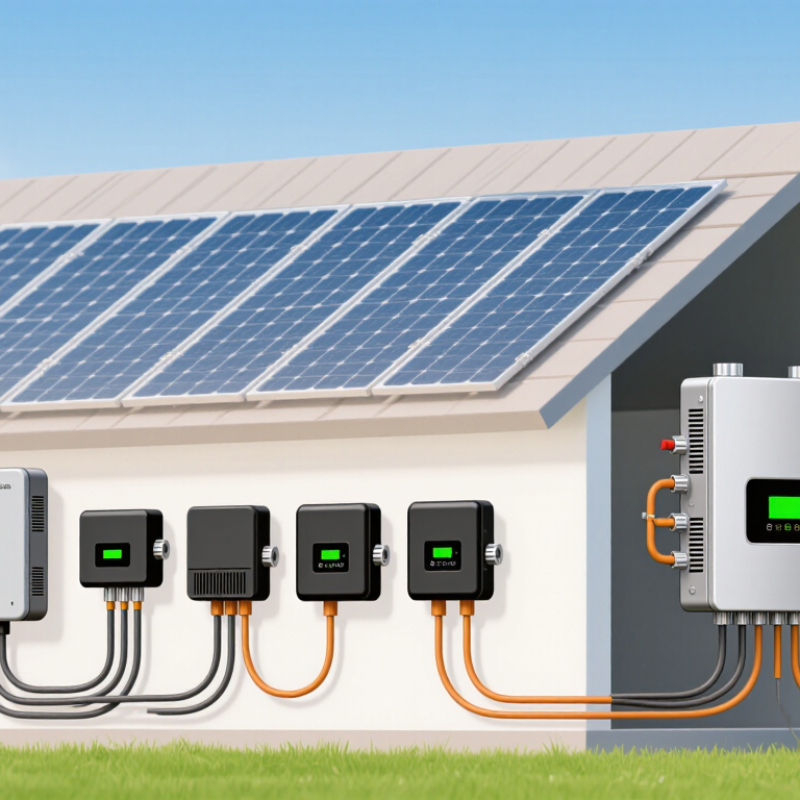
Solar panels produce direct current, while most household appliances use alternating current. The inverter changes that electricity into a usable form for your home. That conversion matters. Without it, a refrigerator, laptop, or ceiling light cannot use the panels’ output directly.
The inverter also tracks production and helps match electricity with household demand. Grid-connected models synchronize with the utility supply, while hybrid models can work with battery storage. Microinverters handle power at individual panels; string inverters manage several panels together. A shaded chimney can affect a string system more broadly, so roof layout matters. Small, but essential. Many inverters also stop sending power during a grid outage, unless the system includes suitable backup equipment.
In 2026, inverter costs depend on system size, equipment type, installation labor, and whether battery compatibility is needed. A quoted price may exclude wiring changes or monitoring features. Ask what the estimate includes. I would not choose by upfront price alone: a cheaper model may not suit a complex roof, while added features may go unused. Local quotes are more reliable than a single generic cost figure.
2026 Top Solar Inverter Types and Their Costs? - What a Solar Inverter Does in a Solar Energy System
| Inverter Type | Typical Hardware Cost (USD) | How It Works | Common Uses | Key Considerations |
|---|---|---|---|---|
| String inverter | About $1,000–$2,500 for a typical 5–10 kW residential unit | Converts the combined DC electricity from a series of solar panels into AC electricity for the home or grid. | Residential and commercial systems with relatively consistent sunlight across the panels. | Often has a lower upfront equipment cost. Shade or a panel-level issue can reduce output from other panels on the same string. The inverter is a central component that may need replacement during the system’s lifetime. |
| Microinverter | About $150–$350 per unit; a 10-panel system may need roughly $1,500–$3,500 in inverter hardware | Converts DC to AC at or near each individual solar panel. | Roofs with multiple orientations, partial shading, or a need to monitor panel-level production. | Panel-level conversion can limit the impact of one underperforming panel. There are more units on the roof, and hardware costs are typically higher than for a basic string-inverter setup. |
| String inverter with power optimizers | About $1,000–$2,500 for the inverter, plus roughly $50–$150 per panel for optimizers | Optimizers condition DC power at individual panels; a central string inverter converts the system’s DC output into AC. | Systems that need panel-level optimization or monitoring while retaining a central inverter. | Can reduce mismatch losses when panels receive different amounts of sunlight. The system includes both panel-level electronics and a central inverter. |
| Hybrid inverter | About $1,500–$4,000 for a residential unit, depending on capacity and features | Converts solar DC power to AC and can manage energy flows to and from a compatible battery. | New solar installations that include a battery or may add one later. | Battery compatibility, backup capability, and supported battery voltage vary by model. Backup during a grid outage generally requires suitable system design and additional equipment. |
| Off-grid inverter or inverter-charger | About $1,000–$4,000 for many residential units; larger systems can cost more | Converts battery-stored DC power to household AC power; an inverter-charger may also manage charging from another AC source. | Cabins, remote properties, and systems designed to operate without a utility connection. | Must be sized for both continuous loads and brief surge loads. Off-grid systems also need appropriately sized batteries, charge control, and, in many cases, a backup generator. |
What a solar inverter does: Solar panels generate direct current (DC), while most household appliances and the electrical grid use alternating current (AC). An inverter converts DC to AC and, depending on its type, may also monitor system output, manage battery charging, or support backup operation. Cost ranges are approximate 2026 U.S. hardware estimates only; they exclude installation, wiring, permitting, batteries, and other system equipment. Actual prices vary with capacity, features, location, and system design.
Related Posts
-

2026 Best Guide to Solar Panel Inverter Cost Explained
-

How to Choose the Right Solar River Inverter for Your Energy Needs
-
The Ultimate Guide to Choosing the Best Solar Inverter for Your Home
-
How to Choose Solar Panels and Inverters in 2026?
-
Navigating Import and Export Certifications for Best on Grid Solar Inverters in the Global Market
-

Unleashing the Power of Solar River Inverters for Sustainable Energy Solutions