SunVena Solar Blog

Residential Solar News, Insights & Resources

What Are the Top Types of Courier Bags?

Courier bags may look simple on a shelf, but their differences matter once a parcel meets rain, rough handling, or a crowded delivery route. A padded mailer protects small electronics and delicate accessories with a soft, cushioned lining. Poly mailers keep clothing and other flexible goods light and compact. Document wallets help papers arrive flat, while insulated bags support temperature-sensitive deliveries. Reusable courier bags offer another option when repeated trips and durability matter.

The expert name and quotation below are illustrative, not a verified real-world attribution. In this article, fictional composite courier-packaging specialist Nora Vale puts it this way: “Choose the bag for the journey, not just the item.” It is a useful principle, though not a complete specification. A bag that suits a dry, short delivery may fail during a long, wet route. Seals, seams, handles, lining, and closure strength all deserve attention.

This guide compares the top types of Courier Bag and explains where each can work well. It will consider protection, capacity, handling, and practical trade-offs, using everyday examples such as a folded shirt, a stack of invoices, or a chilled meal container. No single style fits every delivery. Fit matters. And sometimes, the cheapest choice is not the best one. Buyers should check product specifications and test bags with representative loads before making a large order.
What Are the Top Types of Courier Bags?

How Courier Bags Are Classified

Courier bags are often classified by what they carry, how they are worn, and how they protect their contents. A flat document pouch suits invoices and slim folders, while a shoulder satchel leaves one hand free for a phone or door handle. Backpack-style bags spread weight across both shoulders. Insulated bags add a foam-lined compartment for meals or other temperature-sensitive items. Small details matter. A stiff base can keep containers level, while a wide opening makes loading less awkward.

Construction offers another useful way to compare them. Water-resistant fabric, reinforced seams, reflective panels, and padded dividers each address a different working condition. Closures vary too: zippers are quick to operate, while flap designs can cover the opening from light rain. Check the stitching around handles; that area often takes repeated strain. Categories overlap, though. A backpack may also be insulated, and labels such as “weatherproof” can mean different things across products. It is worth checking dimensions and care instructions instead of relying on a category name alone. That check is easy to skip.

Document and Flat Mailer Bags

Document and flat mailer bags are designed for items that should arrive clean, dry, and easy to handle. Document mailers often carry invoices, forms, certificates, or slim booklets. Their opaque, moisture-resistant exterior helps protect paper from rain and casual handling. A peel-and-seal strip makes packing quick, while a clear address panel can reduce labeling errors. Check that the opening fits the documents without folding their edges.

Flat mailers suit photographs, thin catalogs, artwork, and other low-profile items. Many use a padded lining or a stiff backing board to limit bends during sorting. That matters. A rigid insert can help, but it adds weight and may not prevent damage if the parcel is crushed. For delicate prints, place a clean protective sleeve around the surface before sealing the mailer.

Choose the size with a little room, not a loose fit. Excess space lets contents slide; a tight mailer can strain seams and corners. Test one packed sample by turning it over and checking the closure. It is an imperfect check, not a guarantee. Also consider paper-based options when recyclability matters, and verify that local collection accepts the exact material. A glossy coating or mixed-layer construction can complicate sorting, even when the bag looks recyclable.

Padded and Protective Courier Bags

Padded and protective courier bags suit products that can be scratched, dented, or damaged by repeated handling. The need is practical: Pitney Bowes’ 2023 Parcel Shipping Index estimated 161 billion parcels moved worldwide in 2022, with volume projected to reach 256 billion by 2027. More parcels mean more handoffs, though that figure alone does not measure damage rates.

A padded mailer combines an outer layer with cushioning, such as bubble lining or foam. It can soften small knocks and reduce surface scuffs, but it cannot protect every item from crushing. Not every item. Match the padding to the product: a ceramic mug needs more rigid support than a soft textile, while a device with sharp edges may need extra wrapping to prevent punctures. Seal the closure firmly and check that the contents do not slide around. A little movement matters.

For higher-value or fragile shipments, test a packed sample with realistic drops and vibration. The International Safe Transit Association publishes transport-testing procedures that help businesses assess packaging performance. Testing is useful, but one trial may miss rough handling or unusual stacking. Protective mailers can also combine materials that are difficult to separate for recycling, so check the material details before choosing a design.

What Are the Top Types of Courier Bags? — Padded and Protective Courier Bags

Bag Type Typical Construction Protection Provided Suitable Contents Key Consideration
Padded Bubble Mailer Flexible outer layer with a bubble-cushion lining, commonly made from plastic film or paper. Helps cushion items against minor knocks, scuffs, and surface abrasion. Small accessories, cables, books, and other lightweight items that are not highly fragile. Offers limited crush protection; use a rigid box for items that can break under pressure.
Foam-Lined Courier Bag Durable flexible outer material with a foam or soft cushioning layer. Provides padding that can help reduce the effects of everyday handling and vibration. Small electronics, components, and delicate goods that need more cushioning than a basic mailer. Choose cushioning thickness and bag size to limit movement around the contents.
Paper Padded Mailer Paper exterior with a cushioning layer, which may be paper-based or another padding material. Helps protect against scratches and minor impacts while keeping the package flexible. Documents, photographs, thin books, and small non-fragile products. Check the specific construction and local recycling guidance; mixed-material layers may be harder to recycle.
Rigid Document Mailer Stiff paperboard or corrugated construction, often with a closing flap or adhesive strip. Helps prevent bending and creasing; offers less cushioning against drops than a padded bag. Contracts, certificates, prints, photographs, and flat documents. Match the mailer dimensions to the contents to reduce bending during transit.
Insulated Thermal Courier Bag Flexible bag with insulating layers, sometimes paired with a reflective inner lining. Slows heat transfer and can help maintain contents within a suitable temperature range for a limited period. Temperature-sensitive food or other goods when used with an appropriate packing and cold-chain plan. Insulation alone does not guarantee a particular temperature; transit time, cooling packs, and packing method matter.
Tamper-Evident Protective Mailer Flexible mailer with a permanent adhesive closure or a feature that shows evidence of opening. Helps indicate whether the sealed package may have been opened during handling. Documents, apparel, and small goods where visible evidence of interference is useful. Tamper-evident features do not make a bag theft-proof or protect fragile contents from impact.
Reusable Padded Courier Bag Durable fabric or flexible plastic construction with cushioning and a reusable fastening system. Provides padding and can be used for multiple delivery cycles when returned and handled correctly. Internal transfers, repeat shipments, and returnable items that benefit from reusable packaging. Plan for collection, inspection, cleaning where appropriate, and replacement when damaged.

Poly Mailers and Tamper-Evident Bags

Poly mailers are lightweight, flexible courier bags for clothing, soft goods, and items that do not need a rigid box. Their smooth surface resists light moisture and helps shipping labels sit flat. Low weight can also reduce shipping bulk. Choose a thickness suited to the item, not just the cheapest option. A thin mailer may split at a sharp corner. It happens. Add inner protection when edges or delicate finishes could be scuffed.

Tips: Check the filled bag, not just the empty one. Leave room around the contents, press air out gently, and make sure the adhesive flap seals across its full width. A quick tug can reveal a weak closure before dispatch.

Tamper-evident bags are useful when senders need visible signs that a package may have been opened. Many use a security strip or adhesive seal designed to show disturbance after closure. They do not prevent every attempt to open a bag, and their features vary, so inspect the seal instructions before use. Record the bag’s condition when packing, especially if the contents are valuable or sensitive. I have found that hurried packing can leave wrinkles across the seal; it is easy to miss, and it can make later inspection less clear. A clean, flat closure matters.

Top Types of Courier Bags: Poly Mailers and Tamper-Evident Bags

Typical features of common courier bag constructions. “Yes” indicates a feature commonly included in that construction; actual products vary by material and design.

How to read the chart: Poly mailers are lightweight bags commonly made from water-resistant plastic film. Tamper-evident bags are designed to show signs of opening; poly versions are also commonly water-resistant. Padded mailers add cushioning, while paper mailers are a simple paper-based option. These are general characteristics, not guarantees for every product.

Reusable and Insulated Courier Bags

Reusable and insulated courier bags serve different needs, though some designs combine both. Reusable bags usually use durable fabric, reinforced seams, and sturdy handles. They suit frequent deliveries where bags face repeated loading and unloading. A wide opening helps staff place flat cartons inside without crushing them. Simple care matters, too: removable liners and wipe-clean surfaces can make daily cleaning easier.

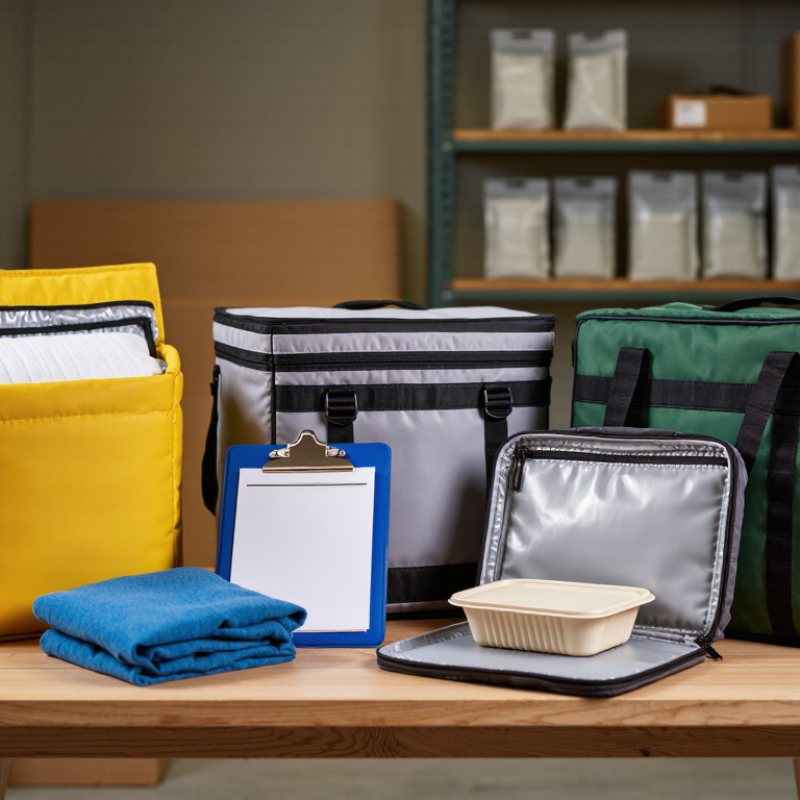
Insulated courier bags add foam or reflective lining to slow temperature changes during short trips. They work well for chilled groceries, prepared meals, and other temperature-sensitive deliveries. But insulation does not actively cool or heat a product. Pre-chilled contents, suitable packing, and shorter routes still matter. A bag can feel thick and protective, yet perform poorly if its zipper leaks warm air or its lining is damaged.

There is a trade-off. Extra insulation can add weight and make a bag harder to fold or clean. Reusable models also need enough drying time between trips; trapped moisture may cause odors. A useful choice depends on delivery distance, load size, cleaning routines, and the temperatures products require. Measure the largest typical order before buying. Small details matter. A bag that fits neatly on a courier’s bike or cart may be more useful than one with impressive insulation but awkward proportions.