Top Vehicle Power Inverter Features You Should Know?
In the world of mobile power solutions, understanding the features of a vehicle power inverter is crucial. Expert and engineer Sarah Johnson emphasizes, "A reliable vehicle power inverter transforms your travel experience." This statement highlights the significance of choosing the right inverter for your journey.
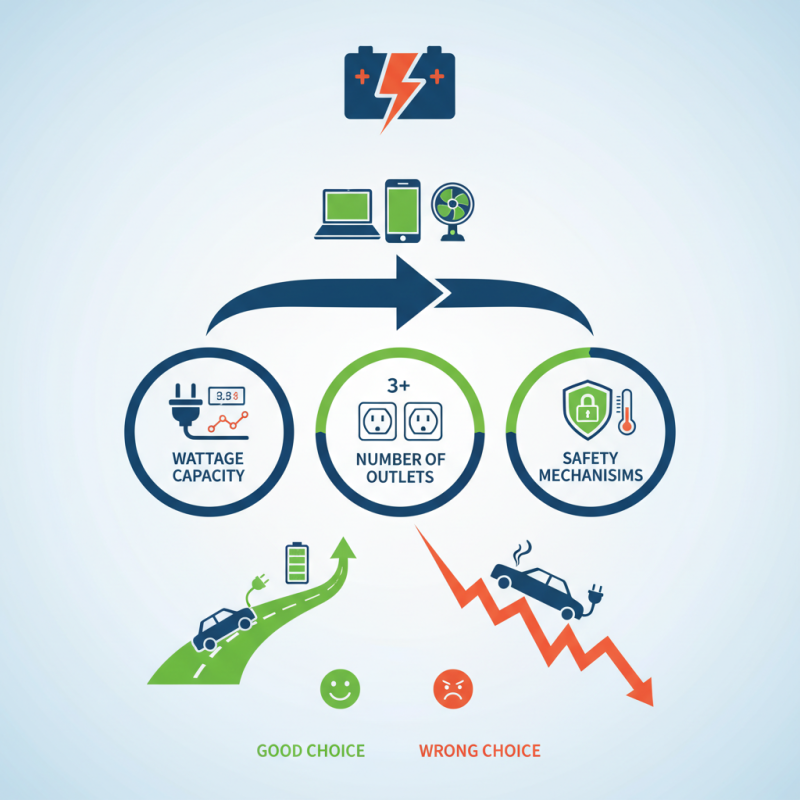
Vehicle power inverters allow you to charge multiple devices while on the road, providing convenience for travelers. They convert DC power from your vehicle's battery into AC power for household electronics. Look for features like wattage capacity, number of outlets, and safety mechanisms. Each detail matters when selecting the right model.
However, not all inverters are created equal. Some may overheat or lack the power needed for demanding devices. Reflecting on this, it's important to research and compare options. Remember, the right vehicle power inverter can enhance your adventures, but the wrong choice can lead to frustration and inconvenience. Choose wisely.
Essential Functions of Vehicle Power Inverters for Daily Use
When choosing a vehicle power inverter, understanding its essential functions is key. These devices convert DC power from your car battery into AC power. This allows you to charge your devices, run small appliances, and even power tools while on the road. The ability to adapt power output is critical, as different devices require various wattages.
Many inverters come with built-in protections. These safeguards help prevent overloading and short circuits. However, not all models are created equal. It's important to check features, like automatic shut-off, which can prevent battery drainage. Lack of this feature can lead to frustrating situations. Imagine being stranded with a dead battery because of an overlooked inverter.
Another detail to consider is portability. Some inverters are bulky and heavy, making them less convenient. Lightweight options fit easily in a backpack but may not offer the same power output. Balancing size and power is a common dilemma. A good inverter should be easy to use and store, but don't compromise on functionality for convenience.
Key Specifications to Consider When Choosing a Power Inverter
When choosing a vehicle power inverter, several key specifications stand out. Wattage is crucial. Determine how much power your devices require. A higher wattage rating often means more devices can be powered simultaneously. Check the continuous and peak wattage ratings. Continuous wattage indicates what the inverter can handle long-term. Peak wattage shows the limit for short bursts of energy, necessary for devices like drills or compressors.
Next, consider the input and output options. Different inverters offer various types of outlets—USB, AC, and DC. Your needs will dictate which types are essential. Safety features are another significant aspect. Look for over-voltage, short-circuit protection, and thermal shutdown capabilities. These enhancements can prevent damage to both the inverter and connected devices.
Size and weight matter too. A compact inverter is easy to store, yet it should not compromise on functionality. Noise level is often overlooked. A noisy inverter can be distracting while driving. Sometimes, finding the right balance can be challenging, especially when comparing features against price. The world of power inverters is complex, and reflective consideration will lead to better choices.
Different Types of Vehicle Power Inverters and Their Applications
Vehicle power inverters come in various types, each with unique applications. The two main categories are modified sine wave inverters and pure sine wave inverters. Modified sine wave inverters are cost-effective and often used for simple devices. They generate a basic waveform, suitable for most electronics. However, they may not power sensitive equipment effectively.
Pure sine wave inverters provide a cleaner and more stable power output. They resemble the electricity supplied by utility companies. This makes them ideal for delicate electronics, medical devices, and high-end appliances. Industry reports indicate that pure sine wave inverters are about 20% more efficient than modified versions. Yet, they come at a higher price point, leading many to reconsider their needs.
A third type worth mentioning is the inverter charger. These units combine an inverter and a battery charger in one device. They are especially helpful for RVs and boats, where power needs vary. A study found that 30% of RV owners prefer inverter chargers for their convenience. However, these can be complex to install and require more maintenance. Every type has pros and cons, and users must carefully assess their specific power needs and limitations.
Top Vehicle Power Inverter Features You Should Know
| Inverter Type | Power Output | Waveform | Applications | Portability |
| Modified Sine Wave | 500W - 3000W | Modified Sine Wave | Small electronics, lights | Portable |
| Pure Sine Wave | 1000W - 5000W | Pure Sine Wave | Sensitive electronics, medical devices | Less Portable |
| Inverter Charger | 300W - 6000W | Modified or Pure Sine Wave | Home appliances, backup power | Stationary |
| DC to AC Inverter | 150W - 1500W | Modified Sine Wave | Camping, outdoor activities | Highly Portable |
Safety Features to Look for in Vehicle Power Inverters
When choosing a vehicle power inverter, safety features are paramount. A report from the Consumer Electronics Association indicates that nearly 30% of users experience issues related to overheating. A good inverter should have built-in thermal protection to prevent this. Overheating can lead to failure or even fire hazards in the vehicle.
Short circuit protection is another essential feature. Data shows that power surges are common when using multiple devices. This can damage not only the inverter but also the connected equipment. Inverters equipped with short circuit protection can quickly shut down to prevent this risk, ensuring safer usage during road trips.
Moreover, look for devices with overload protection. Research indicates that up to 20% of inverters tested failed to handle overload situations properly. An effective inverter should automatically disconnect when the power load exceeds its limit. This prevents potential damage and provides peace of mind while power-hungry gadgets are in use. Protecting your vehicle and devices is a priority, and these features can significantly enhance safety.
Maintenance Tips for Longevity of Your Power Inverter
Maintaining a power inverter is crucial for its longevity. Regular checks can prevent unexpected failures. According to industry reports, nearly 30% of inverter issues arise from inadequate maintenance. Keeping the device clean and free from dust can enhance performance. Dust buildup can lead to overheating and efficiency loss.
Battery care is essential. Many studies show that deep-cycle batteries lag in performance when neglected. Regularly inspecting battery connections ensures a solid connection. Corrosion can develop, reducing efficiency. Use a mixture of baking soda and water to clean terminal connections.
Cooling is another key factor. Inverters often run hot, and maintaining proper ventilation can prolong their life. Ensure that your inverter is located in a well-ventilated space. Overheating can lower functionality, impacting efficiency. Review your inverter load routinely. If it's consistently overloaded, consider upgrading. Always be proactive; neglecting these simple tasks can lead to costly repairs.