SunVena Solar Blog

Residential Solar News, Insights & Resources

Top Off Grid Solar Inverters for Global Buyers

Choosing an off grid solar inverter is not simply a matter of comparing wattage and price. It is a decision about reliability, safety, battery life, and daily comfort. In a remote cabin, a weak inverter can stop refrigeration, water pumping, or medical equipment without warning. The problem becomes serious quickly.

Günther Cramer, the late founder of SMA Solar Technology, described the inverter as “the heart of every solar system.” His observation remains useful for global buyers. An inverter controls how solar panels, batteries, generators, and household loads work together. The best model should match local voltage, frequency, climate, battery chemistry, and expected peak demand.

Real conditions matter.

A 3,000-watt inverter may run a laptop and lights easily. It may struggle when a refrigerator starts beside a water pump. Hot rooms, dust, long cable runs, and poor ventilation can also reduce performance. Buyers should check continuous power, surge capacity, idle consumption, waveform quality, protection ratings, monitoring functions, and warranty support.

This guide compares leading off grid solar inverter options for different regions and use cases. It considers technical specifications, field practicality, installation demands, and after-sales reliability. Some rankings remain imperfect because product performance changes with batteries, weather, and maintenance. A highly rated inverter is not automatically the right choice.

That deserves reflection.

The safest decision comes from calculating actual loads, confirming local electrical requirements, and choosing support that remains available after installation. Fancy features help, but dependable power matters more.
Top Off Grid Solar Inverters for Global Buyers

Off-Grid Inverter Basics: DC–AC Conversion, MPPT, and 90–98% Efficiency

Top Off Grid Solar Inverters for Global Buyers

Off-Grid Inverter Basics: DC–AC Conversion, MPPT, and 90–98% Efficiency

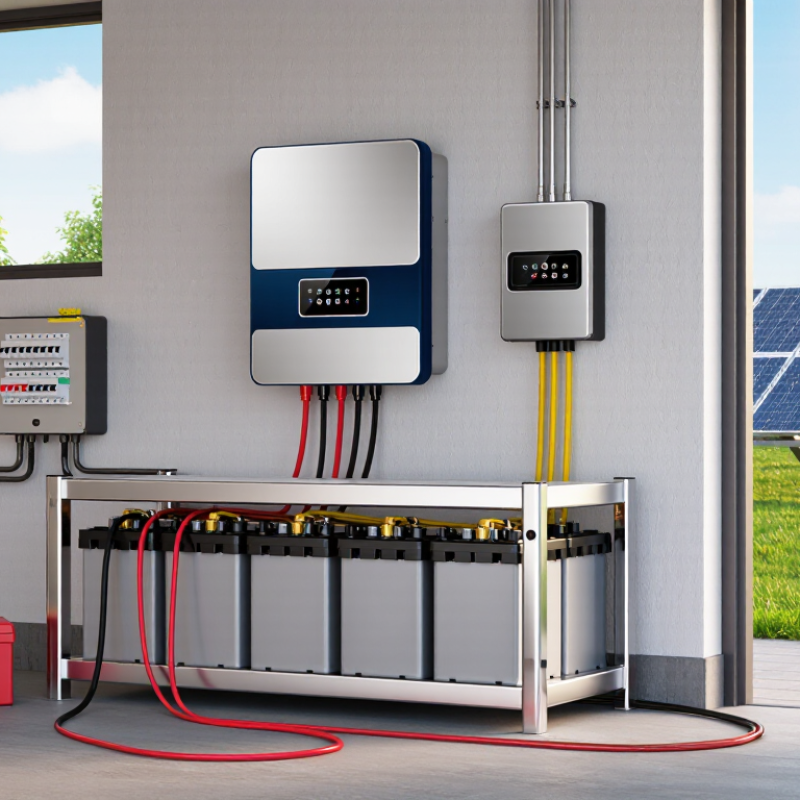
An off-grid inverter turns battery power into the alternating current used by household appliances. Solar panels produce direct current, which may charge a battery before the inverter supplies power to lights, a refrigerator, or a water pump. Check the inverter’s continuous and surge ratings against real appliance loads. A motor can briefly demand much more power when starting.

MPPT, or maximum power point tracking, adjusts the electrical load on solar panels to capture available energy as sunlight and panel temperature change. This matters on a cool, bright morning, when panel output can differ from its output at midday. MPPT cannot create extra energy. Shade, dirty panels, undersized wiring, and poor orientation still reduce harvest. Small details count.

Published conversion efficiency commonly falls around 90–98%, but the figure depends on operating conditions and measurement methods. Efficiency is usually highest near the inverter’s preferred load range; very light or heavy loads can increase losses. Heat also matters. Leave clear space around the unit, follow its ventilation requirements, and compare efficiency data at relevant loads rather than relying on one headline number. I would treat any single percentage as a useful reference, not a promise of everyday performance. A carefully sized system still needs room for cloudy days and unexpected demand.

Top Off Grid Solar Inverters for Global Buyers - Off-Grid Inverter Basics: DC–AC Conversion, MPPT, and 90–98% Efficiency

Representative off-grid inverter classes and typical technical ranges for global system planning
Inverter Class Typical Continuous Output Battery Voltage Common AC Output Typical Peak Efficiency MPPT Voltage Range Typical PV Input Limit Recommended Applications
Compact DC–AC Inverter 300–1,000 W 12 V or 24 V DC 120 V or 230 V AC, single phase 90–94% Usually external or integrated PWM/MPPT controller; approximately 18–100 V DC when MPPT is included 0.5–1.5 kW Lighting, communications equipment, small appliances and emergency loads
Small Residential Off-Grid Inverter 1–3 kW 24 V or 48 V DC 120 V or 230 V AC, single phase 92–96% 60–145 V DC 1.5–4 kW Cabins, small homes, backup circuits and remote workspaces
Mid-Size Hybrid Off-Grid Inverter 3–6 kW 48 V DC 120 V, 230 V or split-phase AC 94–97% 90–450 V DC 4–8 kW Full-time residential systems, refrigeration, pumps and office loads
High-Capacity Residential Inverter 6–12 kW 48 V DC 120/240 V split-phase or 230 V single phase 95–98% 120–500 V DC 8–16 kW Large homes, well pumps, workshop tools and higher startup loads
Modular Parallel Inverter System 10–30+ kW 48 V or higher DC battery banks Single-phase or three-phase AC 94–98% 150–600 V DC, depending on system design 15–40+ kW Microgrids, farms, lodges, clinics and light commercial facilities
Technical notes: DC–AC conversion changes the battery’s direct current into stable alternating current for household or commercial loads. MPPT continuously adjusts the PV operating voltage and current to harvest available solar power efficiently. Peak efficiency is measured under favorable operating conditions; real-world system efficiency is lower because of battery charging, standby consumption, wiring losses, temperature and partial-load operation. Verify local voltage, frequency, grid-code requirements, battery compatibility, surge capacity and protection standards before purchase.

Sizing by Load: Peak Surge, Daily Energy, and 48 V Battery Systems

Sizing an off-grid inverter begins with the loads, not the largest number on a product label. List appliances that may run at the same time, then check both their running watts and startup surge. A refrigerator compressor or well pump can briefly draw several times its normal power. That short spike matters. Choose an inverter whose surge rating covers the combined starting loads, while its continuous rating handles everyday use.

Daily energy is a separate calculation. Multiply each appliance’s watts by its hours of use, then add the results in kilowatt-hours. A 200-watt appliance running for five hours uses about 1 kWh. Include inverter losses and standby consumption; they are easy to overlook. A 48 V battery system can reduce current compared with a lower-voltage system, but the inverter, battery, and cables must all be compatible. For example, 3 kW at 48 V means roughly 63 amps before losses. Small details matter.

Consider a cabin using 5 kWh per day, with a pump that starts while other loads are running. Check the pump’s surge, the battery’s usable capacity, and how many days of backup are needed. Leave room for hot conditions, cable voltage drop, and changing habits. This estimate is still rough; real use rarely follows the worksheet. A few days of load measurements can reveal where the guess was wrong.

Compare Inverter Types: Pure Sine Wave, Hybrid, and 3–10 kW Models

Pure sine wave inverters produce smooth AC power for refrigerators, pumps, laptops, and other sensitive equipment. Their output resembles household electricity, helping motors run more quietly than with modified sine wave designs. Check continuous and surge ratings: a pump may briefly draw far more power at startup. A 3 kW model can suit a small cabin, but simultaneous cooking and water heating may exceed its capacity. Sizing is rarely elegant. Daily loads, peak demand, and battery voltage all matter.

Hybrid inverters combine solar charging, battery management, and often grid or generator input. Their extra controls can simplify a system, though compatibility deserves careful checking. Confirm supported battery chemistry, charging limits, and whether backup output operates during an outage. In the 3–10 kW range, a 5 kW unit may serve a modest home, while larger loads can justify 8 or 10 kW. Bigger is not automatically better; idle consumption and battery capability can become costly constraints. Review the specification sheet, not just the headline rating. I still find surge figures easy to overlook. A shaded roof, cold mornings, or an undersized cable can also reduce real-world performance.

Global Compliance: IEC 62109, UL 1741, CE, and IP65 Protection

For global buyers, compliance is more than a logo on an inverter case. IEC 62109 addresses safety requirements for power converters used in photovoltaic systems. Check that the tested model and its documentation match the unit being purchased. Small differences in hardware can matter.

UL 1741 is relevant in North American markets, but its requirements and applicability depend on the product and intended installation. An off-grid inverter may not need every grid-interconnection function, so confirm the exact listing and local requirements with a qualified installer.

CE marking indicates a manufacturer’s declaration of conformity with applicable European requirements; it is not a universal quality guarantee. Read the declaration and supporting technical documents.

Then inspect the enclosure rating. IP65 means protection against dust ingress and water jets under specified test conditions. It does not mean the inverter can be submerged. That distinction is easy to overlook. A unit mounted outdoors still needs careful placement, secure cable glands, and protection from standing water. Ask for test reports tied to the model number, not just a general certificate. Paperwork can look convincing, and sometimes it is incomplete. Check dates, scope, and issuing details before comparing products.

Evaluate Total Value: Warranty, Idle Draw, Lithium Compatibility, and LCOE

For global buyers, an off-grid inverter should be judged by lifetime value, not its purchase price. A five-year warranty may look acceptable, but exclusions, labor coverage, and replacement shipping can change the real cost. Check whether the warranty covers continuous off-grid operation. Some documents are vague. That deserves skepticism.

Idle draw quietly reduces usable energy every night. A 50-watt standby load consumes about 1.2 kWh daily, before powering any appliance. In a small solar system, that loss can force extra panels and battery capacity. Measure the inverter’s draw in search mode, standby mode, and full operation. Datasheet figures may not match field conditions. Cold weather can also increase battery losses.

Lithium compatibility requires more than a lithium charging preset. Confirm voltage limits, maximum charging current, low-temperature protection, and communication with the battery management system. A mismatched setting can shorten battery life or trigger unexpected shutdowns. NREL’s 2024 Annual Technology Baseline shows storage economics remain highly sensitive to system size and operating assumptions. Therefore, calculate levelized cost of energy, or LCOE, using replacement parts and idle consumption. Lazard’s 2024 LCOE report places utility-scale solar near $29–$92 per megawatt-hour, but off-grid systems usually cost more because they include storage and backup capacity. The comparison is imperfect. That is important.