SunVena Solar Blog

Residential Solar News, Insights & Resources

China Top External Meter Box Manufacturers for Global Buyers

“Science is about knowing; engineering is about doing,” wrote engineering author Henry Petroski. His observation offers a useful lens for evaluating an External Meter Box: specifications matter, but performance depends on how the enclosure works in real conditions.

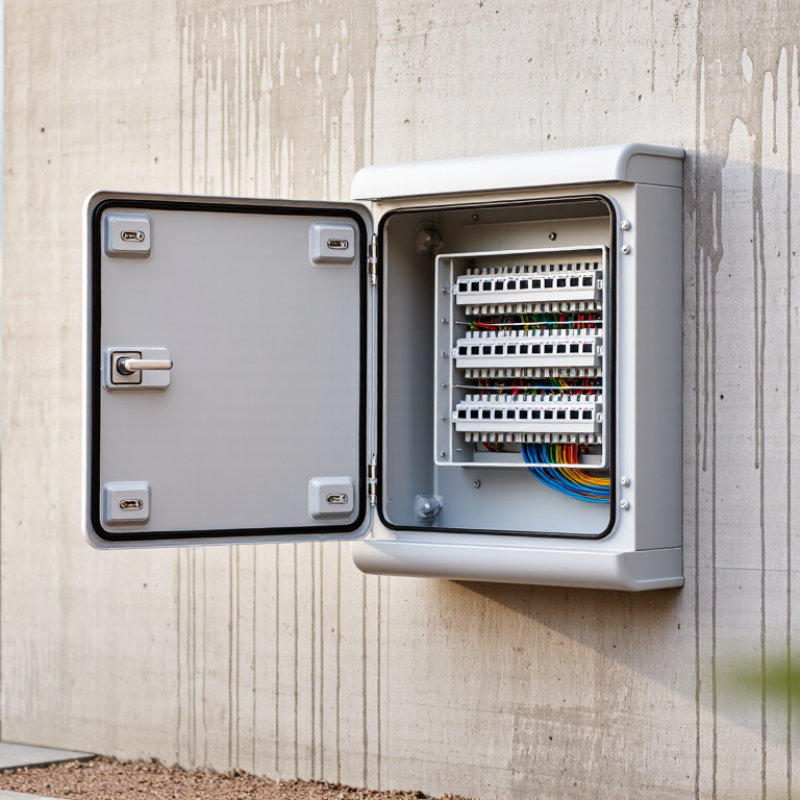
A meter box sits where utility connections meet weather, people, and routine maintenance. Picture a sun-warmed cabinet on an exterior wall, exposed to rain, dust, and repeated opening. Its material, sealing, mounting arrangement, and internal space can affect durability and service access. Small details matter. A stiff door or crowded wiring area can complicate inspection. Poorly matched dimensions may create avoidable installation challenges.

Global buyers also face a varied supplier landscape. Manufacturers differ in product ranges, customization options, documented test data, production capacity, and export support. Claims should be checked against current datasheets, samples, and the requirements of the intended project. This overview examines China-based External Meter Box manufacturers through practical comparison points, including enclosure design, material choices, quality documentation, and communication with overseas customers. It does not treat a broad catalog or low quoted price as proof of suitability. Buyers should confirm specifications with the manufacturer and relevant project professionals before placing an order. Details can change. That part deserves careful attention. The guide is intended to help readers ask sharper questions and build a shortlist, not to promise that one supplier fits every application.
China Top External Meter Box Manufacturers for Global Buyers

External Meter Boxes: Purpose, Installation Types, and Common Enclosure Materials

China Top External Meter Box Manufacturers for Global Buyers

An external meter box shields the meter, terminals, and service connections from rain, dust, impact, and accidental contact. It also keeps readings accessible for inspection. The IEA’s Electricity 2024 report estimated global electricity demand would grow by about 4% in 2024, increasing the need for dependable metering infrastructure. A box is a small component, but poor drainage or a cramped interior can complicate maintenance.

Installation depends on the site. Wall-mounted enclosures suit building facades, while pole-mounted types serve outdoor service points. Recessed boxes sit flush with a wall; pedestal models work where no suitable wall exists. Common materials include UV-stabilized polycarbonate, glass-reinforced polyester, and coated or stainless steel. Plastic resists corrosion and weighs less; metal can offer greater impact resistance, but coatings and seals need attention. No material is automatically best. Exposure, heat, vandalism risk, meter dimensions, and required ingress protection all matter.

Tips: Check the enclosure’s IP rating against the actual weather exposure, not just the product description. Leave room for cable bends and safe meter access. A detail that is easy to overlook: even a sturdy box can collect condensation if ventilation and sealing are poorly balanced.

IEC 60529 IP Ratings: IP54 Splash Protection and IP65 Water-Jet Protection

An external meter box must handle more than rain on a calm day. Wind can drive water toward seams, while dust collects around cable entries and door edges. Under IEC 60529, IP54 indicates dust protection against harmful deposits and protection from water splashes from any direction. It is not a water-jet rating. For exposed sites, IP65 offers dust-tight protection and resistance to water jets. Neither rating means the enclosure can be immersed. Not the same thing.

Tips: Check the rating of the complete, assembled box, not just its empty shell. Confirm that cable glands, seals, and covers are fitted as specified. A missing plug can weaken protection.

In field installations, small details matter. A door that does not close evenly or a poorly seated gasket can undermine the expected protection. IP54 may suit sheltered locations with occasional splashes; IP65 is generally more appropriate where cleaning jets or stronger water exposure are expected. Conditions vary, though, and choosing a higher rating alone cannot fix incorrect installation. Verify the product’s test documentation and inspect seals during maintenance. A rating helps set expectations, but it is not a substitute for careful fitting.

IEC 62262 Impact Ratings: IK08 Withstands 5 J; IK10 Withstands 20 J

For external meter boxes, impact resistance is more than a catalog number. Under IEC 62262, IK08 represents resistance to a 5-joule impact, while IK10 represents 20 joules. That is four times the test energy. It can matter where boxes face tool knocks, moving equipment, or accidental blows near a service entrance. Real sites are less tidy than test labs.

The rating should guide selection, not promise an indestructible enclosure. Impact results depend on the tested assembly, including its door, hinges, latch, viewing window, and mounting method. A strong body paired with a weak latch may still be a poor choice. Ask suppliers for test evidence matching the offered configuration, not just a rating printed in a brochure. That distinction is easy to miss.

For global buyers, compare the IK rating with installation conditions and maintenance needs. A sheltered location may not need the same impact level as a busy loading area. IK10 provides a higher impact threshold, but it does not measure water ingress, UV ageing, or corrosion. Check those separately. One detail deserves a second look: buyers may compare ratings and overlook how the enclosure is fixed to the wall.

China Top External Meter Box Manufacturers for Global Buyers - IEC 62262 Impact Ratings: IK08 Withstands 5 J; IK10 Withstands 20 J

Evaluation Dimension Relevant Data or Standard Fact What Global Buyers Should Verify
IK08 impact rating Under IEC 62262, IK08 corresponds to an impact energy of 5 J. Request test evidence for the exact enclosure configuration being offered, including its door, viewing window, hinges, and fastening method.
IK10 impact rating Under IEC 62262, IK10 corresponds to an impact energy of 20 J. Confirm that the rating applies to the complete assembled product, rather than only to a material sample or a separate enclosure component.
Meaning of the IK code IEC 62262 classifies the degree of protection provided by an enclosure against external mechanical impacts. The IK code is not an IP water- or dust-ingress rating. Check impact protection and ingress protection as separate requirements in the product specification.
Ingress protection IEC 60529 defines IP ratings for protection against access to hazardous parts and ingress of solid objects and water. Specify the required IP code for the installation environment and ask for evidence applicable to the assembled meter box.
Polycarbonate enclosure Polycarbonate is a thermoplastic commonly used for electrical enclosures; impact performance depends on the resin grade, design, thickness, and test configuration. Request the material specification and product-level impact-test documentation; do not infer an IK rating from the material name alone.
Glass-fibre-reinforced polyester enclosure Glass-fibre-reinforced polyester is a commonly used thermoset material for electrical enclosures. Performance varies with formulation and construction. Check the declared material, enclosure design, environmental suitability, and test results for the complete product.
Metal enclosure Sheet steel and stainless steel are commonly used enclosure materials. Corrosion resistance and mechanical performance depend on the grade, coating, thickness, and design. Confirm the specified metal grade and finish, and verify the complete enclosure’s impact rating and suitability for the installation location.
Outdoor installation Outdoor suitability is not established by an IK rating alone; ingress protection, material, seals, and installation conditions also matter. State the exposure conditions, mounting orientation, cable-entry arrangement, and required ingress protection when requesting quotations.
Configuration and accessories Windows, doors, locks, hinges, gaskets, and cable entries can affect the performance of an assembled enclosure. Match the tested configuration to the quoted model and list any options or accessories that differ from the tested unit.
Documentation for international purchasing A declared rating should be supported by documentation identifying the applicable standard, product model, and tested configuration. Request a datasheet, drawing, material details, and relevant test report; confirm that the documents correspond to the product being supplied.

How to Evaluate Chinese Manufacturers: Materials, Testing, and Traceability

For global buyers, a meter box’s material specification matters more than a polished sample. Ask whether the enclosure uses UV-stabilized engineering plastic or coated metal, and request the exact grade, thickness, and supplier batch record. A sunlit sample can look sound while hiding weak hinges or brittle edges. Check documented resistance to impact, heat, moisture, and corrosion under conditions relevant to the installation site. IEC 62208 and IEC 60529 can help define enclosure and ingress-protection test requirements; ask for reports identifying the tested model, laboratory, method, and result. A certificate alone is not enough.

Testing should connect to production. Request inspection records for dimensions, door fit, sealing, and any specified ingress-protection tests, then compare them with a production unit—not only a golden sample. Traceability should link each box to material lots, assembly dates, inspection results, and corrective actions. ISO’s 2022 Survey reported over 1.2 million valid ISO 9001 certificates worldwide, but certification does not prove a particular meter box passed a particular test. That distinction is easy to miss. Review a sample batch record, confirm report numbers with the issuing laboratory where possible, and ask how failed units are contained. Some records may be incomplete; that is worth discussing before an order, not after shipment.

Global Sourcing Checks: Local Codes, Climate Suitability, and Factory Audits

Global buyers of external meter boxes should check local utility specifications before comparing factory quotations. Confirm dimensions, cable entries, sealing requirements, material rules, and access arrangements. IEC 60529 defines IP ratings for enclosure protection, but the required rating depends on the installation site. Treat it as a project requirement, not a catalog shortcut.

Climate suitability needs evidence. The WMO’s State of the Global Climate 2023 estimated global mean near-surface temperature at 1.45 ± 0.12°C above the 1850–1900 average. That global figure cannot replace local exposure data. Ask for test records covering UV aging, corrosion, temperature cycling, and impact resistance. During factory audits, inspect incoming-material checks, molding or welding controls, dimensional inspection, calibration records, and corrective-action logs. Showroom photos prove little. A high IP rating alone does not guarantee long-term outdoor performance; that assumption deserves another look.

Tips Request samples from the production line, not specially prepared units. Compare serial labels, gasket fit, hinge movement, and cable-entry seals against the approved drawings. Record gaps for follow-up.