SunVena Solar Blog
Residential Solar News, Insights & Resources
What Are the Top Electromagnetic Device Types in 2026?
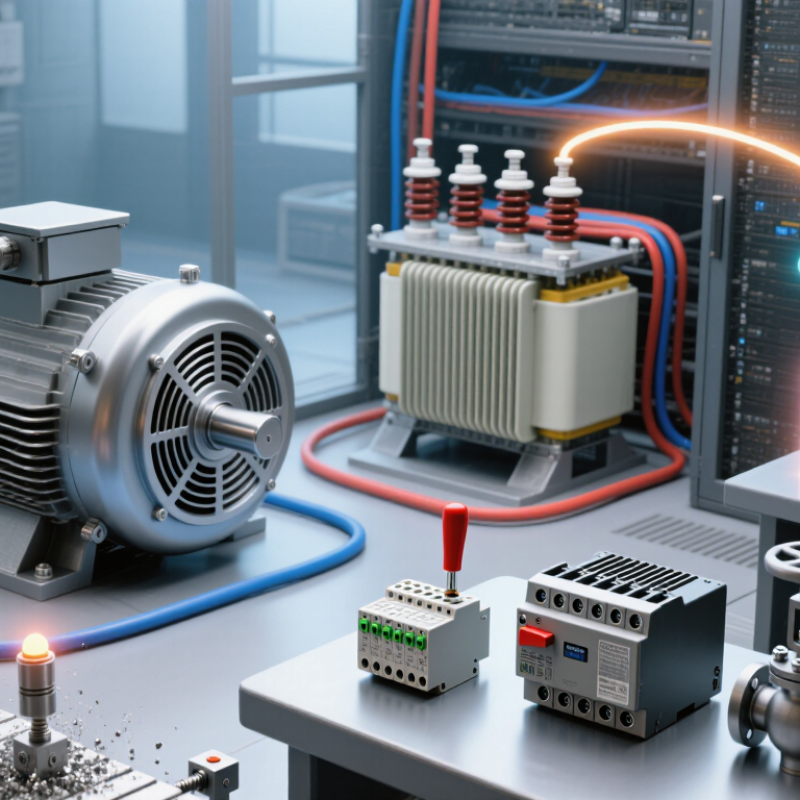
Electromagnetic Device technologies will remain central to automation, energy systems, transport, and connected equipment in 2026. This overview examines the leading types by practical value, adoption, efficiency, and reliability. Electric motors convert electrical energy into motion, from compact robotics actuators to industrial pumps. Transformers support safer voltage conversion across renewable energy networks and data centers. Relays and contactors provide controlled switching in machines, vehicles, and building systems. Solenoids create short, precise linear movement in valves, locks, and dispensing equipment.
Inductive sensors detect metal objects without physical contact. They are useful on dusty production lines where optical sensors may struggle. Wireless power components are also gaining attention in medical, consumer, and industrial applications. Their performance depends on alignment, distance, heat management, and electromagnetic compatibility. Engineers should compare rated power, duty cycle, insulation, response time, noise, and maintenance requirements. Field testing matters more than attractive catalog figures. A motor may appear efficient, yet poor ventilation can shorten its service life. A transformer may meet its rating, yet harmonic loads can increase heat unexpectedly. These details shape real purchasing decisions. Standards, verified test data, supplier traceability, and qualified installation should guide every comparison. The ranking is not absolute. A factory may value rugged relays, while a laboratory prioritizes low-noise actuators. Some 2026 trends remain difficult to measure because market forecasts change quickly. That uncertainty deserves attention. This guide combines established engineering principles with practical observations, while recognizing that every application requires its own safety review and performance testing.
Defining Electromagnetic Devices and Their Main Functions
What Are the Top Electromagnetic Device Types in 2026?
Electromagnetic devices use electric current and magnetic fields to transfer energy, create motion, or control circuits. Their main functions are conversion, switching, sensing, and force generation. The boundary is practical. A transformer changes voltage without mechanical movement. Motors convert electrical energy into rotation, while generators perform the reverse process. Inductors store energy briefly and reduce current changes. Relays and contactors use magnetic force to open or close circuits. Solenoids provide short linear movement in valves, locks, and industrial mechanisms.
These categories remain important as electricity demand expands. The International Energy Agency’s Electricity 2024 report projects global electricity demand to grow by about 4% annually through 2026. The U.S. Department of Energy’s 2021 Motor Systems Market Assessment estimates motor-driven systems consume roughly 46% of U.S. manufacturing electricity. That figure explains why motor efficiency, thermal control, and correct sizing receive serious engineering attention. In practice, technicians also inspect vibration, coil temperature, insulation condition, and unusual acoustic hum.
Electromagnetic sensors add another layer by detecting position, speed, current, or magnetic fields. Current transformers support measurement and protection without directly carrying the full system load. Standards such as IEC 60076 for power transformers and IEC 60947 for low-voltage switchgear guide testing and safety expectations. Yet classification is not always neat. One actuator may combine a solenoid, sensor, relay, and controller. This overlap can complicate maintenance records, and technical labels sometimes hide the actual function.
What Are the Top Electromagnetic Device Types in 2026? - Defining Electromagnetic Devices and Their Main Functions
| Device Type | Definition and Operating Principle | Main Function | Typical Operating Range | Common Applications | Key Strength | Important Limitation |
|---|---|---|---|---|---|---|
| Electric Motors | Convert electrical energy into mechanical motion through the interaction of magnetic fields in the stator and rotor. | Provide rotary or linear mechanical power. | Direct current or alternating current; from low-voltage systems to industrial medium-voltage systems. | Pumps, fans, compressors, machine tools, robotics, transport systems, and household appliances. | High efficiency, reliable continuous operation, and scalable power output. | Heat, vibration, and efficiency losses increase when the motor is overloaded or poorly controlled. |
| Generators and Alternators | Convert mechanical energy into electrical energy by electromagnetic induction as a conductor moves through a magnetic field. | Produce electrical power for local, backup, or grid-connected systems. | Commonly 50 or 60 Hz for power generation; output voltage and power vary by design. | Power stations, wind turbines, hydroelectric systems, emergency power, and vehicle charging systems. | Can supply substantial electrical power from mechanical input. | Requires a mechanical prime mover, regular maintenance, and effective voltage and frequency control. |
| Transformers | Use mutual induction between magnetically coupled windings to transfer alternating-current energy at a different voltage level. | Step voltage up or down while providing electrical isolation when required. | Usually power-frequency operation at 50 or 60 Hz; specialized versions operate at higher frequencies. | Power transmission, distribution networks, chargers, industrial control panels, and electronic power supplies. | Efficient voltage conversion with no mechanical moving parts. | Conventional transformers require alternating current and can be heavy at low frequencies. |
| Electromagnetic Relays | An energized coil creates a magnetic field that moves an armature to open or close electrical contacts. | Switch, isolate, or control one circuit using another circuit. | Control coils may use direct or alternating current; contact ratings range from signal levels to high-power loads. | Industrial automation, safety circuits, automotive systems, building controls, and protection equipment. | Provides galvanic isolation and can control loads with different voltage levels. | Mechanical contacts wear over time and switch more slowly than solid-state devices. |
| Solenoids and Electromagnetic Actuators | A current-carrying coil generates a magnetic field that pulls or pushes a ferromagnetic plunger or armature. | Convert electrical signals into short-stroke linear movement or mechanical force. | Typically low-voltage direct current or alternating current, depending on the actuator design. | Valves, locks, vending mechanisms, brake systems, printers, and automated machinery. | Simple construction, fast response, and straightforward electrical control. | Stroke length is limited, and continuous energization can cause coil heating. |
| Electromagnetic Brakes and Clutches | Magnetic force engages friction surfaces or locks a rotating assembly when a coil is energized or de-energized. | Start, stop, hold, or transmit torque between mechanical components. | Low-voltage control circuits with torque and speed ratings selected for the machinery. | Elevators, conveyors, machine tools, packaging equipment, cranes, and motion-control systems. | Rapid, remotely controlled torque management without a complex mechanical linkage. | Friction materials generate heat and wear, particularly during frequent braking or slipping. |
| Inductors and Chokes | Store energy in a magnetic field and oppose changes in current through electromagnetic induction. | Filter electrical noise, smooth current, store energy, and limit rapid current changes. | From power-line frequencies to radio-frequency circuits, depending on construction and core material. | Switch-mode power supplies, filters, motor drives, audio equipment, and radio-frequency circuits. | Improves power quality and enables compact energy-storage and filtering functions. | Core saturation, winding resistance, and electromagnetic interference can reduce performance. |
| Electromagnets and Lifting Magnets | Create a controllable magnetic field by passing current through a coil, often around a ferromagnetic core. | Attract, hold, move, separate, or position ferromagnetic materials. | Direct or alternating current systems; magnetic force depends on current, geometry, and air gap. | Material handling, magnetic separation, laboratory equipment, locks, relays, and lifting systems. | Magnetic force can be switched, adjusted, and automated electrically. | Holding force decreases with greater air gaps, and loss of power may release the load unless a fail-safe design is used. |
| Electromagnetic Sensors | Detect changes in magnetic fields, inductance, current, position, speed, or nearby conductive materials. | Measure physical conditions and convert them into electrical signals for monitoring or control. | From static magnetic-field measurement to high-frequency proximity and current-sensing applications. | Position detection, speed measurement, current monitoring, industrial automation, vehicles, and medical equipment. | Non-contact measurement is possible, reducing mechanical wear. | Accuracy can be affected by temperature, electromagnetic interference, installation geometry, and nearby magnetic materials. |
| Wireless Power Transfer Devices | Transfer electrical energy across an air gap using magnetic induction or resonant magnetic coupling between coils. | Supply power without a direct electrical connector. | Typically operates at frequencies above the utility power frequency; the exact frequency depends on the application and regulatory requirements. | Device charging, sealed industrial equipment, medical implants, electric transportation, and automated charging systems. | Reduces connector wear and can support sealed or moving products. | Efficiency and power transfer decrease with misalignment, increased distance, and unsuitable surrounding materials. |
Note: Operating ranges are representative engineering categories rather than fixed limits; actual specifications depend on the device design, insulation system, core material, load, and applicable safety standards.