SunVena Solar Blog

Residential Solar News, Insights & Resources

What Are the Top 10 5kW Solar Inverter Brands in China?

China’s solar market is vast, but a 5kW inverter is a specific residential product—not a simple proxy for a brand’s overall strength. China’s National Energy Administration reported 216.88 GW of newly installed solar capacity in 2023. Wood Mackenzie’s global inverter rankings also placed Chinese manufacturers Huawei and Sungrow among the leading suppliers by shipments. These figures show scale. They do not prove that every model suits every home.

As IEA Executive Director Fatih Birol put it, “Solar is the new king of electricity markets,” in the agency’s 2020 World Energy Outlook. For buyers, though, the details matter: a unit’s efficiency, MPPT range, hybrid capability, protection rating, warranty, and local service can shape its real value. A 5kW solar inverter should match the array and household load, not just a brand name. Small differences count.

This guide compares ten Chinese brands and focuses on practical selection factors, rather than treating shipment rankings as a direct measure of 5kW model quality. Product specifications can vary by model and market. So can after-sales support. One caveat remains: published industry reports rarely rank brands specifically for 5kW residential inverters. Readers should verify current datasheets and warranty terms before choosing.
What Are the Top 10 5kW Solar Inverter Brands in China?

What a 5 kW Solar Inverter Does in a Photovoltaic System

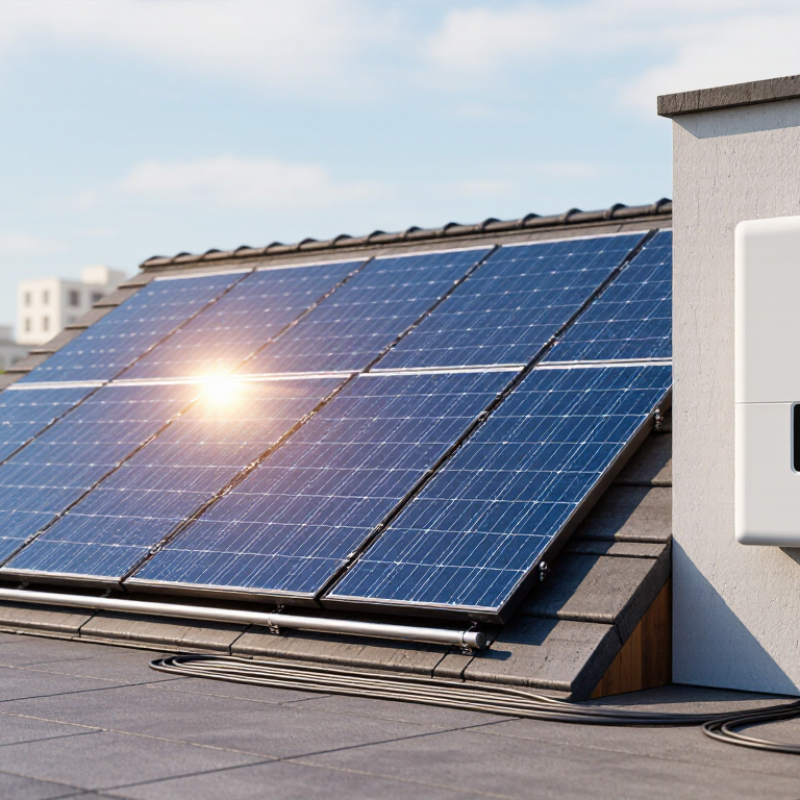
A 5 kW solar inverter converts direct current from rooftop panels into alternating current used by household appliances and the grid. Its output rating describes the maximum AC power it can deliver under suitable conditions—not guaranteed daily production. The inverter also tracks panel voltage to capture changing sunlight. On a clear afternoon, you may see output approach its limit; clouds, heat, shading, and equipment settings can reduce it.

The IEA PVPS report Trends in Photovoltaic Applications 2024 estimates that global solar capacity exceeded 1.6 terawatts by the end of 2023. That scale makes dependable conversion and grid connection increasingly important. NREL’s PVWatts guidance shows why location, panel orientation, and system losses matter when estimating production. A 5 kW inverter may also limit output when panels can produce more DC power. This is called clipping. It can be an intentional design choice, though the trade-off deserves checking against local weather and usage. Real roofs are messier than a model.

Tips: Ask for an hourly production estimate, not just an annual total. Check the inverter’s continuous output, input limits, and monitoring data. Small details matter.

How to Evaluate Chinese 5 kW Solar Inverter Brands

Evaluating Chinese 5 kW solar inverter brands takes more than comparing headline efficiency. Check independently tested efficiency, MPPT voltage range, start-up behavior, and performance under partial shading. A narrow roof with two orientations may need flexible tracker inputs more than a tiny efficiency advantage. IEA PVPS’s 2024 Snapshot reports that global solar installations exceeded 400 GW in 2023, increasing the importance of dependable equipment and clear service support. That market figure is context, not proof that any individual model is reliable.

Ask suppliers for test reports tied to the exact model and firmware. Compare rated output, overload capability, operating temperature, protection ratings, warranty terms, and local repair arrangements. Verify grid-connection requirements for the installation location; they differ by market. Look for evidence from recognized test procedures, such as IEC 62109 safety testing, and check whether the document covers the product being quoted. I would not treat one efficiency number as a verdict. Real roofs are messier, and datasheets rarely show every operating condition.

Tips: Request a sample monitoring screenshot and a written response-time commitment. Confirm replacement-part availability, not just warranty length. A neat spreadsheet helps, but I may still overlook a detail—check the wiring plan with a qualified installer before buying.

Leading Brands: Huawei, Sungrow, Growatt, GoodWe, and Solis

China’s 5 kW solar inverter market includes manufacturers known for grid integration, efficient conversion, and broad service networks. Their products can differ in monitoring tools, backup options, and support for battery storage. Compare the exact model, not just the company’s reputation. Small details matter.

Some established suppliers emphasize smart monitoring, giving installers and homeowners clear readings on daily output and fault alerts. Others offer flexible battery compatibility or compact designs that suit limited wall space. A few are valued for straightforward setup and competitive pricing. These strengths do not guarantee the right fit for every roof. Check local service access and warranty terms.

A 5 kW unit should match the array’s voltage range, phase requirements, and expected peak output. Ask for the model’s full datasheet, then confirm that its startup voltage fits the planned panels. A quiet inverter is pleasant beside a garage wall. So is an accessible service switch. Product rankings can be useful, but they rarely show how installation quality, shading, or hot weather affect real-world performance. I would not choose on price alone; that shortcut can disappoint.

Other Notable Brands: Deye, Sofar, KSTAR, INVT, and Megarevo

Beyond the best-known suppliers, several Chinese manufacturers offer 5 kW inverters for homes and small businesses. Their designs can differ in battery support, monitoring, and backup operation. Check the exact model, not just the company’s broader product range. A 5 kW rating alone does not confirm that an inverter will suit a particular battery or rooftop array.

Look closely at the specification sheet. Confirm the number of MPPT inputs, the usable voltage range, and whether the unit supports your battery chemistry. Ask how quickly backup power switches on, and whether essential circuits need separate wiring. These details become real on a cloudy evening, when a fridge and a few lights are running from stored energy. Warranty terms and access to local technical support matter too. A low price can look appealing. It may not stay appealing if replacement parts take weeks. Independent test data can help, but not every model has equally detailed public results. Even careful comparisons leave some uncertainty; installation quality can change the outcome. Judge each option by documented specifications, service arrangements, and fit with your system—not by reputation alone.

How to Compare Models, Warranties, and After-Sales Support

When comparing 5kW solar inverters from China, match the test conditions before comparing headline efficiency. Check the rated output, peak output, startup voltage, and performance across the temperatures expected at your site. A data sheet may show impressive efficiency, but shade, roof orientation, and battery compatibility can change real-world results. Ask for the same independent test reports for every shortlisted model. Small differences matter.

Warranty terms deserve close reading. Confirm the coverage period, what parts and labor are included, and who pays shipping if a unit fails. Check whether registration or installation by an approved technician is required. A long warranty is less useful if claims involve unclear paperwork or long wait times. Keep the terms in writing.

After-sales support can separate similar models. Ask how quickly technical staff respond, whether troubleshooting is available in your language, and where replacement parts are stocked. Request a sample fault-code guide or support procedure; a vague promise is hard to evaluate. One imperfect detail: published service targets may not match busy-season reality. Ask for recent response-time examples, and verify them with local installers before choosing.