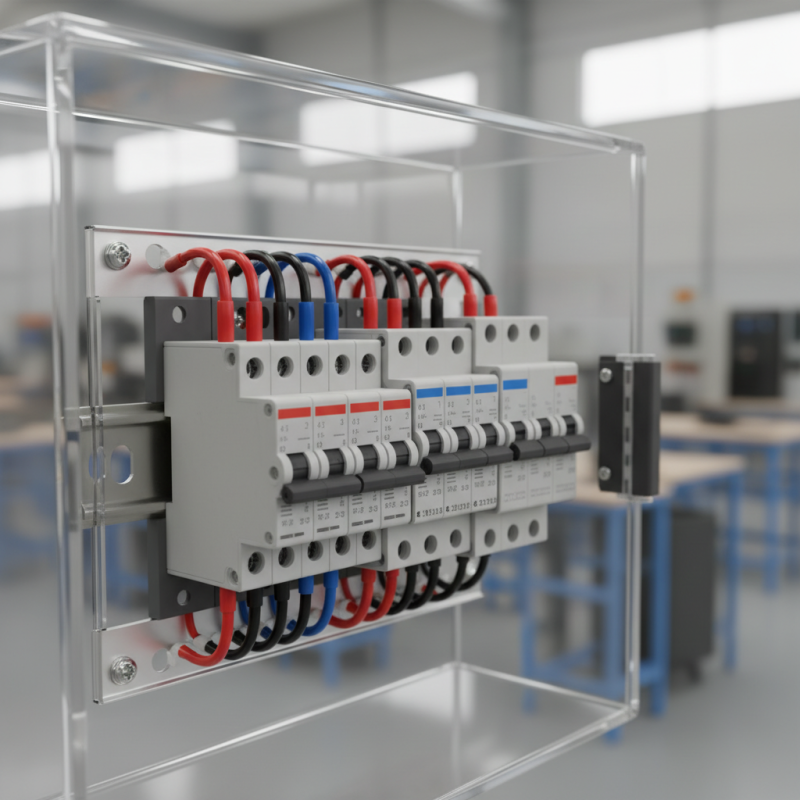
Essential Tips for Choosing the Right Miniature Circuit Breaker?
Choosing the right Miniature Circuit Breaker (MCB) can be challenging. As Richard Stokes, an industry expert, once said, "The right choice ensures safety and efficiency." MCBs are essential for protecting electrical circuits. They prevent overloads and short circuits. Selecting the right one can significantly impact your electrical system's performance.
Consider the specifications carefully. MCBs come in different ratings and styles. Each serves a distinct purpose. A single miscalculation can lead to costly downtimes. Hence, it’s crucial to understand your specific needs. Sometimes, it’s easy to overlook important details.
While many focus on price, quality should come first. A low-cost MCB may not offer reliable protection. This choice could risk damage to your appliances. It's essential to strike a balance between cost and quality. Reflect on your current setup before deciding. The right MCB can make all the difference.
What is a Miniature Circuit Breaker and Its Importance?
A miniature circuit breaker (MCB) plays a crucial role in electrical safety. It automatically switches off electrical circuits when detecting faults or overloads. This prevents potential hazards like electrical fires or equipment damage. Without an MCB, a small surge can escalate into a significant problem. It's like a safety net that protects lives and property.
Choosing the right MCB requires careful thought. Consider the circuits you'll protect. The amperage rating must match your electrical load. Additionally, think about the type of environment. A home may need different features compared to industrial settings. Sometimes, buyers feel overwhelmed by options. They might settle for an MCB that doesn't meet their needs. It's always wise to ask questions and do thorough research.
The importance of MCBs cannot be overstated. They not only protect circuits but also enhance system reliability. A well-chosen MCB can extend the life of appliances. However, many overlook installation details. Poor installation can lead to malfunction, making the MCB ineffective. Regular testing and maintenance are needed to ensure they perform correctly. Ignoring these aspects can have serious consequences. Assess your needs carefully before making a choice; it is crucial for safety.
Key Factors to Consider When Selecting a Miniature Circuit Breaker
Choosing the right miniature circuit breaker (MCB) involves careful consideration of several key factors. One major aspect is the current rating. It's essential to match the MCB's rating to the load it will protect. A 2019 industry report indicated that incorrect ratings account for over 30% of circuit failures. This detail can lead to inefficiencies or costly damages.
Installation environment also matters. MCBs must be suited for residential, commercial, or industrial settings. For example, in humid areas, opt for moisture-resistant models. According to studies, nearly 25% of failures are attributed to environmental factors, underscoring the need for context-aware selection.
Protection characteristics are vital too. An MCB should respond swiftly to overloads but not trigger on minor fluctuations. The traditional B-type curve is suitable for residential circuits, but for equipment with high inrush currents, a C-type may be better. Data shows that an inappropriate curve can lead to repeated nuisance tripping, causing user frustration and potential operational delays.
Essential Tips for Choosing the Right Miniature Circuit Breaker
| Factor | Description | Importance |
| Current Rating | Choose a breaker that matches the load requirements of the circuit. | High |
| Voltage Rating | Ensure the voltage rating meets or exceeds the circuit voltage. | High |
| Type of Breaker | Select between types (e.g., B, C, D) based on the type of load. | Medium |
| Inrush Current | Determine if the breaker can handle the inrush current without tripping. | High |
| Trip Curve | Choose a trip curve that suits your application for better protection. | Medium |
| Number of Poles | Decide on the number of poles based on single-phase or three-phase systems. | Medium |
| Standards Compliance | Ensure compliance with relevant standards for safety and performance. | High |
| Environmental Considerations | Consider operating conditions like humidity and temperature ratings. | Medium |
Understanding Current Rating and How to Choose the Right Amperage
Choosing the right amperage for a miniature circuit breaker (MCB) is crucial. The current rating directly influences safety and efficiency. A breaker protects electrical circuits from overloads and short circuits. If the rating is too low, it will trip frequently. This leads to frustration and interruptions. Conversely, a rating that is too high may not protect the circuit adequately.
Understanding how to calculate the right amperage is essential. Consider the total load of connected devices. Add up their individual current ratings. Each device has a specific requirement. For example, lights, appliances, and electronics draw different amounts. It's important to have a margin. Generally, adding 20% to your total load is a common practice. This prevents nuisance tripping.
Many users overlook this aspect. They often pick a generic value without calculation. This can lead to poor performance or risks. If your circuit frequently trips, it might indicate an under-rated MCB. However, excessively rated breakers can mask problems and allow hazards. Review your choices carefully. A well-selected amperage enhances safety and functionality.
Evaluating Voltage Ratings and Their Impact on Circuit Performance
When selecting a miniature circuit breaker (MCB), understanding voltage ratings is crucial. Voltage ratings indicate how much voltage the MCB can handle safely. Choose an MCB with a voltage rating that matches your application. If the rating is too low, the MCB may trip frequently. This can lead to frustration and disruption in circuit performance.
Different environments influence the voltage required. Residential circuits typically need lower ratings than industrial settings. Sometimes, users may overlook specific requirements. This can cause inefficiencies. An unsuitable rating might not protect the circuit effectively. Always assess the maximum system voltage first. Ignoring this step can result in inadequate protection.
It's also important to consider future upgrades. If you plan to expand your system, select an MCB with a higher voltage rating. This proactive approach prevents potential problems. The wrong choice may compromise circuit safety. Reflect on your choices carefully and seek advice when necessary. Understanding voltage ratings empowers you to make informed decisions that enhance circuit reliability.
Reviewing Additional Features for Enhanced Safety and Functionality
When selecting a miniature circuit breaker (MCB), safety and functionality are paramount. Many users may overlook additional features that enhance performance. For instance, a study by the Electrical Safety Foundation International indicates that 30% of electrical faults could be prevented with better MCB technology. Understanding these features can save lives and prevent property damage.
Consider the response time of an MCB. Modern devices can trip in milliseconds. This rapid reaction significantly reduces the risk of electrical fires. Additionally, some models may include features like surge protection. Such devices can absorb voltage spikes, protecting sensitive equipment. According to industry reports, surge protection can reduce damage costs by nearly 50%.
However, the need for added features can create confusion. Users might struggle to weigh the importance of each. Certain functionalities, like adjustable trip settings, may be beneficial for specific applications but not necessary for all. It's crucial to assess your unique requirements. Avoid the trap of overloading your selection with unnecessary features. Sometimes, simplicity is the most effective approach. Understanding what you truly need will ensure a safer electrical environment.
Essential Tips for Choosing the Right Miniature Circuit Breaker