What is a Regulated Power Supply and How Does it Work?
In today's rapidly advancing technological landscape, the importance of a Regulated Power Supply cannot be overstated. These devices ensure a stable output voltage, which is crucial for the performance of various electronic systems. According to a recent report from the International Electrotechnical Commission (IEC), approximately 40% of power-related issues in electronic devices stem from inadequate power supply regulation.
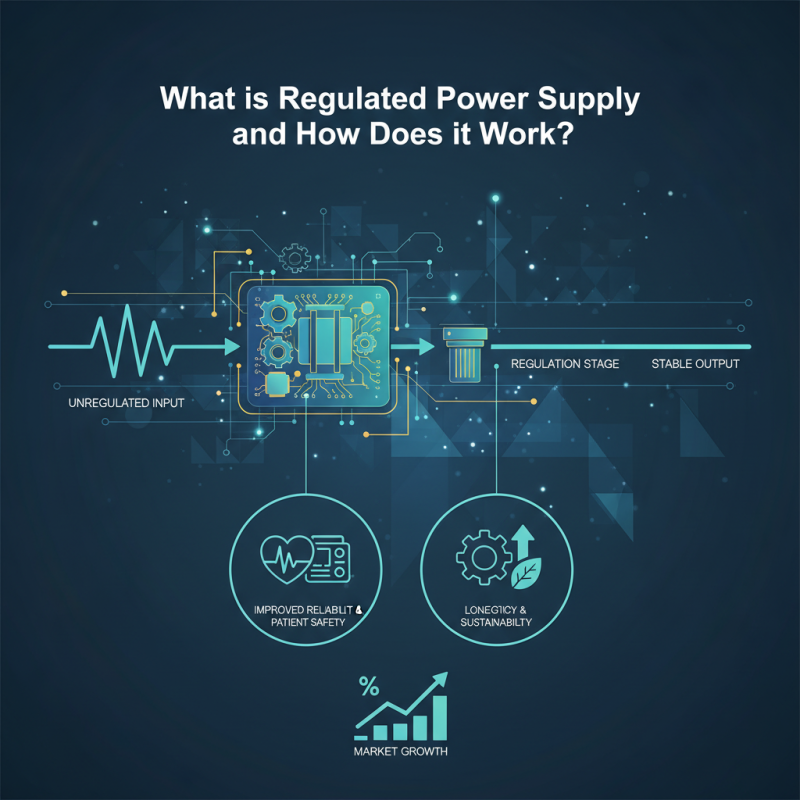
A Regulated Power Supply offers numerous advantages. It minimizes voltage fluctuations, leading to improved equipment reliability and longevity. For example, fluctuations can degrade sensitive components in medical devices, impacting patient safety and device efficacy. However, not all regulated power supplies are created equally. Many devices struggle to adapt to varying load conditions, resulting in inefficiencies and potential operational failures.
In an industry where precision is key, the reliance on effective regulated power supplies is paramount. The market for these supplies is projected to grow by over 5% annually through 2025. While this growth presents opportunities, it also raises questions about the sustainability and environmental impact of production processes. As the demand increases, the challenge remains: how can we ensure that the advancements in regulated power supply technology benefit all sectors without compromising quality?
What is a Regulated Power Supply?
A regulated power supply provides a consistent output voltage. It ensures that devices receive stable power. This stability is crucial for sensitive electronics. Fluctuations can damage components or lead to malfunction.
Inside a regulated power supply, several components work together. Transformers adjust voltage levels. Rectifiers convert AC to DC power. Regulators maintain consistent voltage levels, even when input varies. This intricate setup helps in many applications. It supports everything from computers to medical devices.
However, not all regulated power supplies are perfect. They can become inefficient under certain loads. High temperatures may also affect performance. Regular maintenance is essential to ensure long-term reliability. Understanding these aspects can enhance the choice of power supplies for specific needs.
Key Components of a Regulated Power Supply
A regulated power supply is essential for various electronic devices. Key components ensure consistent voltage and current, protecting sensitive electronics. Understanding these components is crucial for efficiency.
The transformer steps down the input voltage. It changes high voltage to a lower, usable one. This component varies widely. Reports show that transformers can improve efficiency by up to 98%. However, some designs can lead to energy losses. Choosing the wrong transformer can reduce overall performance.
Another vital part is the voltage regulator. It maintains steady output regardless of fluctuations. Poorly designed regulators can introduce noise, affecting device performance. According to industry studies, effective voltage regulation is crucial. It minimizes ripple effects in audio and visual equipment. Capacitors play a role by filtering these ripples. Optimizing capacitor size can enhance overall stability. Ultimately, attention to each element ensures reliable power for sensitive applications.
How a Regulated Power Supply Works
A regulated power supply ensures that electrical devices receive a constant voltage. This is critical for maintaining device performance. It prevents fluctuations that can damage components or cause erratic behavior. Devices such as computers rely heavily on this stable output for optimal functionality.
How does it work? The design typically includes a transformer, rectifier, and regulator. The transformer adjusts the incoming voltage to the desired level. Next, the rectifier converts the AC from the wall into DC. Finally, the regulator fine-tunes the output voltage, handling variations in input. Sometimes, not all components function perfectly. Overheating or component failure can lead to unstable voltages.
These power supplies can use linear or switching methods. Each method has its advantages and disadvantages. Linear supplies are simpler but less efficient. Switching supplies, while more complex, can waste less energy and be smaller. However, they may introduce noise in the output. Balancing efficiency and stability is often a challenge.
Types of Regulated Power Supplies
Regulated power supplies play a crucial role in providing stable voltage outputs for various electronic applications. They maintain consistent voltage levels, preventing spikes and dips that can harm sensitive components. Different types of regulated power supplies exist, each designed for specific purposes.
Linear power supplies are the simplest, using transistors to achieve voltage regulation. They are known for low noise but can be inefficient. Switching power supplies, on the other hand, convert power using high-frequency switches, enabling smaller and lighter designs. These power supplies have become popular due to their efficiency and versatility. According to industry reports, switching power supplies accounted for over 75% of the power supply market in 2022.
Tips: Always check the load requirements before choosing a power supply type. Not considering voltage needs can lead to operational issues. Also, remember that linear types may generate heat, so cooling solutions are vital.
Another type is the programmable power supply, which provides flexibility in voltage and current settings. These supplies are ideal for testing and prototypes. One drawback is their higher cost compared to fixed-output models. Proper installation and configuration are necessary to avoid damaging equipment.
Tips: Research the specifications thoroughly. Misunderstanding requirements can result in inefficiencies and failures. Pay close attention to the power rating and efficiency levels for optimal performance.
Applications of Regulated Power Supplies
Regulated power supplies are crucial in various applications due to their ability to provide stable voltage levels. They are widely used in electronics. Common applications include telecommunications, automotive systems, and industrial equipment. In telecommunications, for instance, regulated power supplies ensure consistent performance. This not only enhances the reliability of communication systems but also prolongs their lifespan.
In industrial settings, these power supplies help to keep machinery running efficiently. A recent report from an industry analyst noted that about 70% of industrial systems benefit from regulated power. Automotive systems also rely on them for consistent performance. Fluctuations in power can disrupt sensitive electronics in vehicles, making regulated power supplies essential.
Tip: Consider the specific power requirements of your devices. It can prevent underperformance or damage. Maintaining proper voltage levels is vital for operational efficiency. Continuous monitoring can identify irregularities early. Watch out for signs of stress on power supplies; they might indicate upcoming failures.