Choosing the right solar inverter is not a minor equipment decision. It affects energy yield, system safety, monitoring quality, and long-term maintenance. A rooftop can look ideal, yet shade from one chimney may change the inverter strategy completely.
The market is expanding rapidly. The International Renewable Energy Agency reported that solar power represented about 73% of global renewable capacity additions in 2023, adding roughly 346 GW. The International Energy Agency also expects solar PV to remain the largest source of new renewable capacity through 2030. More installations mean more product choices, but also more confusing specifications. A must solar inverter should match the panel array, local grid rules, roof conditions, battery plans, and installer capability. Brand recognition alone is not enough.
A practical assessment begins with the site. Measure the array’s maximum DC power, seasonal sunlight, roof direction, and partial-shading risks. Then compare inverter efficiency, MPPT voltage range, surge capacity, IP rating, warranty terms, and monitoring functions. Hybrid models may suit households planning batteries, while string inverters often offer simpler service access. Microinverters can help when roof sections face different directions.
Standards matter. IEC 62109 addresses inverter safety, while grid-interconnection requirements may follow IEEE 1547 or regional equivalents. Certified equipment is safer to evaluate.
Do not trust one chart.
Real-world performance can differ from laboratory figures. Heat, dust, clipped peaks, and weak installation practices matter. A spreadsheet may miss those details. This guide combines industry data, engineering principles, and practical site questions, while recognizing that no single inverter suits every property.
A solar inverter converts panels’ direct current into usable alternating current. It also manages voltage, frequency, and energy flow.
String inverters connect several panels in one circuit. They are cost-effective and easier to maintain. However, shade on one panel can reduce the string’s output.
Microinverters serve individual panels, making them useful for roofs with different angles or partial shade. They usually cost more.
Hybrid inverters coordinate solar panels, batteries, household loads, and the utility grid. Their battery charging controls help store midday energy for evening use. Off-grid inverters work without a utility connection, but they require careful battery sizing.
Every type needs maximum power point tracking, often called MPPT. This feature helps panels operate near their best voltage and current. Look for overload protection, anti-islanding protection, and clear monitoring data.
A practical roof assessment should include shade patterns, panel orientation, peak household demand, and future battery plans. Local electrical rules should guide installation, with testing completed by a qualified professional.
I have seen designs focus too heavily on purchase price. That can be a costly mistake. A cheaper inverter may offer limited monitoring or weaker expansion options. Still, bigger is not always better. An oversized unit can operate inefficiently during light production.
Review efficiency curves, warranty terms, surge capacity, and service access before deciding. Need more data.
How to Choose the Right Solar Inverter for Your Needs?
Assessing Your Solar System’s Power and Energy Requirements
Choosing an inverter starts with two separate questions: how much power your system needs, and how much energy it produces daily. Power is measured in kilowatts, while energy is measured in kilowatt-hours. Confusing these values can lead to costly sizing errors.
List every major load, including refrigerators, pumps, air conditioners, and electric heaters. Record each device’s running wattage and starting surge. Motors may briefly demand two or three times their normal power. Your inverter should handle this peak without shutting down. Also review your household’s hourly energy use, not only the monthly utility bill. A home using most electricity after sunset may need battery support.
A practical assessment should compare the solar array’s maximum output with the inverter’s continuous rating. Slightly higher panel capacity can improve production during cloudy periods, but excessive oversizing may increase clipping. Local temperature, roof direction, shading, and future expansion also matter. A neat spreadsheet can still be wrong if its assumptions are weak. Check manufacturer datasheets and have a qualified installer verify the design against local electrical requirements.
Tips: Measure real appliance use with a monitoring device when possible. Keep a small reserve for startup surges. Do not size only for today’s loads. Recheck the calculation if you plan an electric vehicle, heat pump, or home battery.
This illustrative household load profile uses commonly observed appliance power ratings and operating times. Compare instantaneous power to estimate inverter capacity, and daily energy consumption to size the solar array and battery.
The example’s connected load is approximately 1.66 kW, while the estimated daily consumption is approximately 3.59 kWh. Select an inverter with continuous capacity above the expected simultaneous load and sufficient surge capacity for motor-driven equipment such as pumps and refrigerators. Actual sizing should use measured loads, local solar conditions, battery requirements, and electrical regulations.
How to Choose the Right Solar Inverter for Your Needs?
Efficiency matters, but it should not dominate your decision. The Fraunhofer ISE Photovoltaics Report 2024 notes that modern inverters commonly reach peak efficiencies above 98%. However, real output changes with temperature, partial shading, and low-load operation. A slightly lower-rated inverter may perform better when its size matches the array. The IEA PVPS Trends 2024 report recorded more than 450 GW of new solar capacity worldwide in 2023. That growth makes careful system matching increasingly important.
Check compatibility before comparing advanced features. Confirm the inverter’s maximum DC voltage, MPPT range, phase type, and battery voltage. It must also support your local grid requirements and planned backup loads. Hybrid models can manage solar, batteries, and selected circuits, but their standby consumption and backup switching time deserve attention. Real installations are less tidy than datasheets suggest. A 98% peak figure does not guarantee 98% daily performance. That distinction is easy to miss.
Tips: Compare weighted efficiency, not only peak efficiency. Leave reasonable voltage and power margins for cold mornings and future expansion. Ask for independent test data, warranty conditions, monitoring access, and installer commissioning records. If shading is severe, module-level control may help, but it can add cost and more components. I would also question oversized systems; bigger is not automatically wiser. Recheck every assumption against the roof layout, climate, and household load profile.
How to Choose the Right Solar Inverter for Your Needs?
Installation conditions should guide your inverter choice, not only the panel capacity. Check the available wall space, cable distance, sunlight exposure, and ventilation around the equipment. An inverter installed in a hot, dusty corner may lose efficiency and age faster. Outdoor locations require suitable weather protection and secure mounting. Roof access also matters, because technicians need safe working space.
Safety deserves equal attention. A qualified installer should inspect grounding, insulation, circuit protection, and shutdown controls before connecting the system. Local electrical codes may require specific clearances and protective devices. Keep the inverter away from flammable materials, standing water, and areas exposed to accidental impact. Never treat warning lights as minor faults. They can indicate overheating, insulation problems, or grid-related issues.
Maintenance is usually simple, but it is not effortless. During inspections, check ventilation openings for leaves, dust, and insect nests. Review monitoring data for unusual drops in energy production. A gradual decline may reveal shading, loose connections, or cooling problems. I once underestimated how quickly dust could collect near a rural installation. That mistake changed the inspection schedule. Still, every site behaves differently. Record temperatures, error messages, and service dates. These details help technicians diagnose faults safely and accurately. Beware of relying only on an app. Physical checks remain necessary.
| Evaluation Area | Installation Condition or Requirement | Recommended Inverter Characteristic | Typical Technical Guidance | Why It Matters | Practical Check Before Purchase |
|---|---|---|---|---|---|
| System Type | Utility-connected solar system without battery storage | Grid-tied inverter | Designed to synchronize with the utility grid and shut down during a grid outage unless approved backup equipment is installed. | Provides efficient conversion for normal grid-connected operation. | Confirm local interconnection rules, utility approval requirements, and permitted export settings. |
| System Type | Solar system with battery storage and backup loads | Hybrid inverter | Supports solar generation, battery charging and discharging, grid interaction, and selected backup circuits. | Can manage several energy sources through one coordinated control system. | Check compatible battery voltage, usable battery capacity, backup output rating, and transfer time. |
| System Type | Remote site with no reliable utility connection | Off-grid inverter | Requires battery storage and is usually paired with a generator or other backup source for extended low-sun periods. | Maintains a local electrical supply without depending on the utility grid. | Calculate daily energy consumption, peak demand, battery autonomy, and seasonal solar availability. |
| Power Sizing | Household or small commercial loads with variable demand | Continuous output should cover normal simultaneous loads; surge capacity should cover motor starting loads. | Size the inverter using both continuous power in kW and short-duration surge power, commonly expressed in VA or kVA. | An undersized inverter may trip, overheat, or fail to start pumps, compressors, and other inductive loads. | List the running and starting power of air conditioners, refrigerators, pumps, tools, and other major loads. |
| Solar Array Compatibility | Multiple roof orientations, partial shading, or different panel groups | Multiple maximum power point tracking inputs or module-level power electronics | Each MPPT input should be matched to the applicable panel string voltage and current range. | Independent tracking can reduce mismatch losses between differently oriented or shaded arrays. | Compare the array open-circuit voltage and short-circuit current with the inverter’s maximum DC voltage and current. |
| DC Voltage Range | Solar array voltage changes with temperature and operating conditions | Wide MPPT operating range with adequate maximum DC voltage margin | Cold weather increases panel open-circuit voltage, while high temperatures generally reduce operating voltage. | Staying within the specified voltage limits protects the inverter and supports reliable energy harvesting. | Use the local minimum and maximum design temperatures when calculating string voltage, not only the nominal panel voltage. |
| Installation Location | Outdoor wall, carport, garage, utility room, or rooftop-adjacent area | Enclosure rating and environmental limits appropriate for the location | Outdoor units commonly require a weather-resistant enclosure such as IP65 or a rating specified by local regulations and the installation manual. | Protection from dust, moisture, and direct environmental exposure improves service life and safety. | Never assume an enclosure is waterproof; verify the exact IP or NEMA rating and permitted mounting position. |
| Temperature and Ventilation | Hot climates, enclosed rooms, or locations with limited airflow | Operating-temperature range suitable for the site and sufficient clearance for heat dissipation | Many inverters derate output at elevated temperatures; installation clearances must follow the product manual and local code. | Excessive heat can reduce output, increase thermal stress, and shorten component life. | Measure ambient temperature, avoid direct heat sources, keep ventilation openings clear, and do not install in sealed cabinets unless designed for it. |
| Electrical Protection | Residential or commercial installation with accessible DC and AC circuits | Integrated or correctly coordinated overcurrent, surge, isolation, grounding, and residual-current protection | Protection requirements vary by jurisdiction and system design; DC and AC disconnects may be required. | Proper protection reduces the risk of electric shock, fire, equipment damage, and unsafe maintenance conditions. | Have a qualified electrician verify conductor sizing, protective-device ratings, grounding, bonding, and disconnect labeling. |
| Arc-Fault and Rapid Shutdown | Buildings or jurisdictions requiring additional photovoltaic safety controls | Compatibility with required arc-fault detection and rapid-shutdown equipment | Requirements differ by local electrical code and may depend on whether conductors are inside or outside the building. | These functions can help reduce fire hazards and lower array voltage for emergency response. | Confirm the exact requirements with the authority having jurisdiction before selecting the equipment. |
| Grid Quality | Utility supply with voltage fluctuations or frequent disturbances | Adjustable grid-protection settings approved for the local network | Inverters monitor voltage, frequency, anti-islanding conditions, and other grid parameters. | Correct settings help prevent nuisance trips while maintaining safe grid operation. | Use utility-approved settings only; do not change protection thresholds without authorization. |
| Efficiency | System expected to operate across a wide range of daily output | High weighted or European efficiency together with low standby consumption | Peak efficiency alone does not represent performance at low or changing power levels. | Weighted efficiency gives a more realistic indication of annual energy conversion performance. | Compare weighted efficiency, nighttime consumption, MPPT operating range, and expected loading conditions. |
| Noise and Placement | Installation near bedrooms, offices, or occupied indoor areas | Low-noise design and suitable placement away from living or working spaces | Fan-cooled inverters may produce audible noise, especially under high load or high ambient temperature. | Noise and vibration can affect occupant comfort and may indicate restricted airflow or abnormal operation. | Check the published sound level, cooling method, wall structure, and minimum clearance requirements. |
| Battery Compatibility | Battery-backed or time-of-use energy system | Compatible battery chemistry, voltage range, communication protocol, and charge limits | Lithium-ion and lead-acid batteries require different charging profiles and operating limits. | Correct compatibility supports battery safety, capacity retention, and reliable backup operation. | Verify the approved battery list, maximum charge and discharge current, communication cable, and firmware requirements. |
| Monitoring and Communications | Owner wants performance visibility and fault notifications | Local display, wired or wireless communication, and data logging | Monitoring may include energy yield, operating status, alarms, grid conditions, and battery state of charge. | Timely information helps identify production losses and maintenance needs. | Confirm internet availability, data-privacy terms, local access options, and whether monitoring remains functional offline. |
| Maintenance Access | Equipment installed in a confined, high, or difficult-to-reach location | Accessible mounting position with safe working clearance | Ventilation paths should remain clean, and electrical isolation points should be clearly marked and accessible. | Good access reduces inspection time and improves safety during troubleshooting or replacement. | Provide clear working space, avoid obstructing service panels, and keep the installation manual available on site. |
| Routine Inspection | Normal residential or light commercial operation | Scheduled visual inspection and performance review | Inspect ventilation openings, cable entries, connectors, error messages, corrosion, water ingress, and unusual noise. | Early detection can prevent minor issues from becoming expensive failures. | Review production data monthly and arrange a qualified electrical inspection according to local requirements. |
| Warranty and Service | Long-term ownership and access to qualified technical support | Clear warranty terms, service network, replacement process, and spare-parts availability | Warranty conditions may depend on approved installation, registration, environmental limits, and documented maintenance. | Support quality can be as important as the initial purchase price over the system’s operating life. | Read exclusions, labor coverage, response times, transferability, and required installation documentation. |
| Professional Installation | Any permanent residential or commercial photovoltaic system | Installation and commissioning by a qualified, licensed professional | PV systems contain hazardous DC and AC voltages even when the utility supply is disconnected. | Correct design and commissioning help ensure code compliance, safe operation, and valid warranty coverage. | Obtain permits where required, request commissioning records, and retain single-line diagrams and test results. |
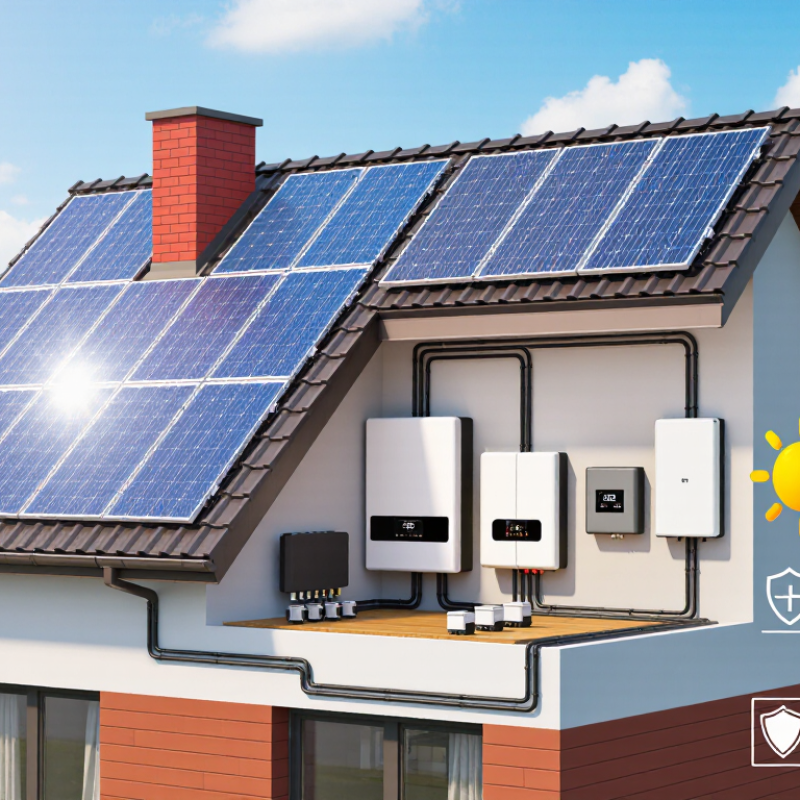
Choosing a solar inverter starts with the budget, but the cheapest unit may cost more later. Compare the purchase price with installation, monitoring, maintenance, and possible replacement costs. For a 5 kW home system, a slightly better inverter can improve daily energy use and reduce service interruptions. Check the efficiency rating under realistic operating conditions, not only the highest advertised figure.
Battery plans also affect value. If you may add storage later, choose an inverter that supports the required battery type and expansion capacity. Otherwise, you could pay for another inverter during an upgrade. Review the warranty period, repair process, and local service availability. A long warranty is useful only when support is reachable. Ask for written terms.
Do not ignore the installation environment. A hot, dusty garage can shorten equipment life, even when the datasheet looks impressive. Proper ventilation, surge protection, and correct sizing matter. Oversizing the inverter is not always wise, either. It can raise costs without improving output. A qualified installer should explain the calculations and show expected annual production. I have seen homeowners focus too heavily on upfront savings, then regret weak monitoring and difficult repairs. The better decision is not always the most expensive one. It is the option whose costs, limits, and future needs are clearly understood.