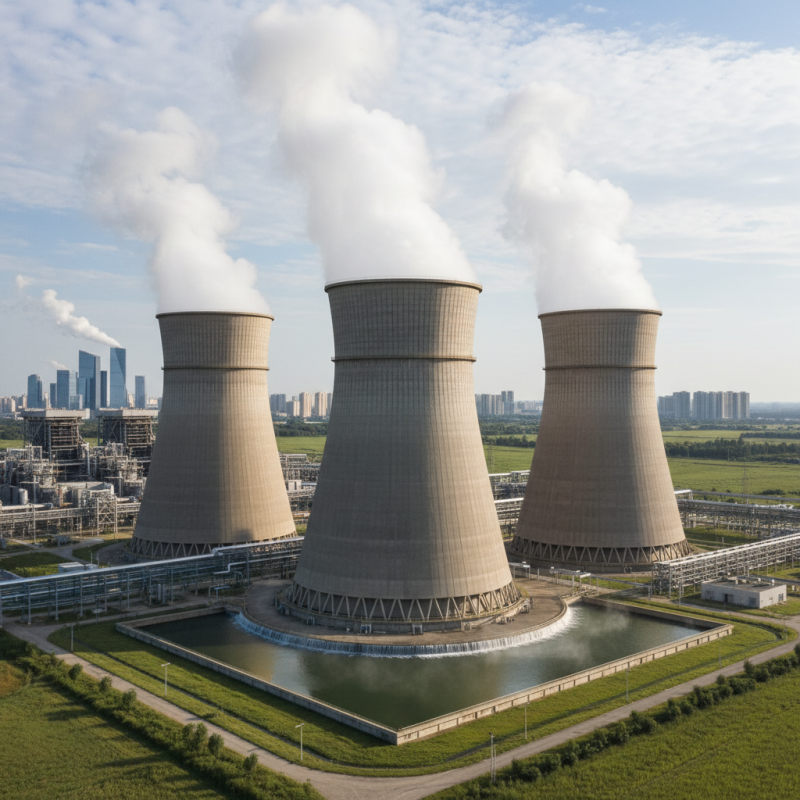
What is a cooling tower and how does it work?
A cooling tower is an essential structure used in various industries. It plays a crucial role in temperature regulation. By removing excess heat from processes or buildings, a cooling tower helps maintain efficient operations.
These towers operate on simple principles of heat exchange. Warm water from a system enters the cooling tower. As it flows down, it evaporates and cools the remaining water. This process is vital for industrial facilities, power plants, and HVAC systems. However, understanding how a cooling tower works can be complex.
Despite their functionality, cooling towers have downsides. Their maintenance can be costly. Additionally, they may require regular cleaning to prevent algae buildup. It's important to reflect on their environmental impact. While they cool water effectively, they can consume significant resources. A balance between efficiency and sustainability is necessary for future developments.
What is a Cooling Tower?
A cooling tower is a heat rejection device. It cools water by evaporating a small amount of it. This process helps control temperatures in industrial plants and buildings.
In operation, warm water flows from the top to the bottom of the tower. As it descends, air moves upward. This airflow encourages the evaporation of some water, which removes heat. The cooler water collects at the bottom and returns for reuse. Observing the process, one might notice how efficiency fluctuates based on air and water temperatures.
Cooling towers come in various designs, often resembling large structures. They can be found in power plants, refineries, and office buildings. The effectiveness of a cooling tower can sometimes be influenced by environmental factors like humidity and pollution. It's crucial to monitor these conditions to ensure optimal performance.
What is a Cooling Tower and How Does it Work?
| Dimension | Description |
| Function | Remove heat from a building or industrial process |
| Types | Open, Closed, Hybrid |
| Cooling Method | Evaporative cooling |
| Components | Fan, Fill media, Distribution system, Basin |
| Applications | Power plants, HVAC systems, manufacturing processes |
| Benefits | Energy efficiency, Cost savings, Environmental benefits |
| Maintenance | Regular cleaning, checks on water quality and flow rates |
The Basic Functionality of Cooling Towers
Cooling towers play a crucial role in industrial and commercial cooling systems. They help dissipate excess heat from processes or machinery. By doing this, they maintain optimal operating temperatures. The basic functionality of a cooling tower is quite simple yet effective. Water absorbs heat from equipment and flows into the cooling tower.
As the warm water enters the tower, it spreads over fill material. This increases the surface area and promotes better heat exchange. Air is drawn in through the tower, either by natural or mechanical means. The warm water then cools as it interacts with the air. As the water cools, a portion evaporates, which removes heat. This process is vital for energy efficiency in many systems.
However, cooling towers aren’t without challenges. They can experience issues like scaling and fouling. Regular maintenance is necessary to prevent these problems. Additionally, the balance between water loss and the cooling effect can be tricky. When water evaporates, it can lead to unwanted mineral concentration. Understanding these nuances is essential for effective operation and long-term reliability.
Types of Cooling Towers Explained
Cooling towers are essential in many industries. They help dissipate heat from processes and equipment. Understanding their types makes it easier to choose the right one.
There are two main types: open and closed cooling towers. Open cooling towers use water directly. They allow evaporation, cooling the water that circulates through a system. This design is popular but can have issues. For instance, they are prone to contamination from airborne debris. Maintenance becomes crucial to ensure efficient operation.
Closed cooling towers, on the other hand, circulate fluid in a closed loop. This design minimizes exposure to outside contaminants. However, they can be more complex to install and maintain. In both types, efficiency is vital, but operational challenges exist. Sometimes, the choice depends on specific needs rather than clear superiority.
Components of a Cooling Tower
Cooling towers play a crucial role in industrial cooling processes. They consist of several key components that work together. The main structure houses the water that's used for cooling. This water absorbs heat from machinery and buildings, which is then released into the atmosphere.
One critical component is the fill material. It increases the surface area for heat exchange. Water flows over the fill, allowing air to flow in and cool it down. Fans are another essential part. They create airflow, enhancing the cooling effect. Pumps circulate water through the system. They pull cool water and push it to areas needing heat removal.
Makeup water is also necessary. It compensates for water lost through evaporation. Without it, the cooling process would falter. It’s important to maintain the right balance. Neglecting any part can lead to inefficiencies. A cooling tower should always be monitored for optimal performance. It’s easy to overlook this, but regular checks are vital.
Applications of Cooling Towers in Various Industries
Cooling towers play an important role across various industries. They are commonly found in power plants, manufacturing facilities, and HVAC systems. In power plants, cooling towers help dissipate heat generated during power production. This process is vital for maintaining efficiency and security in energy generation. In manufacturing, cooling towers regulate temperatures to ensure product quality and equipment longevity.
In air conditioning systems, cooling towers aid in the temperature control of large buildings. They improve comfort by cooling the water used in chillers. Additionally, cooling towers support industrial processes by managing heat loads in chemical plants. This capability is crucial for maintaining optimal operating conditions.
Tips: Regular maintenance is key. Check for scale build-up and clean regularly. Monitor water quality closely to avoid corrosion or biological growth. Identify any leaks early to prevent water loss and inefficiency. Remember, an overlooked cooling tower can lead to higher operational costs. Stay proactive.