How to Choose the Right Isolation Switch for Your Needs?
Choosing the right Isolation Switch is crucial for electrical safety and efficiency. Expert Michael Thompson, a leading authority in electrical engineering, states, “The correct Isolation Switch can prevent unnecessary accidents.” His insight highlights the importance of selecting the right equipment for specific needs.
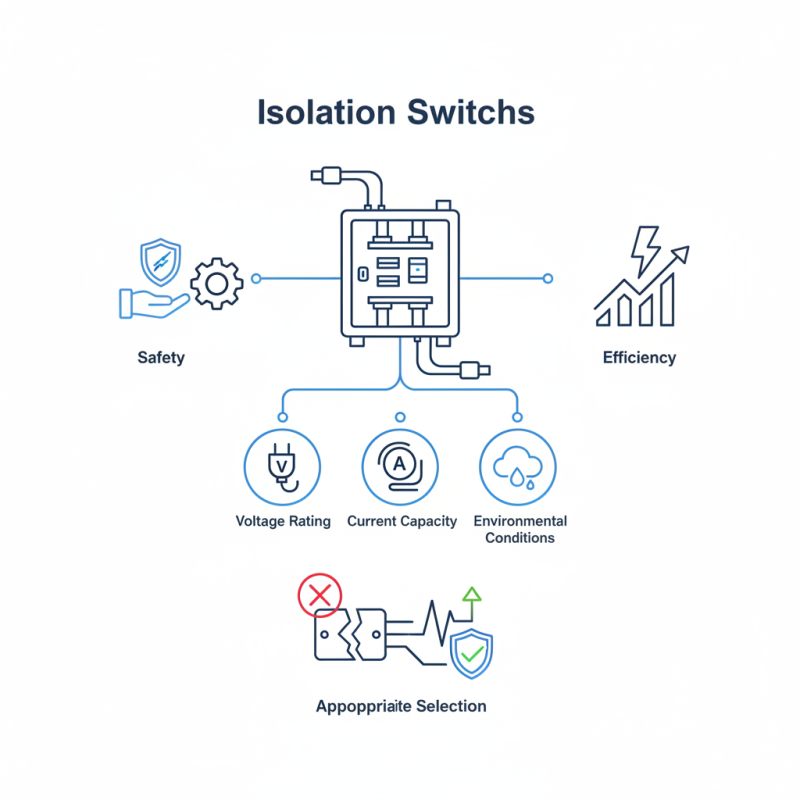
Isolation Switches come in various types and configurations. Each type serves a unique function in power distribution systems. Many users underestimate the impact of their choices. They often opt for cheaper options without considering long-term consequences. It's easy to overlook critical factors such as voltage rating, current capacity, and environmental conditions.
A well-chosen Isolation Switch ensures reliable operation and enhances safety. Inappropriate selections can lead to system failures or hazards. Buyers should reflect on their specific requirements and available options. A thoughtful approach to selecting an Isolation Switch can make a significant difference in performance and safety.
Understanding the Purpose of Isolation Switches in Electrical Systems
Isolation switches are crucial in electrical systems. They serve to disconnect power, ensuring safety during maintenance or emergencies. According to industry reports, nearly 30% of electrical accidents occur due to unexpected equipment energization. This statistic highlights the importance of effective isolation. Choosing the right switch can significantly mitigate risks.
The primary purpose of isolation switches is to provide a clear, visible means of cutting power. Typically, they are employed in settings where maintenance personnel work on live circuits. An effective switch should meet the specified voltage and current ratings. A report by the Electrical Safety Foundation International emphasizes that equipment rated at specific voltages is key to preventing overloads or failures.
Properly positioned isolation switches can save lives. However, many facilities still overlook their placement. For instance, switches should be easily accessible and clearly marked. Reports show that almost 25% of facilities lack adequate signage for their isolation points. This oversight poses significant hazards. Therefore, understanding the role and correct positioning of isolation switches is vital for maintaining safety in electrical systems.
Identifying Key Specifications for Isolation Switch Selection
Choosing the right isolation switch requires careful evaluation of several key specifications. One must consider the voltage rating. This determines how much electrical pressure it can handle. It’s vital to match this with your system's requirements. A mismatch can lead to failures or safety hazards. Ensure the isolation switch’s current rating aligns with your application. Too low a rating might cause overheating.
Additionally, look at the switch's insulation resistance. This impacts how well it can prevent unwanted current leakage. Higher insulation resistance is preferable for safety. Pay attention to physical dimensions too. The size of the switch is important for installation. A switch that doesn’t fit can cause frustration and delays.
Finally, don’t overlook the operating mechanism. Some switches are manual while others are automated. Manual switches can be less convenient. Automation can improve efficiency but may introduce complexity. It's important to weigh these factors against your specific needs. Making the wrong choice might lead to operational issues. Reflect on what best suits your situation, and make a well-informed decision.
How to Choose the Right Isolation Switch for Your Needs?
| Specification | Description | Importance |
| Voltage Rating | The maximum voltage the switch can handle. | Ensures compatibility with your electrical system. |
| Current Rating | The maximum current that the switch can carry. | Critical for avoiding overheating and failure. |
| Pole Configuration | Number of poles in the switch (e.g., single, double). | Determines the type of circuits that can be switched. |
| Mounting Type | How the switch is mounted, e.g., panel mount, floor mount. | Affects installation and space considerations. |
| Environment Rating | Rated for usage in specific conditions (e.g., outdoor, indoor). | Ensures durability and functionality in the intended location. |
| Safety Standards | Compliance with various safety regulations and certifications. | Important for legal compliance and user safety. |
Evaluating Different Types of Isolation Switches Available
When evaluating isolation switches, consider several factors. Various types are available, each serving specific needs. A common option is the rotary isolation switch. It allows easy manual operation. This type is frequently used in household applications. However, it requires sufficient space for installation.
Another type is the emergency isolation switch. This switch is critical for safety in industrial settings. It offers quick shutdown capabilities. While effective, the installation can be complex. Many users find this challenging. It’s important to think through the setup to ensure compliance with safety standards.
Lastly, consider modular isolation switches. These are versatile and can adapt to different systems. However, they may lack robustness in certain environments. It’s essential to assess your specific needs carefully. Each switch type offers unique advantages and disadvantages. The choice will depend on your situation and preferences. Be aware of the trade-offs involved.
Comparison of Different Types of Isolation Switches
Assessing Environmental and Application Considerations
Choosing the right isolation switch requires careful consideration of the environment in which it will be used. Different environments demand different features. For instance, a switch in an industrial setting must cope with dust and moisture. In contrast, switches in homes often face less harsh conditions. Evaluate the potential exposure to elements like water and chemicals.
Application considerations also play a crucial role. The switch must match the electrical load it will handle. An incorrect choice can lead to failures. Think about how often the switch will be accessed. Frequent use would require a more durable design. However, the user might overlook this detail, leading to premature wear.
Another aspect worth pondering is maintenance. Some switches require regular checks. If they are hard to reach, this can be problematic. Regular inspection is easy to forget until an issue arises. Overall, understanding both environmental and application factors is crucial. It can guide you towards a decision that avoids future headaches.
Determining Budget and Maintenance Factors in Your Decision
When selecting an isolation switch, budget is often the first concern. Prices vary widely based on features and specifications. A basic switch may cost less, but could lack essential safety features. Spending more might provide better protection and longevity.
Maintenance also plays a crucial role in this decision. Some switches require regular checks and servicing. Others are designed to be low-maintenance. Assessing your capacity for maintenance is essential. Can you perform routine inspections? Or would you prefer a hassle-free option that demands less attention?
Consider the environment where the switch will be installed. Harsh conditions may necessitate a tougher switch. This can affect both budget and maintenance needs. Poor choices here could lead to frequent replacements and extra costs. Reflecting on these factors can help in making an informed decision.