How to Choose the Right Electrical Breakers for Your Needs?
Choosing the right Electrical Breakers is vital for safety and efficiency in your home or business. Electrical breakers protect circuits and prevent overloads. A wrong choice can lead to hazards or equipment failure.
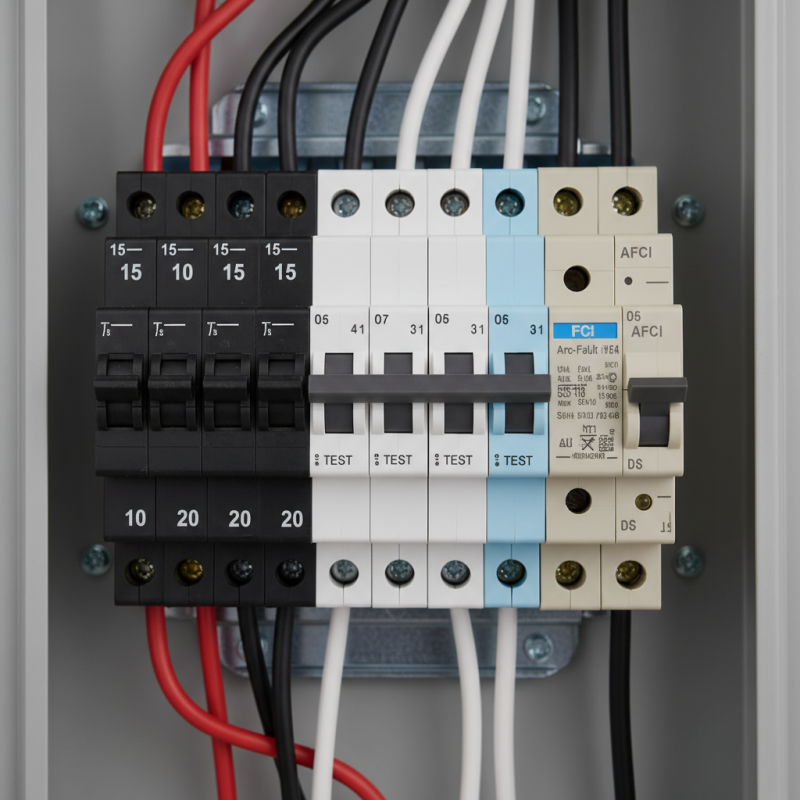
Understanding types of electrical breakers is crucial. You will find options like standard breakers, GFCI, and AFCI. Each serves a different purpose. Misunderstanding these can lead to installation errors. It’s important to analyze your specific needs carefully.
Finally, consider the ratings and specifications. Always check for compatibility with your electrical system. Picking quality products from trusted manufacturers matters greatly. A small mistake might lead to big issues later. Do thorough research and seek expert advice if necessary.
Understanding Different Types of Electrical Breakers
When selecting electrical breakers, understanding their types is crucial. Circuit breakers can be broadly categorized into standard circuit breakers, GFCI breakers, and AFCI breakers. Each serves a unique purpose. Standard circuit breakers protect circuits from overloads. They are the most common and widely used in residential setups. However, they may not provide the necessary protection in all scenarios.
GFCI breakers are essential in areas with water exposure, like kitchens and bathrooms. They detect ground faults and shut off power to prevent shock hazards. Some may overlook this aspect, thinking standard breakers are sufficient. This can lead to dangerous situations.
On the other hand, AFCI breakers protect against electrical fires caused by arc faults. They sense incorrect wiring or damages and quickly disconnect the circuit.
Choosing the right breaker isn't merely about specifications. It requires a deep understanding of your specific needs and environment. Individual circumstances, such as the age of wiring and local regulations, play significant roles. Ignoring these factors could result in inadequate protection. It's wise to consult with an expert to assess your requirements. This thoughtful approach ensures the safety and reliability of your electrical system.
Factors to Consider When Choosing Electrical Breakers
When selecting electrical breakers, several factors play a crucial role. The amperage rating is essential. It determines how much current the breaker can handle without tripping. For example, residential breakers often range from 15 to 30 amps. Understanding your needs is vital to avoid overloading circuits.
Another key factor is the type of breaker. Common options include standard circuit breakers and ground fault circuit interrupters (GFCIs). GFCIs are important in wet areas, like kitchens and bathrooms. They enhance safety by cutting off power when detecting ground faults. Consider the specific requirements of each area in your home.
Finally, installation is significant. Ensure the breaker fits the panel and adheres to local codes. If you're uncertain, consulting an electrician can help. They can assess your setup and recommend suitable options. It’s okay to seek assistance. Selecting the right breaker can prevent electrical hazards and ensure your home's safety.
Electrical Breaker Type Comparison
This chart illustrates the typical usage percentages of different types of electrical breakers used in installations. MCB (Miniature Circuit Breaker) is the most common, followed by RCCB (Residual Current Circuit Breaker), RCBO (Residual Current Breaker with Overcurrent protection), and ELCB (Earth Leakage Circuit Breaker).
Evaluating Electrical Load Requirements for Safety
When evaluating electrical load requirements for safety, understanding the specifics of your electrical system is crucial. Many homes run at capacity or beyond, risking overloads. According to the National Fire Protection Association, faulty circuits account for approximately 47% of electrical fires. Assessing your load demands can prevent such incidents.
Begin by calculating the total wattage of all devices connected to a circuit. Typical residential circuits can handle about 15 to 20 amps, translating to 1,800 to 2,400 watts at 120 volts. Configuration mistakes can lead to equipment damage and hazardous conditions. It's recommended to maintain a 20% buffer below maximum capacity.
Circuit breakers must match load requirements precisely. A mismatch can lead to ineffective protection; breakers that are too high might not trip in an overload, while those too low can cause nuisance trips. It’s also important to recognize that the power consumption of modern appliances can fluctuate, impacting overall load. As reported by Energy Star, energy usage in homes is increasing. Thus, monitoring loads ensures safe operation and protects valuable equipment.
Comparing Breaker Specifications and Features
When selecting electrical breakers, understanding the specifications is crucial. Breakers can differ widely in their ratings and features. Look for voltage ratings, which indicate the maximum voltage the breaker can handle. Common ratings include 120V, 240V, and sometimes higher for specialized applications.
Consider the amperage rating too. This number shows the maximum current load the breaker can protect. Typical ratings range from 15A to 200A. Overloading a breaker can lead to failure, so match its rating to your specific needs. Another important aspect is the breaker type—such as standard, GFCI, or AFCI. Each has unique benefits for particular applications. GFCI breakers protect against electrical shocks, while AFCI breakers prevent fire hazards caused by arc faults.
Finally, pay attention to physical size and compatibility with your panel. Breakers come in various sizes and shapes. An ill-fitting breaker may not install correctly. Check your panel's specifications before making a decision. Reflect on your specific needs, and don’t rush this choice. Choosing the right breaker is a thoughtful process that can prevent future issues.
How to Choose the Right Electrical Breakers for Your Needs? - Comparing Breaker Specifications and Features
| Breaker Type | Voltage Rating | Current Rating | Trip Type | Features |
| Single-Pole | 120V | 15A | Thermal | Compact Design, Easy Installation |
| Double-Pole | 240V | 30A | Magnetic | High Overload Protection |
| Miniature Circuit Breaker (MCB) | 230V | 16A | Instantaneous | Space-saving Design, Fast Trip Response |
| Ground Fault Circuit Interrupter (GFCI) | 120V | 20A | Time-Delay | Water-Proof, Ground Fault Protection |
| Residual Current Device (RCD) | 230V | 40A | Selective | Enhanced Safety, Earth Leakage Detection |
Installation and Maintenance Tips for Electrical Breakers
When it comes to maintaining electrical breakers, regular inspection is crucial. A study by the National Fire Protection Association (NFPA) states that faulty breakers contribute to around 30% of electrical fires. Inspect your breakers every six months. Look for wear, discoloration, or unusual noises. Such signs may indicate underlying issues.
Proper installation is equally important. Seek a qualified electrician if you're uncertain. A report from the Electrical Safety Foundation International (ESFI) highlights that improper installation increases the risk of failure by 50%. Ensure that the breakers match your system's specifications. Choosing the wrong amperage can lead to overload and potential hazards.
Don't overlook regular maintenance. Dust and debris can accumulate inside the panel, affecting its performance. Cleaning it is simple, yet often neglected. Remember that breakers have a lifespan. Many need to be replaced every 10 years, regardless of their condition. Document your maintenance activities to track any patterns that could reveal deeper issues.