SunVena Solar Blog

Residential Solar News, Insights & Resources

How to Choose the Best PVC Roofing Solutions?

Choosing the right Pvc Roofing Solutions requires more than comparing product prices. A roof must suit the building, climate, drainage design, and installation conditions. PVC membranes are valued for their welded seams, water resistance, and practical performance on commercial roofs. However, one product cannot solve every roofing problem.

A dependable evaluation starts with roof measurements, substrate condition, insulation requirements, and expected foot traffic. Check membrane thickness, reinforcement, fire performance, chemical resistance, and ultraviolet protection. Review technical data from established manufacturers, not only promotional claims. A qualified roofing contractor should inspect flashing details, drains, penetrations, and edge restraints before recommending materials. Small details matter.

Climate changes the decision.

Hot roofs need strong UV stability. Cold regions demand flexible materials. Buildings near restaurants may require better grease resistance. Coastal properties also face salt and wind exposure. Warranty language deserves careful reading, especially exclusions involving ponding water, poor maintenance, or unauthorized repairs. Local building requirements should guide the final specification.

Experience can reveal practical weaknesses. A membrane may perform well, yet fail after careless welding or weak detailing. Even excellent Pvc Roofing Solutions need trained installers and scheduled inspections. No system is perfect. That is worth admitting. Budget pressure may encourage thinner membranes, but short-term savings can increase repair risks. This guide examines material quality, installation expertise, maintenance expectations, and long-term value, helping property owners make a more informed and realistic roofing decision.
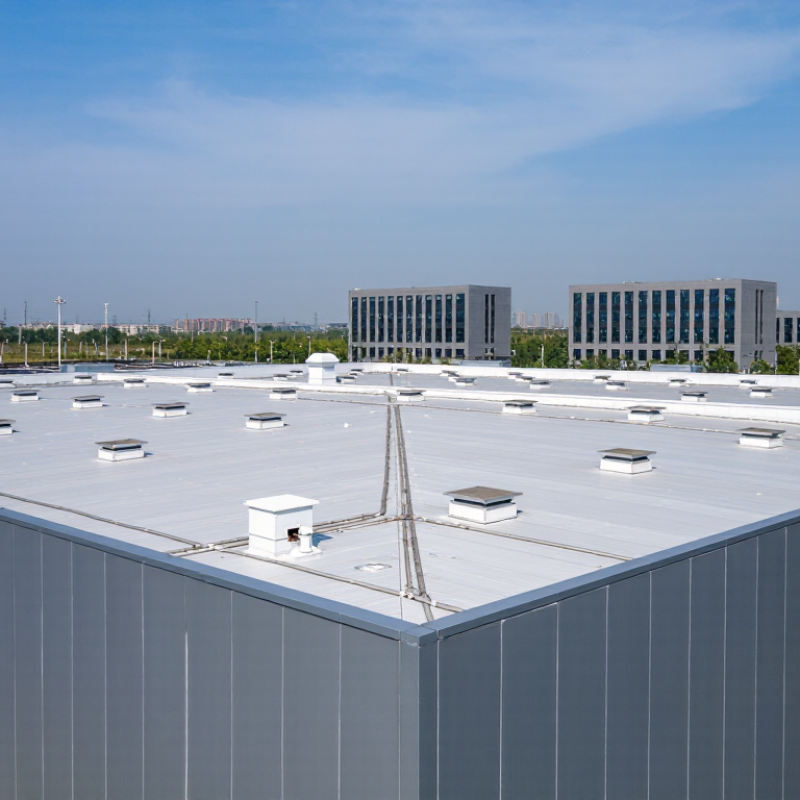
How to Choose the Best PVC Roofing Solutions?

What Is PVC Roofing and How Does It Work?

PVC roofing is a flexible single-ply membrane made from polyvinyl chloride, plasticizers, and stabilizers. It is manufactured in sheets, then installed over insulation or an existing roof deck. Heat-welded seams create a continuous surface that resists water entry. That seam matters. Unlike asphalt systems, PVC reflects much solar radiation when its surface is light-colored. However, actual energy savings depend on insulation, ventilation, climate, and building use.

During installation, trained roofers mechanically fasten, adhere, or combine both methods according to the roof design. They detail laps, drains, curbs, pipes, and edges with care. A small wrinkle near a drain can become a serious ponding problem. On commercial roofs, technicians often inspect welds with probes and test samples before completion. That experience is useful, yet it is not infallible. Weather, substrate movement, and poor detailing can still shorten service life.

Choosing the best PVC solution requires more than comparing membrane thickness. Check local wind loads, fire requirements, expected foot traffic, drainage, and insulation targets. A thicker sheet may offer better puncture resistance, but it may not solve weak decking or standing water. Ask for documented installation experience, written specifications, warranty conditions, and a maintenance plan. Review the roof after storms. Clean drains, repair damaged flashings, and record changes before minor defects spread. I would not treat PVC as maintenance-free; that assumption is practical, easy, and wrong.

Which PVC Roofing Types and Systems Are Available?

PVC roofing comes in several practical forms, and each suits a different building condition. Reinforced PVC membranes contain polyester scrim, giving them better resistance to tearing and movement. Unreinforced sheets are more flexible, but they may need greater care around busy roof areas. Fleece-backed PVC adds a protective layer beneath the membrane, helping cover uneven surfaces and reduce abrasion.

The installation system matters as much as the membrane itself. Mechanically attached PVC uses plates and fasteners, making repairs relatively direct. Fully adhered systems bond the membrane across the roof, which can reduce fluttering during strong winds. Ballasted systems use approved aggregate to hold the membrane in place, although the structure must support the extra weight. Heat-welded seams create a continuous waterproof layer when installed at the correct temperature.

Small details often decide performance. Around drains, corners, and rooftop equipment, poor preparation can create hidden weaknesses. Site inspections should check moisture, insulation condition, wind exposure, and local fire requirements before selecting a system. An experienced installer can test welds and document the work. Still, no system is perfect. Adhesive may struggle on a damp substrate, while fasteners can complicate future maintenance. I would compare lifecycle cost, not only the initial quotation, because the cheapest option can become expensive after repeated repairs.

How to Choose the Best PVC Roofing Solutions? - Which PVC Roofing Types and Systems Are Available?
PVC Roofing Type or System Typical Construction Common Applications Installation Method Main Advantages Important Considerations
Reinforced PVC Single-Ply Membrane Flexible PVC membrane with an internal polyester scrim for dimensional stability and tensile strength. Commercial buildings, warehouses, factories, offices, retail facilities, and low-slope roofs. Loose-laid and mechanically fastened, adhered, or ballasted, depending on the roof design. Strong and flexible Heat-welded seams Good weather resistance Seam welding must be performed correctly. The membrane should be selected according to wind uplift, roof traffic, and substrate conditions.
Unreinforced PVC Membrane Homogeneous PVC sheet without a reinforcing scrim, generally more flexible than reinforced membrane. Flashing details, roof edges, pipe penetrations, gutters, drainage areas, and compatible detailing work. Adhered or heat-welded to compatible PVC roofing materials. Highly flexible Easy to form Useful for details It normally has lower dimensional stability and puncture resistance than reinforced membrane, so it is less suitable for large exposed roof fields.
PVC Cool Roof Membrane Reflective PVC membrane with a light-colored surface designed to reflect a portion of solar radiation. Buildings in warm or sunny climates, especially facilities with high cooling demand. Mechanically fastened, fully adhered, or other approved single-ply installation methods. High solar reflectance Can reduce surface heating Welded seams Energy performance depends on insulation, climate, building use, HVAC efficiency, roof orientation, and membrane cleanliness.
PVC Roofing for Chemical-Exposure Areas Formulated PVC membrane selected for resistance to specific chemicals, oils, grease, or industrial contaminants. Restaurants, food-processing facilities, laboratories, manufacturing areas, and industrial roofs. Usually adhered or mechanically fastened, with welded seams and specially detailed penetrations. Good chemical resistance Waterproof seams Suitable for demanding areas Chemical compatibility must be verified for the actual substances, concentration, temperature, and exposure duration before specification.
PVC Membrane Over Existing Roof A new PVC membrane installed over a suitable existing roof assembly, often with separation or cover boards. Roof refurbishment projects where the existing deck and insulation remain structurally serviceable. Adhered or mechanically fastened after inspection, preparation, and correction of moisture or substrate problems. Can reduce tear-off work Faster renovation Less construction waste The existing roof must be surveyed for trapped moisture, weak substrates, incompatible materials, drainage defects, and code requirements.
Mechanically Fastened PVC System PVC membrane secured to the deck or structural substrate with approved fasteners and plates beneath or at membrane seams. Large commercial roofs, warehouses, and projects requiring rapid installation. Fasteners and plates are installed in designed patterns; membrane laps are hot-air welded. Fast installation Material-efficient Easy to inspect Fastener spacing and layout must be designed for wind uplift. Substrate type, fastener pull-out resistance, and thermal movement are critical.
Fully Adhered PVC System PVC membrane bonded across the roof area to insulation, cover board, or another approved substrate. Complex roof geometries, buildings where reduced membrane flutter is desired, and projects with limited fastening options. Compatible adhesive is applied to the specified surfaces, followed by membrane placement and hot-air welding. Smooth appearance Reduced flutter Suitable for irregular layouts Adhesive selection, coverage rate, substrate dryness, temperature, and curing conditions affect performance and installation quality.
Ballasted PVC System Loose-laid PVC membrane held in place by approved ballast, commonly rounded stone or concrete pavers. Suitable low-slope roofs with adequate structural capacity and accessible roof layouts. Membrane is loose-laid with protected seams and covered by a designed ballast layer or paver system. Limited adhesive use Fast placement Potentially reusable components Structural load, wind exposure, drainage, membrane protection, and safe access for future maintenance must be carefully evaluated.
PVC Roof Garden or Green-Roof Compatible System PVC waterproofing membrane combined with protection layers, drainage, growing medium, and vegetation. Extensive or intensive green roofs, terraces, and projects seeking additional roof functions. Membrane is installed with protected seams and tested before the drainage and planting layers are added. Waterproof foundation Supports roof landscaping Can improve stormwater management Requires root resistance, robust protection, reliable drainage, structural capacity, maintenance access, and detailed waterproofing inspection.
Selection should be based on roof slope, climate, wind exposure, substrate, insulation, drainage, expected traffic, chemical exposure, fire requirements, local codes, and the manufacturer’s tested assembly. Actual service life varies with design quality, installation, maintenance, and environmental conditions.

How to Evaluate PVC Roofing Performance and Durability?

Choosing the best PVC roofing solution starts with evidence, not a glossy product sheet. Evaluate membrane thickness, reinforcement, seam design, and documented test results. Ask for data on tensile strength, tear resistance, puncture resistance, and dimensional stability. These figures show how the roof may respond to foot traffic, wind, heat, and material movement. A qualified roofing professional should inspect the deck, drainage, insulation, and local weather exposure. Performance depends on the whole assembly.

Durability is easier to judge through installation details. Look for hot-air welded seams with consistent width and clean edges. Request sample weld tests, maintenance instructions, and warranty conditions in writing. Check whether the system meets recognized standards for fire, wind uplift, water resistance, and aging.

On a completed roof, inspect corners, penetrations, drains, and flashing twice a year. Small cracks, loose edges, or standing water need prompt attention. I have seen minor drainage defects become expensive repairs. Still, test results cannot predict every site problem.

Tips: Compare at least three technical data sheets. Photograph seam samples before approval. Keep inspection records after storms. Never choose by price alone, but budget pressure is real. Balance initial cost with expected service life, repair access, energy performance, and installer competence. A careful assessment may reveal that a simpler solution fits the building better.

What Factors Should Guide Your PVC Roofing Selection?

Choosing a PVC roofing solution starts with the building, not the product brochure. Assess local rainfall, wind exposure, roof slope, drainage, and maintenance access. A low-slope roof with standing water needs stronger detailing around drains and penetrations. PVC membranes commonly use hot-air-welded seams, but poor welding can still cause leaks. Ask for documented seam-testing procedures and installer training records.

Climate performance deserves careful attention. The U.S. Department of Energy reports that reflective roofs can remain up to 50°F cooler than conventional dark roofs under sunny conditions. That difference may reduce heat entering a conditioned building. However, the actual saving depends on insulation, occupancy, ventilation, and weather. A reflective surface alone is not a complete energy strategy. The U.S. Environmental Protection Agency also recommends evaluating roof reflectance and thermal emittance together, rather than choosing color alone.

Material quality should be verified against recognized standards, such as ASTM D4434 for PVC sheet roofing. Review membrane thickness, reinforcement, puncture resistance, fire classification, and chemical exposure data. Check compatibility with existing insulation and adhesives. Warranty length can help, but it should not replace a site inspection. In practice, the cheapest option may create higher repair costs later. I would also question any forecast promising identical service life on every roof. Installation quality, rooftop traffic, ultraviolet exposure, and neglected drainage can change the result dramatically. Data matters. So does the installer’s judgment.

How to Compare Installation, Maintenance, and Total Costs?

How to Choose the Best PVC Roofing Solutions?

Choosing a PVC roof requires more than comparing installation quotes. Labor, insulation, drainage, penetrations, and deck repairs can change the final price. Heat-welded seams usually provide dependable water resistance when installers follow manufacturer specifications. However, poor detailing around vents can undermine an otherwise excellent system. The Whole Building Design Guide identifies 20 to 30 years as a common service-life range for properly designed single-ply roofing systems. Actual performance depends heavily on climate, traffic, and maintenance quality.

Maintenance costs deserve equal attention. Annual inspections should check seams, flashings, drains, and membrane damage after severe weather. The National Roofing Contractors Association recommends documented inspections and prompt repairs. These records can prevent small punctures from becoming expensive interior damage. The U.S. Department of Energy reports that cool roofs may reduce annual cooling energy use by 7–15% in suitable buildings. That saving matters, but it should not be treated as guaranteed. A spreadsheet can still lie. Compare installation, repairs, energy effects, replacement timing, and disposal costs across the same period, such as 20 years.

Tips: Request itemized bids, not vague allowances. Ask whether the price includes insulation and roof-edge details. Review the installer’s training, inspection process, and completed commercial projects. Use a lifecycle-cost table with optimistic and conservative assumptions. Keep a repair reserve. PVC roofs are not maintenance-free, and ignoring that point weakens an otherwise careful investment.