How to Choose the Best LCD Display for Your Business Needs?
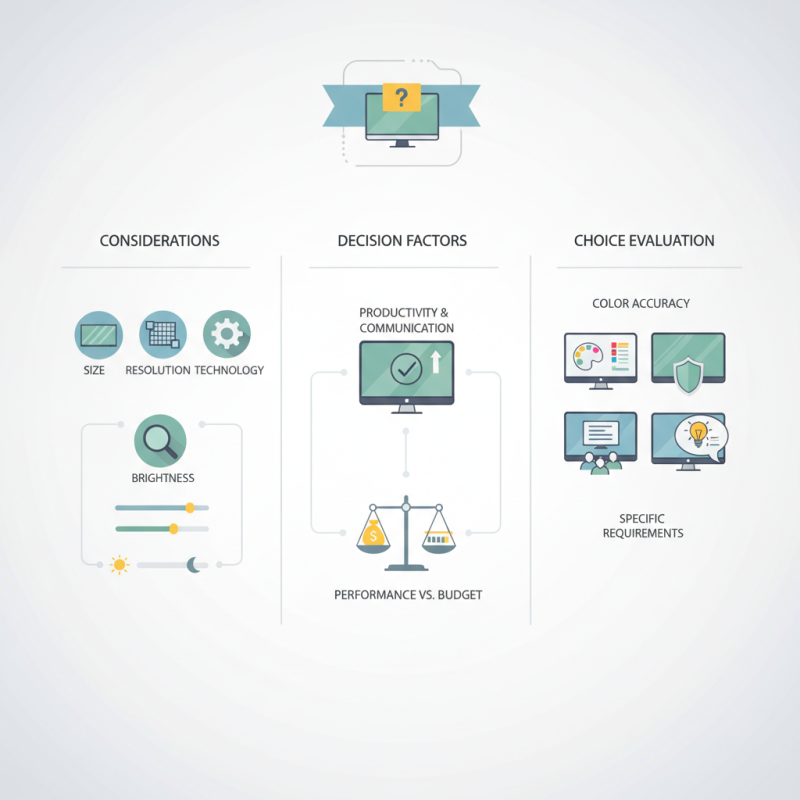
Choosing the right LCD Display for your business needs is crucial. An appropriate display enhances productivity and communicates effectively. To find the best option, you must consider various factors. The size, resolution, and technology play a significant role in this decision.
LCD displays come in many forms. A larger screen may offer better visibility for presentations. High resolution is vital for clarity, especially in detailed graphics or videos. Don't overlook brightness and contrast; these features impact overall image quality.
However, it’s easy to get overwhelmed by choices. Each brand and model has its strengths and weaknesses. Some may excel in color accuracy while others may lack in durability. It’s important to evaluate real-world use cases. Reflecting on your specific requirements can lead to better choices. Balancing performance with budget constraints is essential in making the right decision.
Understanding Different Types of LCD Displays and Their Features
When selecting an LCD display, understanding the types and their features is crucial. There are several types of LCDs available, each designed for specific applications. For example, TN panels are often used in budget-friendly monitors. They offer fast response times but have limited viewing angles and color accuracy. In contrast, IPS panels provide better color reproduction and wider viewing angles, making them suitable for creative work.
Another key consideration is the display resolution. Full HD screens work well for most tasks, but higher resolutions like 4K are essential for detailed graphics or large displays. Businesses should also assess their lighting conditions. Screens with higher brightness levels are necessary for well-lit environments to enhance visibility. Lastly, think about the screen size. A larger screen can improve productivity by allowing multiple applications to be visible simultaneously.
Some users might overlook the aspect of durability. Some LCDs may not withstand a heavy workload or high temperature well. Investing in a more robust model could save costs in the long run. Additionally, ensure that you consider the warranty and customer support options provided. These factors contribute to reliable long-term use.
Assessing Your Business Requirements for LCD Display Applications
When selecting an LCD display for your business, it’s essential to assess your specific needs. Consider the environment where the display will be used. Is it for an office, retail space, or outdoor setting? Each space has unique requirements for brightness and visibility. For instance, outdoor displays need to be brighter to combat sunlight. Indoor displays, on the other hand, can focus more on resolution and color accuracy.
Think about the content you will display. Will it be static images, videos, or interactive content? Static applications require different specifications than those that will be changing frequently. The resolution is crucial for detail. High-resolution displays can greatly enhance user engagement, but they may not always be necessary, depending on your audience and application.
Budget constraints also come into play. It’s easy to overspend on features that aren’t essential for your goals. Weigh the benefits of advanced features against your current needs and future growth. Reflect on the long-term costs, including maintenance and potential upgrades. Choosing the right LCD display requires careful consideration, balancing various factors to find the best fit for your business.
Evaluating Display Specifications: Resolution, Brightness, and Size
When choosing an LCD display for your business, several specifications deserve close attention. Resolution is key. A higher resolution provides sharper images, which is essential for presentations and digital signage. For instance, 4K displays offer greater detail than standard HD displays. This is particularly important in areas like graphic design or video editing, where clarity is crucial.
Brightness also plays a significant role. A display with higher brightness levels is essential in environments with a lot of natural light. If your screen is frequently viewed outdoors, look for displays with at least 700 nits. This ensures that visibility remains high, avoiding any compromise on the quality of your content.
Tip: Before purchasing, consider how large a display you need. Size affects viewing distance. For example, a small meeting room may only require a 32-inch screen. However, larger spaces may benefit from 55 inches or more.
You should evaluate your specific needs before making a decision. Sometimes, a too-bright or large display can overwhelm the viewer. Think about how people will interact with your display. Reflection and glare can become issues, especially in bright environments. Making informed choices can lead to better results for your business.
Comparing LCD Brands and Models: What to Look For
When choosing an LCD display for your business, several factors are crucial. Research indicates a significant variance in color accuracy across brands. For instance, industry reports suggest that some displays achieve up to 95% sRGB coverage, while others fall below 70%. This discrepancy affects how your content is represented.
Another key component is brightness. A display with 300 nits may suffice in a dim room. However, in bright environments, a minimum of 500 nits ensures visibility without straining the eyes. Additionally, resolution plays a role in productivity. A survey found that 4K displays can enhance detail perception, leading to fewer errors in design tasks. Choosing a model with adjustable height and tiltable screens can reduce neck strain, promoting employee health.
Durability is often overlooked but vital. Some models face issues like screen burn-in or lack of resilience in high-use environments. Understanding warranty terms can help mitigate potential losses. It’s essential to consider all these variables. Companies should reflect on their unique needs and test different models to determine the best fit.
Budgeting for Your LCD Display Purchase and Ongoing Costs
When budgeting for your LCD display purchase, it’s essential to consider both the initial costs and ongoing expenses. The price of the display is just the beginning. Additional factors include installation fees, maintenance, and potential upgrades. You may also need to factor in cost for mounting brackets and cabling. These items can add up quickly and impact your overall budget.
Regular maintenance is often overlooked. Dust accumulation can affect display quality, leading to costly repairs. Consider setting aside a budget for routine cleaning and technical checks. Energy consumption is another factor. Energy-efficient displays may have a higher upfront cost but save money over time. Assessing the total cost of ownership is necessary for a sound investment.
Don’t forget future needs. LCD technology evolves rapidly. You might need a more advanced display in a few years. Planning for upgrades can prevent sudden expenses that disrupt your budget. Always remember that initial savings might lead to higher costs later. Balancing your current requirements with future potential is key. Evaluate all aspects carefully before making a final decision.
How to Choose the Best LCD Display for Your Business Needs? - Budgeting for Your LCD Display Purchase and Ongoing Costs
| Feature | LCD Display Type | Initial Cost (USD) | Ongoing Costs (Annual, USD) | Ideal Use Case |
| Screen Size | Full HD (1920x1080) | $300 | $50 | Office Use |
| Screen Size | 4K Ultra HD (3840x2160) | $600 | $70 | Design and Media |
| Screen Size | Curved Display | $800 | $90 | Gaming and Simulation |
| Screen Size | Touchscreen | $500 | $60 | Interactive Displays |