SunVena Solar Blog

Residential Solar News, Insights & Resources

How to Choose the Best Aftermarket RC Parts?

Choosing the right Aftermarket Rc Parts can transform a car that jitters through corners into one that tracks cleanly over gravel. The wrong upgrade can do the opposite. A heavier metal arm may look tougher, yet add weight where handling matters. A faster motor can overheat if the battery, gearing, and cooling setup cannot keep pace. Small details count.

Market research offers useful context, but not a perfect buying guide. Grand View Research’s Radio Control Toys Market report examines the wider category; it does not provide a clear, independently audited breakdown of aftermarket components. That distinction matters. Buyers should treat broad market growth figures as context, not proof that a specific part is reliable. Product specifications, compatibility charts, warranty terms, and hands-on testing are more useful when comparing components.

JConcepts founder Jason Ruona is a recognized RC product designer and industry reference. I could not verify a published quotation from him specifically about choosing aftermarket parts, so I won’t invent one. The practical rule here is: “Check fit and system compatibility before chasing speed.” It is simple, perhaps too simple. Still, a pinion that meshes correctly and a shock that fits the chassis can matter more than a dramatic product photo.

This guide will help you compare materials, fit, performance claims, and value. Look for details you can check: dimensions, supported models, and clear installation instructions. Then match each upgrade to how and where you actually drive.
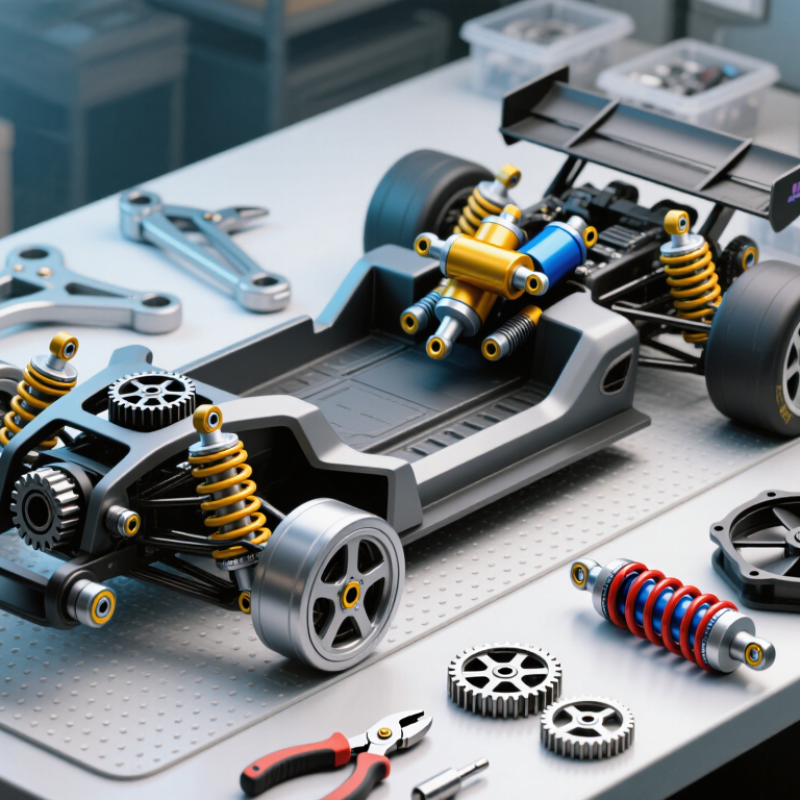
How to Choose the Best Aftermarket RC Parts?

Understand the Role of Aftermarket RC Parts

How to Choose the Best Aftermarket RC Parts?

Understand the Role of Aftermarket RC Parts

Aftermarket RC parts are replacement or upgrade components made by suppliers other than the vehicle’s original manufacturer. Their role is to restore function, change performance, or adapt an RC vehicle to a specific driving style. They are not automatically better than standard parts.

Fit matters.

A lightweight gear may help a vehicle accelerate, while a tougher suspension arm may tolerate rough landings. Yet added strength can also mean extra weight or stress on nearby components. Before buying, check the model, part dimensions, mounting points, and connector type. A part that looks right in a photo may still need small adjustments—or simply may not fit. That detail is easy to miss.

Think about where and how you drive. Dusty tracks, wet grass, and smooth indoor floors place different demands on tires, bearings, and suspension. Compare material descriptions and inspect clear product photos; vague specifications make reliable choices harder. After installation, test the vehicle at low speed and watch for unusual heat, noise, or looseness. Keep the original part if it is still usable. Sometimes the standard option is enough, and changing several parts at once makes problems harder to trace.

Identify Your RC Vehicle’s Compatibility Requirements

Choosing aftermarket RC parts starts with the vehicle, not the upgrade. Check its manual for scale, chassis version, battery voltage, connector polarity, motor dimensions, and mounting-hole spacing. A part that looks right may still hit the suspension arm or leave a gear mesh too tight. Measure the old part with calipers; note shaft diameter and length, not just the motor’s advertised size. Small details matter.

Radio compatibility needs the same care. The FCC’s 47 CFR §15.247 rules cover equipment operating in the 2.4 GHz band, from 2400 to 2483.5 MHz. That range alone does not guarantee a transmitter and receiver will bind: protocol and firmware must match. Check the receiver model requirements and the speed controller’s supported cell count before connecting a pack. I might miss a connector detail on a first pass, so verify polarity before powering up.

Tips: Photograph the original installation, then compare each dimension and connector side by side. Keep the old screws; replacement hardware may be a different length and could damage the chassis.

Compare Materials, Performance, and Build Quality

When choosing aftermarket RC parts, compare the material with the job it must do. Nylon components can absorb bumps and flex slightly, while aluminum parts often feel rigid but may transfer impacts elsewhere. A lightweight part can improve handling, yet thin sections may wear faster. Check the manufacturer’s material details rather than judging by color or finish alone.

Performance depends on fit as much as material. Look for cleanly cut edges, even mounting holes, and threads that accept screws without force. A suspension arm should move freely through its range, while gears need consistent contact without tight spots. Small gaps matter. A glossy finish can hide rough machining, so inspect contact surfaces closely. It is easy to overvalue appearance; even careful checks cannot predict every failure under hard use.

Tips: Compare dimensions with your original part before ordering. After installation, tighten screws evenly and test movement by hand. Start with a short, low-speed run, then check for loosened fasteners, unusual heat, or fresh wear marks.

How to Choose the Best Aftermarket RC Parts? - Compare Materials, Performance, and Build Quality

Part / Application Common Material Typical Strengths Trade-Offs Likely Performance Effect Build-Quality Checks Often Suits
Suspension arms Reinforced nylon or other engineering plastic Lightweight; some flex can absorb impact; generally inexpensive to replace. Flex and durability vary by formulation, temperature, and molding quality. A flexible arm may help avoid transferring a sharp impact to other components, but can allow more movement under load. Check for even molding, clean pivot holes, consistent thickness, and no cracks or excess flash. General bashing and drivers who prefer replaceable, impact-tolerant parts.
Suspension arms or mounts 6061-T6 aluminum alloy Rigid, corrosion-resistant when properly finished, and easy to machine accurately. Can be heavier than plastic; a hard impact may bend the part or load adjacent components instead of flexing. Can reduce component flex and improve consistency, provided the rest of the setup is compatible. Look for flat mating faces, smooth edges, properly aligned holes, and a finish without bare or damaged areas. Drivers seeking a more rigid setup for track use or controlled driving conditions.
Chassis plates 6061-T6 aluminum alloy Good strength-to-weight balance, machinability, and resistance to everyday corrosion. Can be heavier than a composite plate and may transmit more vibration depending on chassis design. Provides a firm mounting platform; handling changes depend on chassis stiffness and suspension tuning. Confirm straightness, smooth countersinks, clean threads, and correct hole spacing for the vehicle. Builds that need a durable metal chassis and compatible replacement mounting points.
Chassis or shock towers Carbon-fiber laminate Low weight and high stiffness in the directions supported by the laminate. Edges can be vulnerable to damage; drilled areas and cut edges need sound finishing. Can reduce weight and flex, but stiffness and durability depend on laminate thickness and fiber orientation. Inspect for delamination, splintered edges, clean holes, and consistent plate thickness. Weight-conscious track builds and carefully maintained vehicles.
Transmission gears Acetal (POM) plastic Low friction, quiet operation, and useful wear resistance in properly aligned gear trains. Can wear or strip under excessive load, heat, poor gear mesh, or contamination. Often keeps drivetrain noise and rotating mass lower than an all-metal gear set. Check tooth shape, smooth rotation, bore fit, and correct gear pitch and tooth count. Lightweight setups and applications where quiet, smooth meshing is important.
Transmission gears Hardened steel High wear resistance and strength when heat treatment and tooth finishing are well controlled. Usually heavier and can be noisier; poor alignment can damage gears or bearings. Can handle demanding drivetrain loads, but does not compensate for incorrect mesh or inadequate lubrication where required. Look for uniform teeth, smooth bores, no visible burrs, and clear material or heat-treatment specifications. Higher-load drivetrains with suitable bearings, alignment, and maintenance.
Driveshafts and axles Steel alloy Good torsional strength and resistance to wear at joints when correctly hardened and finished. Adds rotating mass; surface protection and joint maintenance matter in wet or abrasive conditions. Can provide dependable torque transfer for vehicles that place substantial load on the drivetrain. Check straightness, smooth joint movement, secure pins, and even surface finish. High-load use where durability is more important than minimizing rotating weight.
Bearings Steel races and balls Widely available, smooth-running, and suitable for many general-purpose RC applications. Water, grit, corrosion, or damaged seals can shorten service life. Low rolling resistance when clean, correctly sized, and installed without binding. Verify dimensions and seal type; check for smooth rotation, play, and roughness. Most vehicles, with bearing type selected for the running environment and maintenance routine.

Material choice alone does not determine performance. Confirm vehicle compatibility, dimensions, gear pitch, mounting pattern, and intended use; inspect and maintain parts according to the manufacturer’s instructions.

Evaluate Brands, Reviews, and Warranty Coverage

How to Choose the Best Aftermarket RC Parts?

When comparing aftermarket RC parts, look beyond polished product photos and familiar logos. Check whether the manufacturer provides clear measurements, material details, and compatibility notes for your vehicle’s exact model and version. A suspension arm may look identical online yet use different mounting points. Small mismatch, big headache.

Reviews are most useful when they describe real use. Look for details about installation, fit, durability, and the conditions tested, such as dusty trails or repeated jumps. Several reviews mentioning the same loose screw or early wear deserve attention. Give more weight to specific, balanced feedback than to brief praise. Reviews can still be wrong; people may install parts differently, and some failures come from setup rather than the part itself.

Read the warranty before buying. Check its duration, what counts as a defect, and whether wear, crashes, or installation damage are excluded. Keep the receipt and take clear photos before fitting the part. That matters. A warranty is less reassuring if the claim process is vague or replacement shipping costs fall to you. I would not treat warranty coverage as proof of quality; it is one piece of evidence, and sometimes the fine print changes the picture.

Choose Parts That Fit Your Budget and Driving Goals

Choose aftermarket RC parts around your budget and the way you actually drive. A parking-lot basher needs durable suspension arms and tires that grip rough pavement. A track-focused car may benefit more from balanced wheels, adjustable shocks, or a carefully matched gear ratio. Fit comes first. Check the vehicle’s model, scale, mounting points, and battery limits before ordering. A low-cost part that needs extra adapters can become the expensive choice.

Allied Market Research’s radio-control toys outlook estimated a $1.4 billion global market in 2021 and projected $2.5 billion by 2031. That forecast describes the wider toy category, not guaranteed demand for any specific upgrade. Circana reported that U.S. toy-industry sales fell 8% in 2023, a useful reminder to prioritize value over hype. Set a spending ceiling, then price the part, required tools, and likely replacement pieces together.

For a tight budget, replace worn components before chasing speed. Stronger parts can also move stress elsewhere; a tougher arm may leave a gear or shock as the next weak point. It is easy to overlook that. Change one part at a time, note how the car handles, and keep the original piece if it still works. My own judgment can be wrong, especially when a shiny upgrade looks more useful than it is.