2026 How to Choose the Right Grid Tie Solar Inverter for Your System?
Choosing the right grid tie solar inverter is crucial for solar energy systems. This component converts solar energy into usable electricity. Many options are available on the market today. It can be overwhelming to pick the best one for your needs.
You need to consider several factors. The inverter must match your solar panel's capacity. Reliability and efficiency are key. Some inverters have advanced features, like monitoring capabilities. Others may lack these benefits. It’s important to evaluate what truly matters for your setup.
Reflecting on your energy needs is essential. Do you need backup power? Will you be expanding your system in the future? Not every grid tie solar inverter fits every situation. Taking time to research can help avoid costly mistakes down the line. Solar energy is an investment. Choose wisely to reap the benefits.
Understanding the Basics of Grid Tie Solar Inverters
When selecting a grid tie solar inverter, understanding the fundamentals is crucial. These devices convert the direct current (DC) produced by solar panels into alternating current (AC) that can be used in homes. They must handle the power generated while syncing with the grid. If the inverter isn't compatible, it can lead to efficiency losses.
Tips: Choose an inverter with a good efficiency rating. Look for models with at least 95% efficiency. Also, consider the maximum power point tracking (MPPT) capabilities. This feature optimizes energy harvest even on cloudy days.
It's important to think about how much energy you actually need. Oversizing your inverter can result in unnecessary costs. Conversely, an undersized inverter may cause energy losses. Reflect on your future energy needs, such as adding more appliances or electric vehicles.
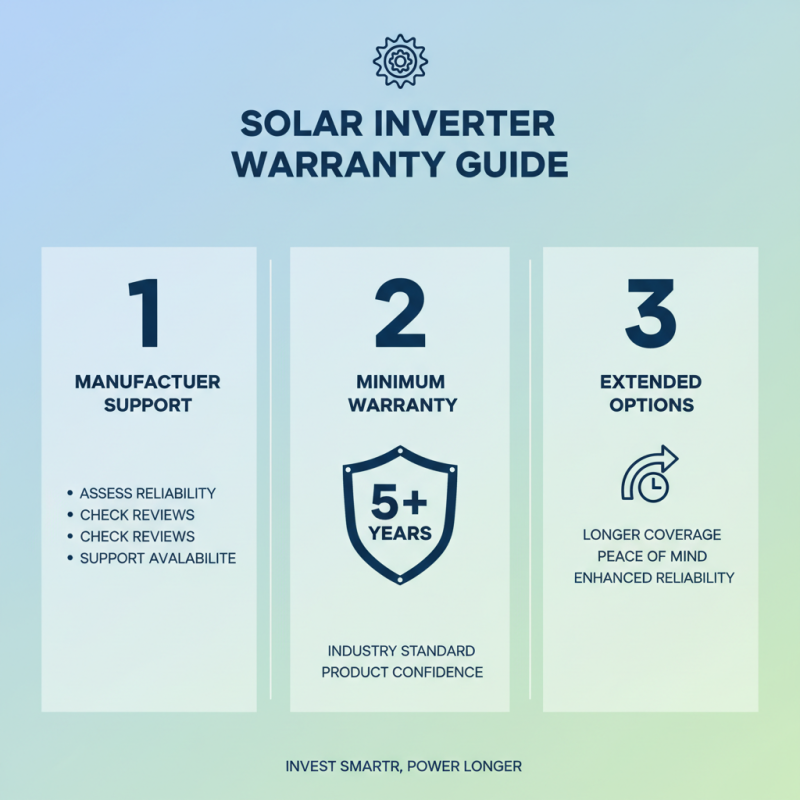
Tips: Check the warranty options before making a decision. A longer warranty often indicates better reliability. Installation differences can also affect performance. Professional help can make a significant difference. Make sure to factor in all these aspects before choosing your inverter.
Identifying Your Solar Power Needs and System Requirements
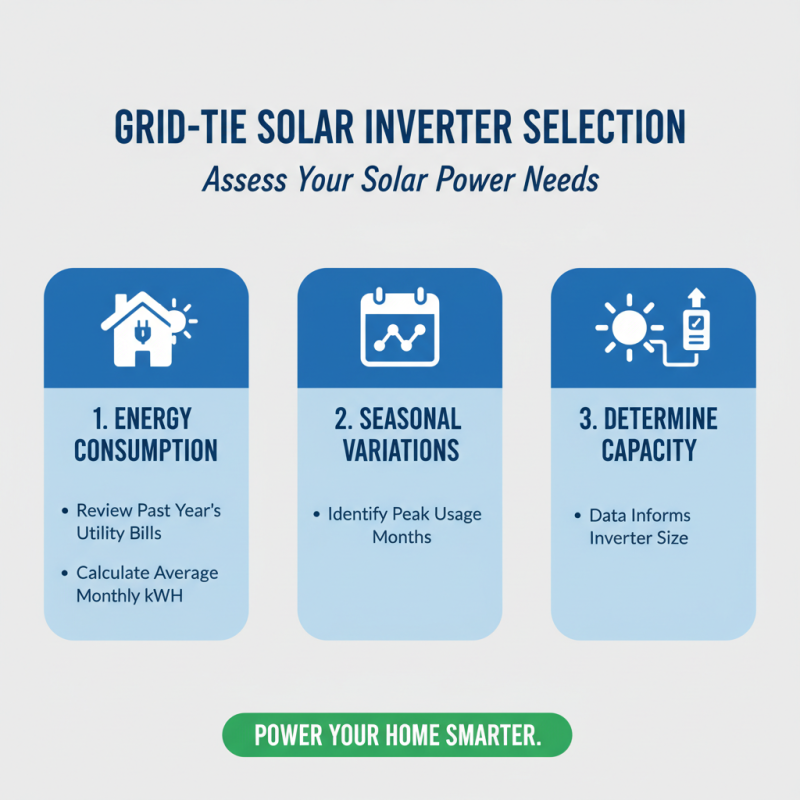
When selecting a grid tie solar inverter, understanding your solar power needs is crucial. Start by assessing your energy consumption. Look at your utility bills from the past year. Calculate the average kilowatt-hours you use monthly. Do you have seasonal variations? Consider the peak usage months. This data will inform the capacity required for your inverter.
Next, think about your solar array. How much energy can your panels produce? Their wattage and efficiency play a significant role. Factor in your local sunlight conditions too. Are there frequent cloudy days? This might impact your inverter's performance. Panel orientation and shading can also affect energy output. Take a closer look at your roof or installation area.
Finally, ensure the inverter's compatibility with your overall system. Check for technical specifications, and regulations in your area. Sometimes, constraints can lead to overestimating needs. Be realistic about your ambitions. It's easy to overlook future expansion possibilities. Staying flexible can yield benefits later on. Make informed decisions to optimize your system's efficiency.
Evaluating Inverter Efficiency and Performance Ratings
When evaluating grid tie solar inverters, efficiency and performance ratings are key. These ratings indicate how well an inverter converts sunlight into usable electricity. A high efficiency rating means more energy production, which translates into savings on bills. Look for models with efficiency ratings above 95%. It’s crucial to pay attention to real-world performance as well. Testing conditions can differ from manufacturer claims.
Inverters typically come with specifications like maximum power point tracking (MPPT) efficiency. This feature allows the inverter to adjust and extract maximum power from solar panels. However, not all inverters perform equally under varying conditions. Some may struggle in partial shading or low-light scenarios. It’s essential to consider your installation site’s characteristics.
Heat dissipation affects inverter performance too. High temperatures can reduce efficiency. Inverters with better cooling mechanisms tend to perform better over time. Also, examine the warranty and service options. A longer warranty can provide peace of mind but might come at a higher initial cost. Reflect on how these details fit your needs and budget before making a choice.
2026 How to Choose the Right Grid Tie Solar Inverter for Your System? - Evaluating Inverter Efficiency and Performance Ratings
| Inverter Model |
Peak Efficiency (%) |
Input Voltage Range (V) |
Output Power (kW) |
Warranty (Years) |
Weight (kg) |
| Model A |
98.2 |
100-600 |
5 |
10 |
12 |
| Model B |
97.8 |
150-600 |
7.5 |
8 |
10 |
| Model C |
98.5 |
200-800 |
10 |
12 |
15 |
| Model D |
97.5 |
180-720 |
8 |
5 |
14 |
Considering Compatibility with Solar Panels and Battery Systems
When selecting a grid tie solar inverter, compatibility is crucial. Your inverter must work well with solar panels and battery systems. Not all inverters can handle every type of solar panel. You need to check power ratings, voltage, and current specifications. A mismatch can lead to inefficiencies or even equipment damage.
Here are some tips. Match the inverter capacity to your solar panel output. For example, if your panels produce 5 kilowatts, choose an inverter that can manage this. Ensure that both the inverter and panels share compatible technologies. Some systems might require additional configuration.
Battery systems also play a significant role. Ensure your inverter can communicate with the battery technology. If you have lithium batteries, some inverters may not support them. Research your options; you might find surprising limitations. Always read the technical details, as overlooking them can lead to future regrets. Compatibility is not just a checkbox—it’s essential for efficiency.