How to Choose the Right Electric Forklift Battery for Your Needs?
Choosing the right Electric Forklift Battery requires careful consideration of various factors. According to the Material Handling Industry report, over 90% of warehouses and distribution centers utilize electric forklifts. This dependence underscores the need for reliable and efficient battery solutions.
The Electric Forklift Battery not only powers operations but also impacts overall efficiency. A recent survey found that the right battery selection can increase warehouse productivity by up to 25%. However, selecting the wrong battery can result in increased operational costs and downtime. Many operators underestimate the significance of battery capacity and lifespan, which are crucial for optimizing performance.
It's essential to evaluate each battery's specifications and operational demands. Industry experts suggest considering the energy requirements per shift, charging options, and maintenance needs. This approach can prevent future regrets, as improper choices may lead to suboptimal performance or even safety risks. Taking the time to research and analyze options will ultimately pay off in operational efficiency and cost savings.
Understanding the Different Types of Electric Forklift Batteries
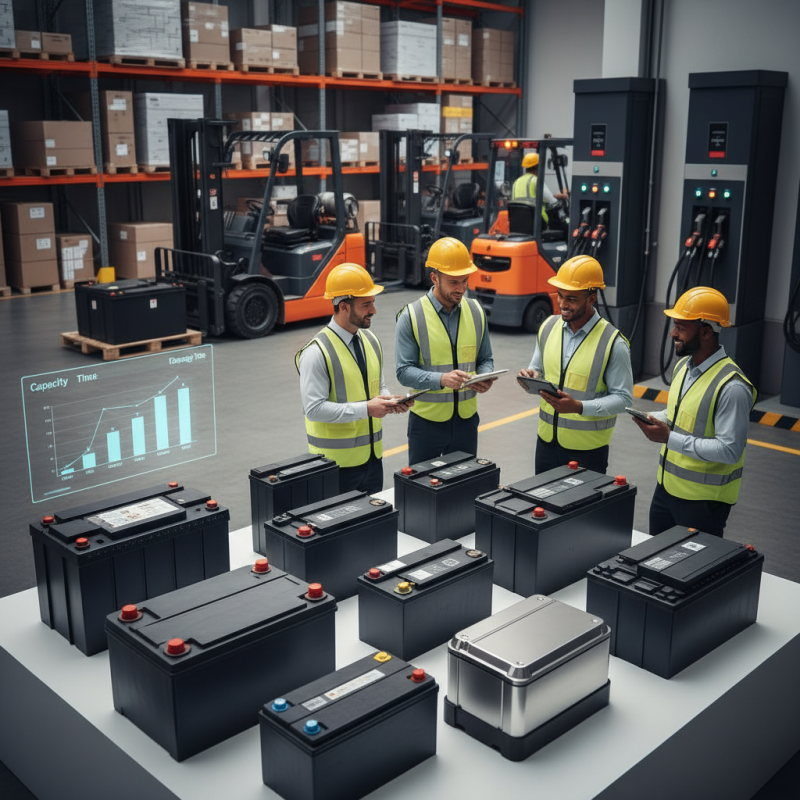
Electric forklift batteries come in various types, each designed for specific operational needs. The most common battery types are lead-acid, lithium-ion, and nickel-cadmium. Lead-acid batteries dominate the market. According to industry reports, they account for over 60% of the forklift battery market. They are cost-effective but require regular maintenance. Battery life can range from 1,500 to 2,000 cycles, depending on usage.
Lithium-ion batteries are gaining traction. They offer rapid charging and longer lifespans, with up to 5,000 cycles, as noted by recent studies. This type requires less maintenance and operates efficiently at various temperatures. However, initial costs can be higher. Many companies are evaluating the total cost of ownership when deciding between battery types.
Nickel-cadmium batteries, while less common, still serve niche markets. They perform well in extreme environments but can suffer from memory effect issues. Industry experts suggest evaluating operational demands and budget constraints before making a choice. Each battery type has its pros and cons, making it essential for businesses to reflect on their specific needs.
Evaluating Your Electric Forklift's Power Requirements
When evaluating your electric forklift's power requirements, consider the workload. Different applications need varying amounts of power. Heavy loads for extended hours require robust battery support. It's crucial to assess the average weight lifted and the duration of use each day.
Tips: Analyze your peak demand hours. Understand when you need the most power. This helps in choosing a battery with adequate capacity. If your operations vary greatly, a battery with slightly higher capacity may be wise.
Battery type is another important factor. Lithium-ion batteries provide rapid charging and longer lifespans. However, lead-acid options are typically more affordable upfront. Reflect on your long-term operational costs. Balancing initial investment and maintenance is key.
Tips: Calculate total ownership costs over the battery’s lifetime. It can be tempting to opt for cheaper options. Yet, hidden expenses may arise, leading to higher overall costs. Assessing both performance and budget constraints is essential for making the right choice.
Assessing Battery Life and Maintenance Needs
When assessing battery life and maintenance needs for electric forklifts, knowing the type of battery is essential. Lead-acid and lithium-ion batteries have different lifespans and care requirements. Lead-acid batteries usually last about 1,500 cycles, while lithium-ion can last up to 5,000 cycles. This difference impacts maintenance routines significantly.
Tips: Regularly check fluid levels in lead-acid batteries. Maintaining proper water levels is critical for optimal performance. For lithium-ion batteries, ensure software updates are current to enhance efficiency.
Battery maintenance should include inspection for wear and tear. Check cables and connections frequently. A small issue can lead to significant downtime. Furthermore, the environment affects battery life. Avoid extreme temperatures that can compromise battery efficiency. Always store batteries in a dry, cool place.
Battery Life and Maintenance Needs for Electric Forklifts
Considering the Environmental Impact of Battery Choices
When selecting an electric forklift battery, the environmental impact of your choice is critical. Many companies overlook this factor, but it can influence sustainability goals significantly. According to a report from the International Energy Agency, battery production accounts for a substantial portion of greenhouse gas emissions in the supply chain. Making informed decisions about battery technology can mitigate this impact.
Consider lithium-ion batteries. They provide longer life cycles and higher efficiency compared to traditional lead-acid batteries. Their lifespan can exceed 5,000 cycles, which reduces the need for frequent replacements. This ultimately lessens waste and conserves resources. However, sourcing lithium raises ethical concerns regarding mining practices.
Tips: Always check battery recyclability. Look for manufacturers committed to sustainable practices. Engaging in partnerships with responsible suppliers can also enhance your environmental footprint. An exploration of alternatives, like solid-state batteries, may provide innovative and eco-friendlier solutions in the future.
Remember to evaluate your operational needs against environmental implications. While cost and performance are crucial, the broader impact of your battery choice should not be ignored. Reducing carbon footprints can lead to improved public perception and compliance with regulations. Reflect on how battery decisions align with your company’s values and sustainability objectives.
How to Choose the Right Electric Forklift Battery for Your Needs? - Considering the Environmental Impact of Battery Choices
| Battery Type | Voltage | Capacity (Ah) | Weight (kg) | Environmental Impact | Estimated Lifespan (Years) |
| Lead Acid | 12V | 150 | 120 | Medium Recyclability | 3-5 |
| Lithium-ion | 24V | 200 | 80 | High Recyclability | 8-10 |
| Nickel Cadmium | 36V | 120 | 110 | Low Recyclability | 5-7 |
| Gel Battery | 48V | 150 | 100 | Medium Recyclability | 8-9 |
Budgeting for Your Electric Forklift Battery Investment
When considering an electric forklift battery, budgeting is essential. The upfront cost is just one part of the investment. Maintenance, lifespan, and performance impact the total expense. A cheaper battery may save you money initially, but could lead to higher operational costs over time.
Tips: Assess your operational needs. If you frequently use the forklift, investing in a high-quality battery may reduce downtime. A reliable battery offers longer life and greater efficiency. Evaluate potential savings on energy and maintenance.
Be aware of hidden costs. Installation and disposal can add to total expenses. In some cases, cheaper batteries might not be recyclable, leading to additional fees. Research local regulations and recycling options to avoid unexpected charges. Compare warranties and service options to ensure you are informed about potential future costs.