How to Choose the Right BK Series Control Transformers?
Selecting the right BK Series Control Transformers is crucial for efficiency in electrical systems. These transformers play a significant role in managing voltage levels and ensuring the smooth operation of machinery. However, with various options available, making an informed choice can be challenging.
Understanding the specifications and requirements of your specific application is important. Factors like power rating, voltage type, and phase configuration can impact performance. BK Series Control Transformers offer a reliable solution, but not all models will suit every situation. You must consider these details carefully.
It’s also vital to reflect on the potential pitfalls in selection. Oversizing or undersizing a transformer can lead to inefficiencies and performance issues. Familiarizing yourself with manufacturer guidelines and user experiences can enhance your decision-making process. Aim to navigate through the complexities of choosing BK Series Control Transformers, ensuring a perfect fit for your needs.
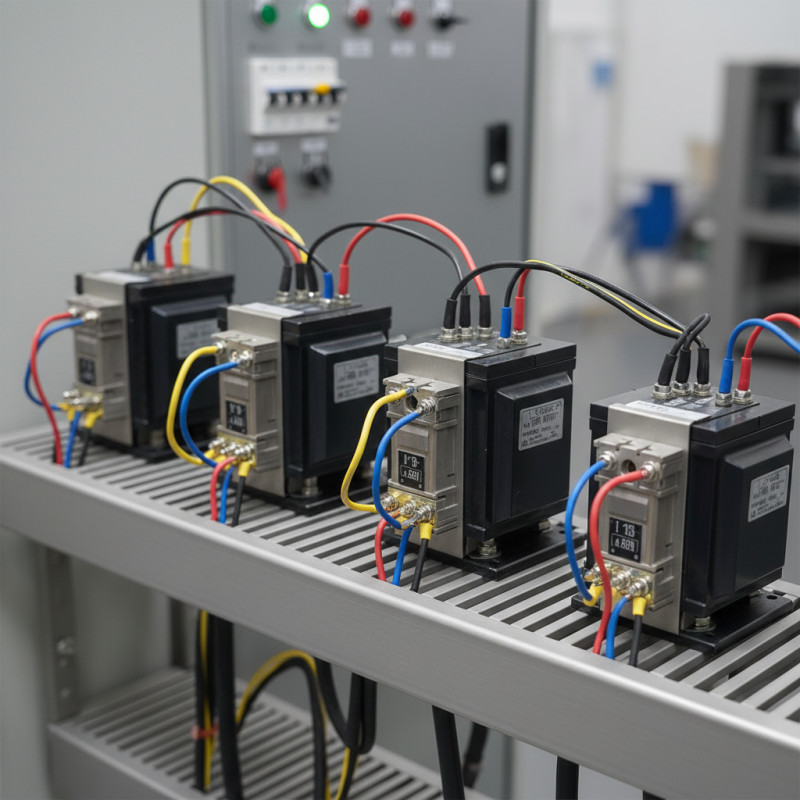
Understanding BK Series Control Transformers and Their Applications
When selecting the appropriate BK Series Control Transformers, understanding their applications is essential. These transformers are reliable components for various automation systems. They help reduce voltage for control circuits, providing safety and efficiency. Knowing your specific needs will guide your choice.
Tips: Consider the load requirements. Ensure the transformer can manage the necessary current levels. Check for insulation ratings. Proper insulation is crucial for safe operation in industrial settings. Look into the mounting options available; some transformers fit better in tighter spaces.
BK Series Control Transformers excel in environments with frequent cycling. They provide stability and reduce wear on connected devices. However, not every transformer suits every application. Reflect on your system design and voltage needs. Avoid making a quick decision. A thoughtful approach leads to better system performance.
Key Specifications to Consider When Selecting BK Series Control Transformers
When selecting BK Series control transformers, several key specifications demand careful attention. First, consider the voltage rating. It needs to match your equipment requirements. Mismatches can lead to inefficiencies or even equipment failure. A transformer’s capacity, measured in volt-amperes (VA), should also align with your load needs. Underestimating capacity may result in overheating and reduced lifespan.
Another essential factor is insulation class. Different classes perform under varying temperature ranges. Ensuring proper insulation can prevent premature failure, especially in harsh environments. Additionally, look into the transformer's efficiency ratings. Higher efficiency means less energy waste, translating to lower operational costs.
Don’t overlook physical dimensions and mounting options. These elements may affect installation flexibility. It’s vital to ensure the transformer fits within the intended space without compromising performance. Evaluate these specifications carefully. An informed choice protects your investment and enhances system reliability. Reflections on past selection mistakes can guide current decisions. Always seek advice if unsure.
Analyzing Load Requirements for Optimal BK Series Transformer Selection
When selecting a BK Series control transformer, analyzing load requirements is crucial. Load requirements directly impact the transformer’s performance and lifespan. According to industry reports, ensuring the correct voltage and current ratings can enhance efficiency by up to 15%. Insufficient capacity may lead to overheating, while overrating results in unnecessary costs.
Voltage ratings between 120V and 480V are common in control systems. A precise assessment of the load’s power factor is essential for reliable operation. If a load has a low power factor, the transformer must compensate to avoid underperformance. Studies indicate that a proper match to load requirements can reduce energy consumption significantly. Ideally, the transformer should be configured to handle at least 125% of the expected load.
Consider potential variations, such as seasonal changes in load. In the HVAC industry, for example, fluctuations can be considerable. Monitoring these requirements ensures better operational resilience. If load conditions change, reviewing specifications helps maintain efficiency. Ignoring these details can lead to costly downtimes and repairs in the long run. Accurate data on load profiles can also inform future upgrades or replacements.
How to Choose the Right BK Series Control Transformers? - Analyzing Load Requirements for Optimal BK Series Transformer Selection
| Transformer Model | Voltage Rating (V) | KVA Rating | Phase | Load Type | Recommended Applications |
| BK-1 | 120/240 | 1.5 | Single | Resistive | Lighting, Small Motors |
| BK-2 | 240/480 | 3 | Single | Inductive | Pumps, Compressors |
| BK-3 | 480 | 5 | Three | Inductive | Industrial Equipment |
| BK-4 | 600 | 10 | Three | Mixed | Heating Systems, HVAC |
| BK-5 | 240/480 | 15 | Single | Capacitive | Control Circuits |
Evaluating Efficiency Ratings and Performance Metrics in BK Series Transformers
When selecting a BK series control transformer, it's vital to evaluate its efficiency ratings. Efficiency defines how well a transformer converts input power into output power. A higher efficiency rating often indicates lower energy losses. This translates to reduced electricity costs and a smaller environmental footprint. Always look for transformers that meet industry standards to ensure reliability.
Performance metrics are equally important. Pay attention to voltage regulation, load handling capabilities, and thermal performance. A transformer might perform well under light loads but fail under heavy ones. Check if the specifications match your project's needs. Sometimes, a transformer can be over-specified, leading to unnecessary expenses.
Consider how these factors tie into your overall application. Don't just choose based on numbers. Real-world experiences reveal that even well-rated transformers can underperform in specific conditions. It's essential to assess your unique requirements and seek advice from industry professionals. Balancing efficiency and performance metrics is crucial for achieving optimal results.
Comparative Analysis of Leading BK Series Control Transformer Models and Features
When selecting a BK series control transformer, it's essential to evaluate different models and their particular features. Voltage rating is crucial. Ensure the transformer can handle the voltage your application requires. Some models support standard voltages effectively. Others may offer variable voltage input, which provides flexibility but can complicate installation.
Efficiency plays a vital role in performance. A more efficient transformer minimizes energy waste. This can lead to lower operational costs over time. Features like thermal protection are also significant. These features safeguard the transformer from overheating, enhancing reliability. Look for models with overload capabilities. They can tolerate temporary surges without damage.
Another aspect to consider is the physical dimensions. Space constraints often dictate the transformer type that can be used. Some models are compact yet powerful, while others may be larger but offer additional features. Weigh the benefits against your specific needs. It’s wise to compare product specifications, but be aware that not all manufacturers provide complete information. Take time to do thorough research. Assessing user reviews can provide insights into real-world performance limitations.
Comparative Analysis of BK Series Control Transformers