Choosing a Carbon Film Reaistor for global sourcing requires more than comparing unit prices. Buyers must examine resistance tolerance, temperature coefficient, voltage rating, noise performance, coating quality, and long-term stability. A part that looks identical in a catalog may behave differently after humidity exposure or repeated thermal cycling.
Dr. Felix Zandman, founder of Vishay and a major figure in precision resistor technology, emphasized a practical engineering belief: “There is no substitute for quality.” This principle remains valuable when evaluating international suppliers. A reliable sourcing decision should include factory audits, production samples, traceable test reports, and clear inspection criteria. Ask whether the supplier controls carbon composition, lead welding, protective coating, and final resistance testing. Small details matter. A scratched coating can invite moisture. A weak lead joint can fail during assembly.
Global sourcing also demands realistic communication. Confirm datasheet standards, packaging methods, labeling, minimum order quantities, and replacement policies before placing an order. Regional standards may differ, even when specifications appear familiar. Do not depend only on a supplier’s website. Request recent certificates and compare samples from different production lots.
Cost still matters. It should not lead the decision. A cheaper Carbon Film Reaistor may create higher expenses through returns, production delays, or field failures. No checklist is perfect. Supplier performance can change. Therefore, review quality records regularly and keep a qualified backup source. This approach is not flawless, but it is more dependable than choosing solely by price.
How to Choose Carbon Film Resistors for Global Sourcing?
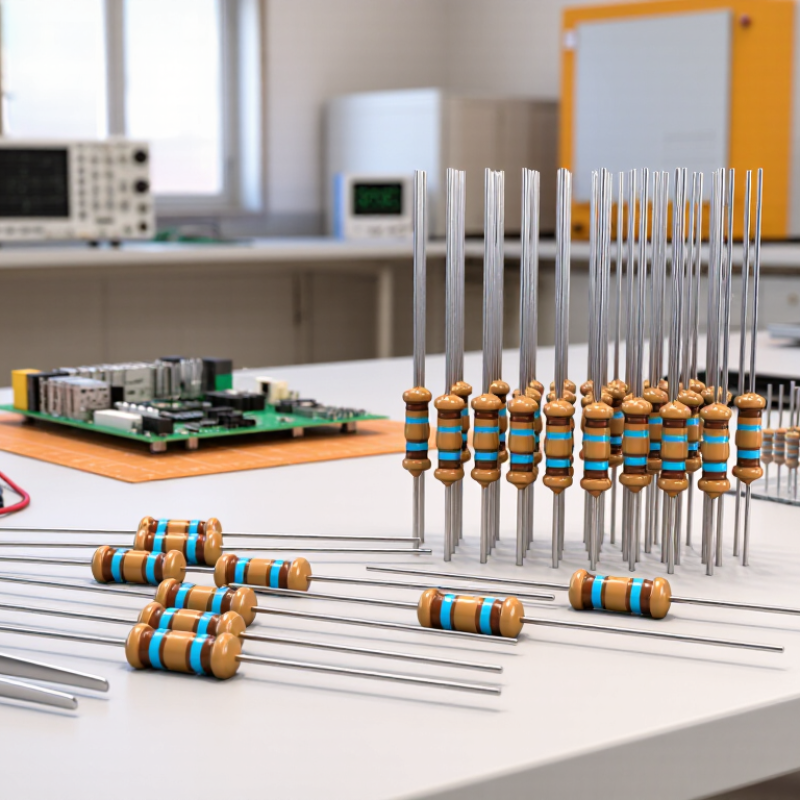
A carbon film resistor usually starts with a small ceramic rod. A thin carbon layer is deposited around its surface. Metal end caps provide electrical contact and hold the leads firmly. Manufacturers cut a controlled spiral into the film to adjust resistance. A protective coating then shields the element from moisture, dust, and handling damage. The spiral pattern matters because it affects resistance accuracy, noise, and pulse behavior.
When evaluating construction, check the tolerance, temperature coefficient, rated voltage, and power rating together. A resistor marked at 1/4 watt may overheat in a compact enclosure. Carbon film parts often offer stable performance for general circuits and moderate temperatures. However, they can produce more excess noise than some precision technologies. Their resistance may also shift under humidity, heat, or repeated overloads. Small details matter.
For global sourcing, request drawings, test reports, batch identification, and storage conditions. Confirm lead diameter, coating integrity, and dimensional tolerances before approval. Sampling should include resistance checks at room temperature and after controlled heat exposure. Do not rely only on printed markings. Marking errors happen, and packaging can hide bent leads or chipped coating. I once treated a familiar specification as sufficient; that was too optimistic. Production results can still vary between lots, so incoming inspection deserves a realistic budget.
Defining electrical requirements should come before requesting supplier quotations. Start with the nominal resistance, tolerance, rated power, and maximum working voltage. These values describe normal operation, not every real condition. Measure the real load. A circuit drawing may show 0.25 watts, while startup surges create much higher stress. Record continuous, intermittent, and pulse conditions separately.
Temperature also changes resistor performance. Specify the operating range, expected temperature rise, and acceptable temperature coefficient.
For precision signal paths, excessive noise can affect measurements. Noise matters.
Carbon film resistors may suit general control circuits, but demanding analog applications need careful validation. Check derating curves, insulation requirements, lead spacing, and body dimensions before approving a part. Packaging details matter during automated assembly and long-distance transport.
From practical sourcing work, I have found that supplier datasheets are useful but incomplete. Ask for tolerance data, production test methods, material declarations, and traceable lot records.
Compare samples under cold, room-temperature, and elevated-temperature conditions.
Do not guess. A clean resistance reading today does not prove long-term stability. Humidity, vibration, soldering heat, and storage time can expose weaknesses.
I once treated a resistor as a simple commodity and overlooked pulse loading; the design passed bench testing but needed a larger power margin later. That mistake was avoidable.
Define acceptance limits in writing, then confirm them with independent measurements and a small pilot order.
Carbon film resistors look simple, but their specifications can shift purchasing outcomes. Start with resistance value, tolerance, temperature coefficient, power rating, and maximum working voltage. IEC 60063 defines preferred value series, such as E24 and E96, commonly paired with ±5% and ±1% tolerances. A ±1% resistor is not automatically better. It may cost more without improving a low-accuracy control circuit.
Temperature coefficient matters near heat sources. A 250 ppm/°C resistor changes about 0.25% after a 10°C rise. Check this figure against the circuit’s drift budget.
Power rating also needs headroom. At least 50% derating is a practical starting point, although enclosure temperature can demand more. IEC 60115-1 specifies endurance testing at rated conditions, including long-duration operation near 70°C. AEC-Q200 qualification commonly includes a 1,000-hour operating-life test, but qualification data does not replace application testing.
Performance ratings deserve closer attention. Review overload capability, voltage coefficient, noise, humidity resistance, and pulse behavior.
Carbon film parts can be acceptable for general control circuits, yet precision sensing may expose their limitations.
In supplier audits, compare the full datasheet, not only the resistance code. Verify lot traceability, test methods, and packaging moisture controls.
One detail is easy to miss: a resistor can meet its tolerance at 25°C but drift beyond it in a sealed, warm enclosure. Global sourcing becomes safer when samples are tested under the actual temperature, voltage, and load profile.
Global sourcing carbon film resistors requires more than a low unit price. Evaluate process control, documentation, and response speed. Request ISO 9001 records, production flow charts, and recent internal audit findings. Check whether the facility controls coating thickness, spiral trimming, solderability, and resistance tolerance. Ask for sample data, not only catalog values. A useful sample includes batch numbers, measured resistance, temperature coefficient, and inspection dates. Small details matter.
Certifications need careful verification. Confirm the certificate issuer, validity period, facility address, and covered product scope. RoHS and REACH declarations should match the exact resistor series and materials. IEC 60115 test references can strengthen technical credibility, but they do not replace independent verification. Request test reports with laboratory identification and clear conditions. Some documents look complete yet omit humidity or load-life results. That gap deserves questions.
Supply capability appears in evidence, not promises. Review monthly capacity, minimum order quantities, standard lead times, and peak-season planning. Ask how the manufacturer handles material and packaging shortages. Confirm lot traceability from incoming materials to final cartons. A backup production line helps, but it may use different equipment settings. Compare samples from different lines before approval. No supplier is flawless. Record open risks, corrective actions, and review dates. A factory may pass an audit and still miss a labeling check next month. Keep incoming inspection proportional to product risk and shipment history.
Choosing carbon film resistors for global sourcing requires evidence beyond a low quotation. In supplier audits, I check resistance tolerance, temperature coefficient, rated voltage, coating quality, and batch traceability. IEC 60115-1 provides a useful testing framework for fixed resistors. Ask for recent test records, not only a compliance declaration. A datasheet can look complete. The production lot may still differ.
Pricing needs a wider calculation. Compare unit cost, minimum order quantity, tooling, inspection, packaging, and payment terms. The OECD’s 2023 Economic Outlook highlights continued pressure from inflation and interest rates, which can affect component pricing and supplier stability. Request prices at several volumes, such as 10,000, 100,000, and 1,000,000 pieces. Then compare the landed cost. The cheapest offer may create higher inspection expenses.
Tips: Keep three approved samples from different lots. Measure them after heat exposure and humidity storage. Verify RoHS and REACH documentation against the actual product code. For logistics, use the World Bank’s 2023 Logistics Performance Index as a country-level reference. Its framework assesses customs, infrastructure, international shipments, logistics competence, tracking, and timeliness. Require carton dimensions, gross weight, lead time, and a defined shipping handover point. Carbon film resistors are small, but moisture and crushed packaging can still damage them. I would also recheck the plan quarterly. Market conditions change faster than many purchasing spreadsheets.
| Evaluation Dimension | Specification or Benchmark | Verification Method | Sourcing Implication | Recommended Status |
|---|---|---|---|---|
| Resistance Range | Common carbon film ranges are approximately 1 Ω to 10 MΩ, subject to the resistor body size and design. | Review the product datasheet and verify representative samples with a calibrated four-wire or precision resistance meter. | Confirm that the supplier can provide the required values in the selected E24 or E96 series without substitutions. | Accept when range is documented |
| Resistance Tolerance | Typical commercial tolerances are ±2%, ±5%, and ±10%; ±5% is widely used for general-purpose applications. | Measure samples at 23 ± 5 °C and compare results with the marked value and stated tolerance. | Tighter tolerance usually increases cost and may reduce the available supplier pool. | Match to circuit requirements |
| Temperature Coefficient | Many general-purpose carbon film resistors are specified around ±200 to ±500 ppm/°C. Lower TCR should be requested for precision circuits. | Request the TCR rating and test data covering the intended operating temperature range. | Carbon film technology is generally less temperature-stable than metal film technology. | Use with application review |
| Rated Power | Common axial carbon film ratings include 0.25 W, 0.5 W, 1 W, and 2 W. Derating is required at elevated temperatures. | Check the derating curve, body dimensions, and temperature-rise data in the datasheet. | Select a power rating with engineering margin rather than purchasing solely by resistance value. | Approve after derating check |
| Maximum Working Voltage | Typical axial parts may be rated from approximately 200 V to 500 V, depending on size, resistance value, and construction. | Verify the lower of the rated voltage and the voltage calculated from V = √(P × R). | High-voltage applications may require a larger body or series-connected resistors. | Confirm by calculation |
| Pulse and Surge Capability | Standard carbon film resistors are not automatically pulse-rated; surge performance depends on construction and body size. | Request overload, pulse, and short-time overload test results based on the intended waveform. | For inrush or repetitive pulse loads, compare against dedicated pulse-resistant alternatives. | Require application-specific evidence |
| Applicable Quality Standard | IEC 60115-1 provides general specifications and test methods for fixed resistors used in electronic equipment. | Request the relevant declaration of conformity, product specification, and test records. | A standard-based specification improves consistency between samples, production lots, and replacement orders. | Prefer documented compliance |
| RoHS Compliance | Request compliance with Directive 2011/65/EU and its amendment Directive (EU) 2015/863, including restricted phthalates. | Obtain a current declaration and, for risk-based verification, request material test reports such as XRF screening. | Missing documentation can delay customs clearance or customer approval. | Mandatory for applicable markets |
| REACH Status | The supplier should address obligations under Regulation (EC) No 1907/2006 and disclose relevant substances of very high concern when applicable. | Request a current REACH statement covering the supplied part number and material composition. | Clear substance declarations support European market access and customer compliance files. | Obtain written declaration |
| Quality Management System | ISO 9001 certification is a useful supplier-control indicator but does not replace product testing or incoming inspection. | Check certificate scope, validity, certification body, manufacturing location, and audit history. | A valid certificate can reduce process risk, especially for recurring or high-volume orders. | Preferred, not sufficient alone |
| Visual and Dimensional Inspection | Check lead diameter, lead spacing, body length, body diameter, coating condition, color bands, and marking legibility against the approved drawing. | Use calibrated calipers, optical inspection, and an approved golden sample or drawing. | Dimensional variation can create automated assembly problems even when electrical values are correct. | Include in incoming inspection |
| Electrical Test and Lot Traceability | Each shipment should be identifiable by part number, resistance value, tolerance, production lot, quantity, and date code where applicable. | Request a certificate of conformity or batch test report and verify lot information on labels and packing lists. | Traceability simplifies complaint handling, recalls, and controlled reordering. | Required for repeat sourcing |
| Indicative Unit Pricing | For standard axial parts, indicative bulk pricing may range from about US$0.005 to US$0.05 per piece, depending on volume, tolerance, power rating, packaging, and destination. | Obtain comparable quotations using the same specification, quantity, packaging, Incoterm, currency, and validity period. | The lowest unit price may exclude testing, tooling, freight, duties, or compliance documentation. | Compare total landed cost |
| Minimum Order Quantity | Standard values may be available from approximately 1,000 to 10,000 pieces per value; custom packaging or uncommon values may require more. | Confirm MOQ by resistance value, tolerance, power rating, packaging format, and production lot. | High MOQ can increase inventory carrying cost and obsolete-stock risk. | Negotiate by value family |
| Sample Lead Time | Common stock samples may be dispatched in approximately 3–10 business days; custom samples can require 2–4 weeks. | Request a written sample schedule and confirm whether samples are from regular production or specially prepared. | Use samples to confirm electrical, mechanical, marking, and packaging requirements before approval. | Approve before mass order |
| Production Lead Time | A typical production window is approximately 2–6 weeks after order confirmation, depending on capacity, quantity, packaging, and value mix. | Include the lead time, promised ship date, and delay-notification process in the purchase order. | Long lead times require safety stock or a qualified second source. | Set contractual delivery terms |
| Packaging and Moisture Protection | Bulk, tape, or box packaging should prevent bent leads, mixed values, contamination, and label loss during international transport. | Approve packaging artwork and request carton dimensions, net weight, gross weight, quantity per package, and packing photos. | Correct packaging reduces receiving time, counting errors, and transport damage. | Specify before purchase order |
| Shipping Method | Express is suitable for samples, air freight for urgent medium shipments, and sea freight for larger non-urgent volumes. | Compare transit time, freight cost, insurance, customs responsibility, and delivery terms for each route. | The best method depends on shipment value, urgency, carton volume, and destination requirements. | Choose by total landed cost |
| Trade and Customs Documents | Prepare a commercial invoice, packing list, transport document, country-of-origin information, and the correct customs classification required by the importing country. | Review draft documents before dispatch and ensure the part description, quantity, value, and consignee details are consistent. | Accurate documents reduce customs holds, classification disputes, and unexpected charges. | Verify before shipment |
| Incoming Quality Acceptance | Define acceptance criteria for resistance, tolerance, dimensions, appearance, quantity, packaging, and documentation before the first shipment. | Use a documented sampling plan, calibrated equipment, and a nonconformance process for rejected lots. | Clear acceptance rules prevent disputes and provide objective evidence for corrective action. | Define before mass production |