Choosing a Laser Lighting Factory China partner requires more than comparing catalog prices. Factory capability, optical stability, testing discipline, and communication quality can decide whether a prototype survives real installation. The International Energy Agency reports that lighting uses roughly 15% of global electricity, making efficiency and product lifetime practical business concerns, not decorative claims. The U.S. Department of Energy also identifies laser-based solid-state lighting as promising for high-luminance, directional applications, while noting remaining challenges in cost, thermal management, and system integration.
Shuji Nakamura, Nobel Prize-winning solid-state lighting pioneer, has stated, “The future of lighting is solid-state lighting.” His view still matters, but it should not excuse vague factory promises. A reliable supplier should show measured lumen output, beam angles, color consistency, thermal test results, photobiological safety documents, and a traceable quality process. Ask to inspect the assembly line, aging racks, integrating spheres, and sample records. A bright showroom is not enough.
Reports from Yole Group and DOE research show strong interest in laser and advanced solid-state sources, especially where compact optics and high luminance matter. Yet market enthusiasm can hide weak after-sales support. Request independent test reports, production capacity evidence, warranty terms, and a sample-to-mass-production plan. Some buyers focus too heavily on unit price. That can be a costly mistake. The better question is simple: can this Laser Lighting Factory China deliver consistent performance after six months, not only impressive samples today? Even careful buyers may miss small thermal or alignment issues. That is why staged audits and third-party verification remain essential.
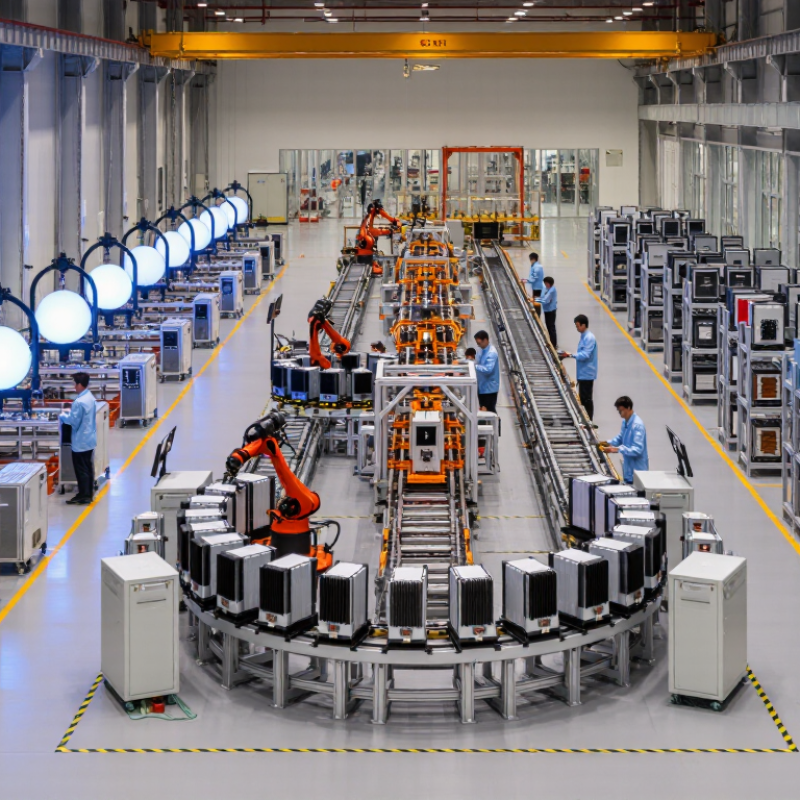
Choosing a laser lighting factory in China starts with a precise application brief, not a colorful product catalog. Describe the venue, viewing distance, ambient light, operating hours, and control system. Be specific. A stage effect may need a narrow beam, while architectural outlining often benefits from wider coverage. If the supplier cannot restate your requirements clearly, the project may already be drifting.
Wavelength determines color appearance and affects how the beam behaves in haze, glass, or outdoor air. Ask for measured wavelength data, not only names such as red, green, or blue. Output power needs equal care. Confirm whether the quoted figure means optical output, electrical input, or a marketing peak. Request test reports, calibration dates, and performance tolerance for each production batch. I have seen specifications look impressive until measurements were taken at the aperture. That gap deserves a direct explanation.
Beam angle should be checked with the actual mounting distance. A five-degree beam can create bright hot spots across a short wall. IP rating matters outdoors, but IP numbers do not replace drainage, cable protection, or thermal planning. Ask the factory for ingress-test evidence, operating-temperature limits, and sample units for continuous testing. Review drawings and labels carefully. Small errors in wavelength or connector details can delay installation. A dependable supplier welcomes technical questions and records every change in writing. Do not rely on assumptions; some requirements become clear only after a real-site trial.
7 Tips to Choose a Laser Lighting Factory in China?
When choosing a laser lighting factory in China, check compliance before comparing prices. Tip 1: Request a current IEC 60825-1 test report for the exact product series. The report should identify laser class, output limits, protective housing, labels, and testing methods. Tip 2: Confirm the certificate applies to the factory and product scope. A generic document is not enough. Tip 3: Inspect warning labels and user instructions on physical samples. Small details matter.
Tip 4: Ask for the factory’s ISO 9001 certificate, including its certification body, validity period, and approved business scope. ISO 9001 shows a controlled quality management system, not automatic product safety. Tip 5: Review records for incoming materials, assembly checks, calibration, and final inspection. Reliable factories can explain these steps clearly. Tip 6: Visit the production area, or arrange a live video audit. Compare the documented process with what workers actually do. Paperwork can look perfect.
Tip 7: Request batch traceability and corrective-action records. Ask how the factory handled a failed test or customer complaint. The answer may reveal more than a polished presentation. In my experience, rushed suppliers often avoid specific evidence. Still, one visit cannot prove everything. Repeat checks, independent testing, and written specifications reduce uncertainty. A careful supplier should welcome reasonable questions, even difficult ones.
When evaluating a factory, verify its IEC 60825-1 laser classification documents, protective housing design, warning labels, user instructions, testing records, corrective-action process, and ISO 9001:2015 quality management certificate.
The chart shows the visible continuous-wave accessible-emission boundaries commonly used for IEC 60825-1 laser classes: Class 2 at 1 mW, Class 3R at 5 mW, and Class 3B at 500 mW. Class 4 begins above the Class 3B boundary. These values are screening references only; the official classification also depends on wavelength, pulse duration, exposure time, beam conditions, and measurement method. ISO 9001:2015 certification demonstrates a quality management system, but it does not replace IEC 60825-1 safety verification.
Reference framework: IEC 60825-1, Safety of laser products — Part 1; ISO 9001:2015, Quality management systems — Requirements.
Choosing a laser lighting factory in China requires more than reviewing product photos. Optical performance should be tested with measurable data, not attractive claims. Ask for beam accuracy, divergence, and color rendering reports before discussing price.
Beam accuracy shows how closely the light follows its intended path. During evaluation, inspect a sample on a wall from a fixed distance. The hotspot should remain centered, with limited spill around the edges. Divergence matters too. A narrow beam can spread noticeably after several meters. Request the beam angle, measurement distance, and test conditions. A factory using a goniophotometer can provide more reliable results than a basic visual inspection.
Color quality deserves equal attention. Specify a color rendering index of at least 80 CRI, then ask how it was measured. An integrating sphere and recent calibration records add credibility. Check several samples, because one excellent unit may not represent the full batch. I once trusted a single demonstration sample, and the production light showed wider variation. That mistake was avoidable. Ask about LED binning, thermal control, and quality checks during assembly. Clear test records, realistic tolerances, and a willingness to discuss failures usually reveal more than polished sales language.
7 Tips to Choose a Laser Lighting Factory in China?
Audit Manufacturing Capacity Through Yield Rates, Testing, and Lead Times
Request yield rates by product, batch, and production month. A single annual percentage hides seasonal problems. Ask how the factory defines a qualified unit. Is brightness measured before or after thermal testing? Clear definitions matter. Review failure records, not only successful inspection reports. Repeated driver faults or uneven beam patterns reveal weak process control. Small details matter.
Check the testing area during a factory visit. Look for calibrated photometers, temperature chambers, power meters, and documented test procedures. Ask to see calibration records and recent test samples. Then compare test data with your own acceptance requirements. A factory may pass its internal standard while missing yours. That gap can become expensive. Request a controlled sample run when possible. Observe assembly, alignment, sealing, and final inspection instead of relying on photographs.
Measure lead time in separate stages: material preparation, assembly, testing, packing, and shipment readiness. Ask for actual records from several recent orders. A short promise may exclude testing or rework. Also check production capacity during peak periods. A factory with impressive equipment may still lack trained operators. A perfect yield report can be suspicious. Real production includes some rework. What matters is whether the factory explains it, tracks it, and reduces it. Build a modest schedule buffer, because even reliable data cannot remove every supply or testing delay.
Anonymized factory-audit comparison using practical manufacturing indicators for laser lighting procurement. Verify all figures with production records, test reports, and a physical audit before approval.
| Factory Profile | Monthly Rated Capacity | First-Pass Yield | Final Inspection Pass Rate | Optical Test Coverage | Thermal Aging Practice | Typical Production Lead Time | On-Time Delivery | Audit Score |
|---|---|---|---|---|---|---|---|---|
| Profile A Established OEM Line | 8,000 units Dedicated laser-lighting assembly line | 98.1% Based on the latest three production lots | 99.2% Documented outgoing inspection records | 100% Power, wavelength, beam pattern, and safety checks | 100% of finished units 4-hour powered aging | 25–30 calendar days For repeat orders after component confirmation | 96% Measured across the previous six months | 92 |
| Profile B Mid-Size Integrated Plant | 5,000 units Shared assembly resources | 96.7% Process yield tracked by work order | 98.4% Final inspection sampling plus critical-point checks | 100% Electrical and optical output tested; beam alignment sampled | Sample-based 8-hour aging on each production batch | 30–38 calendar days Capacity dependent during seasonal peaks | 91% Recent delivery performance is acceptable | 84 |
| Profile C High-Mix Custom Factory | 3,200 units Flexible line for customized models | 94.8% Lower yield on new configurations | 97.6% Corrective-action records available | 90% Optical output tested; beam profiling is sampled | Sample-based 4-hour aging with model-dependent duration | 35–45 calendar days Engineering approval may extend the schedule | 87% Requires a documented production schedule | 76 |
| Profile D Capacity-Focused Factory | 12,000 units High-volume standardized products | 97.3% Stable results on standard models | 98.8% Automated inspection for selected characteristics | 100% Power and wavelength tested; beam geometry sampled | Sample-based 2-hour aging for standard production | 20–28 calendar days Fastest for repeat standard orders | 94% Strong capacity but priority must be booked | 88 |
| Profile E Small-Batch Specialist | 1,500 units Low-volume production capability | 91.6% Manual assembly creates higher variation | 95.9% Inspection is largely operator-led | 85% Basic electrical and optical checks completed | Not standardized Performed only on selected projects | 45–60 calendar days Longer lead time for component sourcing | 79% Milestone control and buffer time recommended | 64 |
Evaluation reference: prioritize factories that can provide traceable yield data, calibrated optical and electrical test equipment, documented thermal-aging procedures, realistic capacity loading, and verified lead-time performance. First-pass yield should be calculated before rework; delivery performance should be based on a defined period and agreed shipment date.
Choosing a laser lighting factory in China requires more than comparing unit prices. Evaluate the five-year cost, not the quotation alone. The International Energy Agency’s 2023 Energy Efficiency report estimates lighting uses about 15% of global electricity. Efficiency matters, but laser systems need measured data. Request independent test results for lumens, watts, thermal performance, and color stability. Do not accept “maintenance-free” without evidence.
Warranty terms can change the real purchase price. Check coverage for the laser module, driver, cooling system, optics, and labor. A three-year warranty may exclude gradual brightness loss or installation damage. Ask whether replacement parts remain available after the warranty ends.
Calculate expected failures using operating hours, not calendar years. MOQ also affects cost. A 500-unit order may reduce the price, but it can trap cash in slow-moving inventory. Request pilot quantities and written acceptance criteria.
Build a simple five-year model. For 100 fixtures running 4,000 hours yearly, a 100-watt system consumes 40,000 kWh annually. At $0.12 per kWh, electricity costs $24,000 over five years. An 80-watt alternative costs $19,200, before maintenance. Add freight, installation, spare drivers, inspections, downtime, and disposal. The U.S. Department of Energy’s solid-state lighting reports show efficiency depends heavily on the complete system, not just the light source. A spreadsheet can still lie. Test a small batch under real heat and dust, then revise the model.